Category Legends

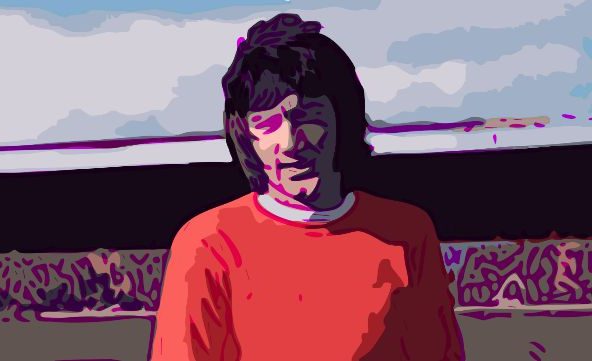
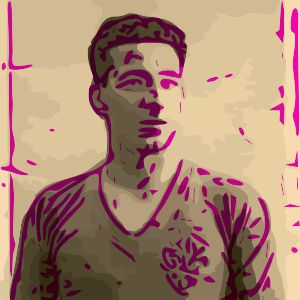
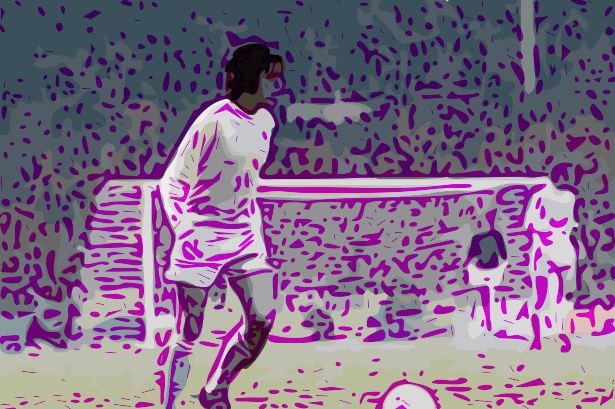
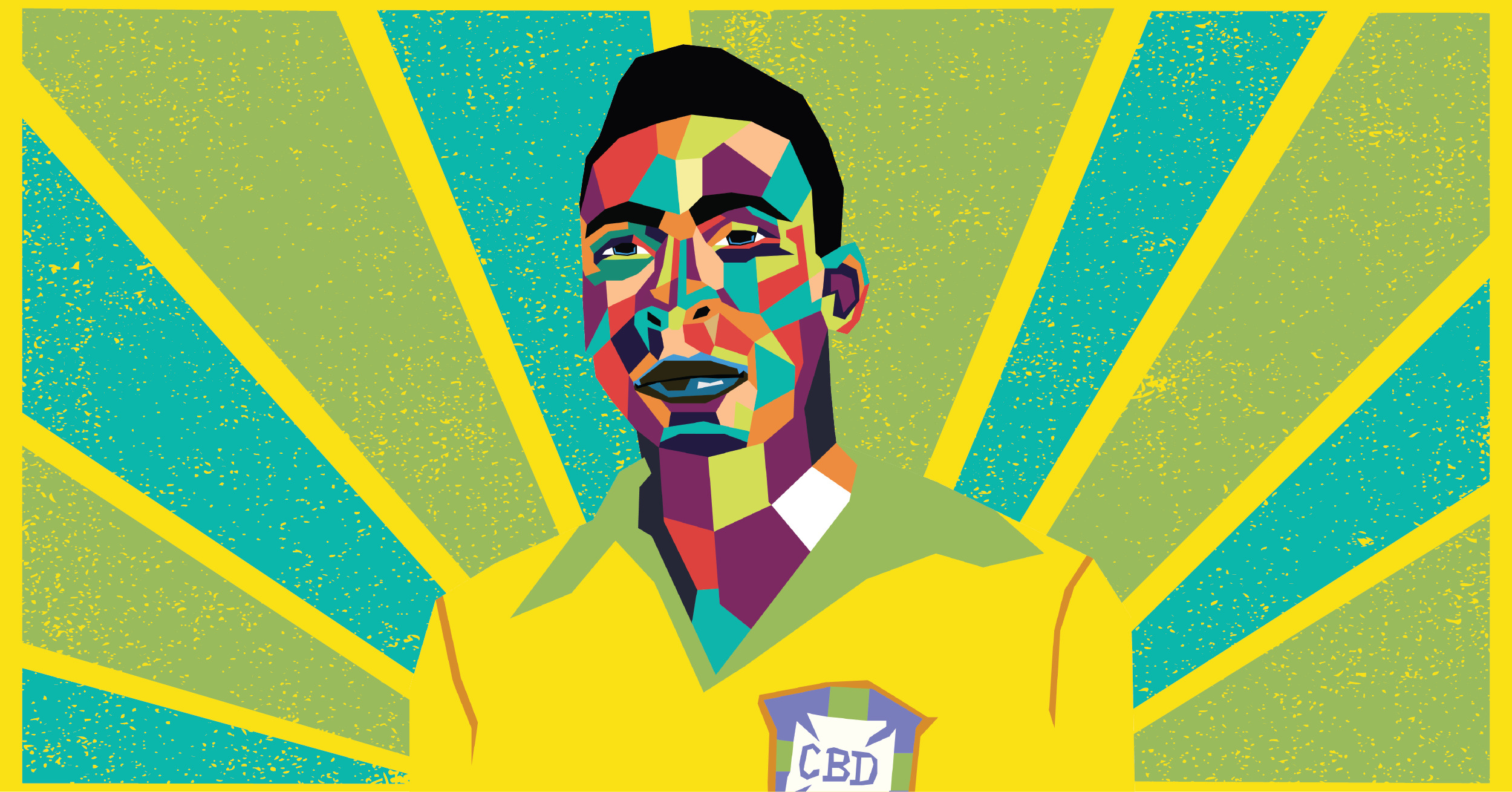
Gérson – Life & works of the definitive Brazilian no. 8

Who’s your favourite Brazilian footballer? If you’re my age, it’s probably Ronaldo or Ronaldinho. If you’re older, maybe it’s Romario, Socrates, or maybe even Pelé himself. And if you’re too young to remember the times when Zidane had any hair on his head, I’m guessing it’s Neymar. It’s all too logical; they’re the deadly strikers, the tricky wingers, the magic number 10s. But what if I told you there’s another kind of samba magician? A player with all that flair, but cut to a different mould: the Segundo Volante, the typical Brazilian no.8.

Second to none

So, what does that expression mean? Segundo Volante. “Segundo” it’s rather easy, it’s the Portuguese word for “second”; volante it’s a bit more tricky. Carlos Volante was an Argentine midfielder of the 1920s, 30s and 40s. Born in the city of Lanús in 1905 he debuted for the club of the same name in 1924. The son of Italian immigrants, he got a move to Napoli in 1931 and went on to play for several European clubs in Italy and France. In 1938, fearing the threat of WW2, he moved to Flamengo after some Brazilian friends convinced him to ply his trade over there. 

His arrival coincided with the short but immensely relevant stay at the club of Hungarian coach Dori Kürschner, who was attempting to apply the highly structured WM to Brazil’s typically free-flowing game. Kürschner deployed him as one of the halfbacks, and even though the Magyar was out by September of that year, Volante was highly successful. His style as a rugged, combative ball-winning midfielder with a never-say-die attitude was both surprising and illuminating for Brazilian football. So much so that other managers, looking for his players to emulate that, would tell them to “play as Volante”. From there the expression has grown to conquer all of South America, where it came to mean any midfielder. Even now, when in Brazil they use the expressions “cabeça de área” (18-yard box leader) and “meio-armador” (playmaking midfielder), here in Argentina we say “volante de contención” and “volante creativo”, quite literally “holding midfielder” and “creative midfielder”.

So that explains the “volante” part, but why “segundo”? As  Kürschner was sacked following a string of bad results, the Flamengo job went to the Hungarian’s assistant (and former player-manager of the club), Flávio Costa. It was largely expected that he’d drop the WM, but he instead opted to tweak it. He rotated the square formed by the four midfielders, so one of the halfbacks would drop in front of the back 3 (a role that would come to be known as the quarto zagueiro, a ball playing centreback) and one of the inside-forwards would advance to sit right behind the front 3 (creating the traditional ponta da lança role) and the set-up came to be known as the diagonal.

As the 4-2-4 developed from that system, a 2-man midfield was formed by the remaining players, a “primeiro” (or first) volante and our man, the “segundo” (or second) volante. The reason as to why each took its name is less clear, but reading a bit of football history it’s not hard to hypothesize an explanation. When Kürschner implemented the WM in Brazil he did it not by dropping the centre-half between the fullbacks (as it happened in England) but rather by dropping the left half into the defence. 

That way, the two half-backs were number 5 and 4, and when Costa and other coaches implemented the diagonal, it was numbers 5 and 8 which formed the midfield. As such, anyone reading the team sheet list would have read the midfield as 5, the first midfielder, and 8, the second midfielder, primeiro and segundo volante.

The first player to have taken the role of segundo volante on the international level was probably Zizinho, as the deep inside forward on the right in the diagonal played by Brazil’s 1950 WC side, the same role he had occupied in Flavio Costa’s Flamengo. Much more of a dribbler than those who would follow, his skillset and quality were such that when he missed Brazil’s second match of the 1950 World Cup vs. Switzerland the home team struggled to break down the deep defence of the Swiss. Even years later, Bela Guttmann would sign the then 34yo Brazilian from small side Bangu for his Sao Paulo side to take the role of the creative midfielder in the 4-2-4 he was looking to implement. That side would go on to win that year’s Paulista Championship, and Zizinho would become a Sao Paulo legend.

His successor in the national team, Didi, was much more defined in his role as a midfielder. An elegant passer of the ball, he dictated tempo while also helping the defence. He had a cold head and a smart reading of the game, and also possessed a killer mid-range shot, inventing the folha seca free-kick style, most famously used in modern times by Cristiano Ronaldo and Juninho Pernambucano. The man who would succeed him would take the Segundo Volante role even further and become arguably its greatest exponent, Gérson de Oliveira Nunes, better known simply as Gérson.

The heir to the kingdom

The sole child of footballer Clovis Nunes, who had won the Rio de Janeiro title in 1935 with América Football Club, Gérson de Oliveira Nunes was born in Niterói, a coastal city part of the Rio de Janeiro Metropolitan Region, in 1941. He first started playing at 6 years old, with Bangu de Icaraí. Even at that tender age, he was the owner of the ball: the team was run by his dad. Despite that, Gérson showed great promise, and in 1955 he joined Niterói club Canto do Rio’s youth academy.

Gérson has often said that he had wanted to become a footballer ever since he was a child. In those days his hero was actually one of his dad’s friends, none other than Zizinho himself; however, as he grew and his passing ability and intelligence began to shine, his eyes turned to the man he’d replace in the National Team: Didi. The master himself acknowledged his passing skills: “He was my heir”.

In 1958, Canto do Rio faced Flamengo, which many considered the best youth side in Rio. Gérson dismantled the whole team, and Mengão’s manager Modesto Bria asked the club to sign him. At just 17 years old, Gérson made it to Flamengo. The first team featured players like Joel Martins, Moacir, Dida and even Mario Zagallo, who had been crowned world champions just six months earlier, but Gérson wasn’t dazzled. He barked orders at them in training, with a strong personality that didn’t match his age.

Everything was going to plan, until the key match of the 1962 Rio de Janeiro State Championship, better known as the Campeonato Carioca. With Flamengo and Botafogo locked in a title race, they faced each other in the last matchday. Flavio Costa, who had returned to the Mengão that very year, played Gérson on the left, with a terribly thankless objective, man-marking Garrincha. It was to no avail. Botafogo won 3-0 and Garrincha, who was Brazil’s key man in their 1962 World Cup title, was uncontrollable, scoring two. Teammates, board members and fans blamed the loss on Gérson, saying he had put enough of a shift. Ironically, he was sold to Botafogo, for what was the highest ever fee paid in Brazilian football at the time, $250,000.

It was around that time that he got his nickname of “Papagaio” (Parrot), because of how talkative he was. Gérson was chased by reporters after games because he was guaranteed to produce a new headline. He became the club’s main spokesman, always dealing with media after matches, and Gérson never disappointed. He’d spare no thought on his teammate’s attitudes, the board’s decisions or coach’s tactics, and would even propose solutions. At a time when players only ever talked in clichés, he always was the exception. It took some time, but eventually his team got used to his personality. 

By the time the 1966 World Cup arrived, he was an undisputed starter for the National Team. However, his first major tournament experience wasn’t a good one. He was only able to feature against Hungary, where the Seleção was soundly beaten 3-1, and was unable to play the rest of the matches, with kidney problems. Brazil was out of the World Cup early for the first time in 12 years, and Gérson was once again blamed for the failure, accused by the press and the public of being a “coward” and lacking “love for the national team”.

Botafogo won the Campeonato Carioca in 1967 and 1968, with Gérson among the key figures. It looked like he was about to finally settle when the team decided to do a tour in Mexico. Gérson refused to join them, as his wife was due to give birth. The board threatened to remove him from the team, claiming his presence was mandated by his contract, but he put his family before his career and stayed home. From there, things were sketchy between Gérson and the club, so he argued it’d be best if they sold him so he could make more money because “playing football won’t last forever”. In July of 1969, he was moved to São Paulo for $225,000.

However, before he could play for his new side, he was called by Mario Zagallo to the squad for the 1970 World Cup. There, Gérson would be able to cast away the ghosts of 1966, becoming the leader and the brain of the Seleção.

Gérson and the 4-2-4

The team that won the 1970 World Cup was in many ways the culmination of the process that started with Kürschner’s arrival to Flamengo, the definitive version of the Brazilian 4-2-4, the coronation of a process that had started almost 30 years prior.

The back four was perfectly balanced. On the right, Carlos Alberto, a fullback very much in the same mould as Nilton Santos, had greater license to push forwards, whilst on the opposing flank Everaldo acted as a counterweight. Standing at 1.89m (6’2), centreback Hércules Brito offered aerial capabilities; next to him, the much shorter Wilson Piazza played as a defensive midfielder for Cruzeiro and was the perfect quarto zagueiro, allowing the team to bring the ball from the back.

In the middle, Gérson played on the left next to a much more defensive player in Clodoaldo, who stood on the right and covered for Carlos Alberto’s marauding runs. It’s interesting to see how, in the same way we can see the role of the Segundo Volante develop through the years, a similar progression can be seen with the more defensive of the partners. In 1950 it was Danilo Alvim who stood between Zizinho and the quarto zagueiro, an elegant, long passing midfielder, much more similar to Gérson himself than a modern-day holding midfielder. Eight years later, when Didi took on the role of Brazil’s midfield orchestrator, he did it with Zito by his side, a much more defensively minded, combative player, but still a marvellous technician who dictated tempo in Pelé’s Santos as he barked orders and lead the team. 

It was only with his successor (both at Santos and on the National Team), Clodoaldo that the position became a mostly defensive, positional role. As an article on the Brazilian football magazine Placar points out: “[Clodoaldo], always calm and strong, was a master of ball recovery and excellent on support, becoming one of the first cabeça de areas of Brazil”. We can maybe put him, then, as the starting point of a long line of rugged and talented Brazilian holding midfielders, including Dunga, Gilberto Silva and Fernandinho.

Gérson was a tactician on the pitch; he guided his teammates, telling them where they should stand, and even making them switch positions to better exploit the opponent’s weak spots. In the semifinals, with Brazil a goal down against Uruguay, he saw himself often marked out of the game, so he decided to switch roles with Clodoaldo, dropping to a more defensive stance and unleashing his young teammate’s runs. The result was Cloadoaldo’s equalizer with a late run into the box from the left.

Upfront, four of the most creative players in that era combined. Jairzinho started wide on the right, cutting inside to create space for Carlos Alberto’s runs, while the industrious Rivellino positioned himself a bit deeper, in a role similar to that which Mario Zagallo (who coached the side) occupied in 1958. In the middle, Pelé and Tostão, both ponta da lanças in their teams (Santos and Cruzeiro), started together, with O Rei usually starting deeper to find space and attacking from there, and the Cruzeiro man dropping off in the attacking phase, but pushing forwards when Brazil lost the ball.

Gérson’s role was about linking those around him and making the teamwork. As Jonathan Wilson notes in “Inverting the Pyramid”, “Gérson spent hours practising clipping diagonal balls for Jairzinho to run onto, in effect calibrating his left foot, making adjustments for the thinness of the Mexican air”.He would take the ball deep and look to advance it, either via long passes or with dribbling runs forwards, as the attacking quartet stretched the defence and looked to find space so Gérson would find them.

Not only that, but he would also often the opponent’s box, either arriving late from deep or carrying the ball forwards with intent, looking to exploit any gaps created by the fear his teammates drove into the defender’s hearts with a quick lay off or (as he did in the 1970 World Cup final), launching a powerful shot with his left foot from the edge of the area.

Crucially, he was also a volante, and there he aided the defence at all times. As Sandro Mazzola would quickly find out, his forward runs didn’t mean he left Clodoaldo exposed, but rather they formed a solid duo guarding their centre backs, combining the cabeça de area’s strength and speed with Gérson’s positional awareness and intelligence. He was, in many regards, a total midfielder.

After the glory

At São Paulo, Gérson won two São Paulo Championships, in 1970 and 1971. However, right when he seemed to be at his peak, injuries started to slow him down. When he was out of the team, São Paulo’s level dropped, and both fans and the press accused him of “dumping” his team when they needed him most.

His smoking got worse, which also didn’t help. He suffered severe shortness of breath, a consequence of his cigarette addiction. Such was his smoking that Nocaute Jack, the massagist of the Brazilian National Team, left a pack and some matches ready for him in the dressing room at halftime during games. By the São Paulo years, he was up to two packs a day.

Further controversy followed when Gérson refused to play in a friendly against Fluminense in the city of Maceió, in the north of Brazil (some 2400 kilometres away from Sao Paulo). The situation became intolerable when he worsened an ankle injury playing Futsal in the Rio de Janeiro area.

However, Gérson had other priorities. The highly polluted air of São Paulo was giving his daughter Cristiane pulmonary issues, so he decides to move back to Rio. He gives the São Paulo board an ultimatum, either he’s sold or he retires. Without any real options, the club sells him to Rio de Janeiro side Fluminense for $300,000. At 31 years old, Gérson fulfilled the dream of playing for his childhood side. Not long after signing, he’d live his last great moment with the Seleção, winning the Taça Independência in 1972, an international tournament held to commemorate the 150th anniversary of the Brazilian Declaration of Independence. Without Pelé, Gérson was the captain, lifting the cup in front of the almost 100,000 people who attended the Maracanã.

With Fluminense, Gérson spent a lot of time on the sidelines due to injuries. The manager, Davi Ferreira, better known as “Duque”, was a known disciplinarian who would clash with Gérson. He renovated the squad with young talents like Pintinho, Cléber, Marco Aurélio and Rubens Galaxe. By October of 1973, Gérson was ready to play, but Duque argued that he “needed more time” and that the team was “slower” with him on the pitch. The team would win the Campeonato Carioca that year, but discord never ended. They often clashed regarding tactics. Once, before a match against América Mineiro, the manager was explaining how the opposition would play; “I know”, pointed out Gérson, “But how are we going to play?”. Refusing to follow orders, he was subbed off at halftime, and Fluminense lost the match. Not long after that game, Gérson suffered an injury while training. Disenchanted, he decided to end his career in November 1974, at 33 years old.

Gérson had always made it clear that, despite his manager-on-the-pitch attitude and tactical intelligence, he wasn’t keen on pursuing a career in management. It was in the commentary box where he found his new home. “Up there, with coffee and cold water, everything seems easy, doesn’t it?”, he pointed out shortly before his retirement. 

When he retired, he moved back to his natal city of Niterói, so he travelled every day twenty-six kilometres to his working place in Rio de Janeiro, commentating matches both for TV and radio. When he was asked about it, he answered in typical Gérson style: “I get paid a lot to criticize, I won’t take a bad pay to be the one they criticize”. 

He embraced and enjoyed his new work; his only regret was to take part in an ad for cigarettes brand Vila Rica, in 1976. There, he lauded the superior “taste and smoothness” of the cheaper brand and asked the public “Why would I pay more if a Vila Rica gives me everything I want from a good cigarette? I like to get an advantage in everything. Get an advantage too, get Vila Rica”. That was eventually associated with the idea of Jeitinho (the idea that Brazilians always have a way to bend the rules to get what they want) and gave birth to “Gérson’s Law”, a saying that implies Brazilians like to skip the line. It was hardly a fitting way for a world champion to get immortalized in popular culture; smoking hurt Gérson even long after he had retired.

The legacy

In many ways, it’s hard to put Gérson’s career in context. Such an enormous accomplishment like Brazil’s victory in the 1970 World Cup seems to put everything else in the shadows. But he was an incredibly influential player for Brazilian football, and probably remains so. 

From a footballing and tactical standpoint, he was a key member of the last great team before the advent of modern football. He was the last great classic Brazilian playmaker, playing a role that was born out of the original great Seleção sides. “When he stopped playing, the great passers of Brazilian football ended”, said Didi.

From a professional side, he was one of the first to take his worth seriously and fight for his rights. “If fighting for my rights, or the rights of the footballer, is to be “problematic”, then I’m problematic”, he said once to Placar,  “But I’ll tell you something, many want to take advantage of me, but I won’t let anyone do it”. When he moved from Flamengo to Botafogo, he demanded payment of a clause in his contract that granted him 15% of the transfer fee. Flamengo wouldn’t pay, so Gérson took them to court. It took him three years and he eventually only got half of the payment, but for him, it wasn’t about the money. It was his right, and he wasn’t about to let it slip.

Interviewed by Placar in late 1970, he remembered what he went through after the 1966 World Cup, when he was harassed by both the press and the people in the street. “What some pundits don’t understand is that once they attack a player, the public feels like they can attack him too”, he commented. “But I don’t allow it. I’ll always remember the names of those who got the public to insult us. They attack us, talk ill of us, but when we stop playing they forget about us. So I try to enjoy it, I try to get the most I can get out of football now, because when you don’t, you end up forgotten, broken”.

If we’re to consider he played around the same time as Garrincha, who was often ripped off by Botafogo who took advantage of his naivety to the point where the club’s biggest selling-point was on one of the lowest wages they paid, it makes sense Gérson was ready to fight for what he was due.

Today’s Tales: Nuno says Harry is going nowhere – so that’s that, then…

A week without actual football has now passed us by because, as ever, we do not count preseason friendlies as football and no matter how hard we try, it’s difficult to get too excited about the prequalifying rounds of the Champions League.

All we have to live for in this post-Euros world is the transfer merry-go-round and we are living in eternal hope it (a) being merry and (b) actually going round.

What throw-a-six-to-start rumours have been out there this week and has anything actually been confirmed?

Strap yourself in reader, we’re about to bring you fully up to speed.

Rafa Benitez is hoping the signing of Kalidou Koulibaly, once a target for their neighbours, will show he is serious about bringing success to the Ev as well as increasing their outgoings significantly. Koulibaly played for Rafa in Italy, apparently, and what’s the point of paying a superstar manager a huge wedge of cash if he cannot open his contact book?

Benitez is also keen to rid the club of Moise Kean permanently and Juventus are said to be open to taking him back to Turin – water passing under bridges springs to mind. Juve would also like a bit of Gabby Jesus, but we said that last week and not much has happened. Slightly less exciting for Everton fans is the arrival of Asmir Begovic to be the backup to Pickford.

Arsenal could have a good week next week – having snapped up Nuno Tavares from Benfica, there’s a good chance they’ll finally sign Ben White and tempt Ruben Neves away from Wolves. We can all agree that they’d be little upgrades on Rob Holding and Mohamed Elneny. 

Hector Bellerin has seen the success had by the likes of Ashley Young and Victor Moses by doing one to Inter and wants to have a go himself. He’s told Mikel Arteta he wants out – luckily, Arteta still has Cedric Soares, right?

Houssem Aouar is still very much on the Arsenal list with James Maddison and Albert Sambi Lokonga should/might/probably will arrive from Anderlecht in the next seven days.

Joe Willock has seen these rumours and correctly deduced Arteta doesn’t fancy him so would like another year in Newcastle to continue being cuddled by Steve Bruce.

Andre Onana won’t be joining the Gunners as he is off to France and Lyon – and speaking of France, Arsenal are hoping to nudge Eddie Nketiah towards Patrick Vieira and Crystal Palace.

Vieira needs to get busy otherwise Palace will struggle to name an eleven on the Premier League opening day, and he’s currently looking at a keeper Sunderland released, a child-striker from Man City and Kasper Dolberg from Nice (who presumably hasn’t been that put off by being managed by Vieira previously).

Tottenham have joined the race for Portuguese (yeah, obviously) international Renato Sanches. Liverpool are still linked and Barcelona are working out how to fiddle the books to make it happen too.

If you look up Wales’ Harry Wilson on Wikipedia you’ll see that his bio includes “perfect signing for a newly-promoted Premier League team” so Brentford would like him for £10m and would like to pay that again for Celtic’s Kristopher Ajer (who is pretty good, apparently).

Manchester United think this is the week where they finally get Raphael Varane from Real Madrid, though those pesky PSG people are now trying to muscle in on the deal. If United are not careful, they might end up with Vinicius Jr as well as Madrid try to flog him so they can sign Kylian Mbappe.

Champions City would like Barcelona to stop pestering them about Antoine Griezmann as they want to focus on closing the deals on Harry Kane (who Nuno says is DEFINITELY not going anywhere), Jack Grealish (who is becoming very tempted by a new Aston Villa deal) and Erling Haaland who Dortmund are half resigned to losing and half determined to keep.

Roman Abramovich has made it his personal mission to persuade Dortmund that they should sell Haaland to him and if that fails, Chelsea have a cunning Plan B in going for Robert Lewandowski instead.

Griezmann is more likely to end up back at Atletico in a swap deal with Saul Niguez, meaning he won’t be going to Liverpool after all. Someone else keen to get away from Diego Simeone is Kieran Trippier who has his heart set on going to Man United. If that happens, Simeone would like Norwich’s Max Aarons to be his replacement – English right-backs are very, very in fashion right now.

Staying with City, they were impressed with Fulham’s Antonee Robinson relegation season and would like to keep him in the Premier League. Wolves seem to think he is Portuguese and have made a bid.

Another player that went down with Fulham might find themselves in a better place in life – Alphonse Areola is off to West Ham on loan.

With Saul going to Barca (maybe it was offering them Divock Origi that put them off), Liverpool need to get their midfield sorted so are now chasing down Italy’s Nicolo Barella from Inter – £60m is the number being bandied about.

To stop King Klopp taking Youri Tielemans away, Leicester City are going to offer him a new fat cheque at the bottom of a new long-term contract. Klopp has also missed out on Donyell Malen, who is off to Dortmund to be the new Jadon Sancho.

Tottenham do need to get busy and will finalise the deal for Tommy Yasu this week. Tomiyasu is an all-action defender who could become a crowd favourite quite quickly and ease the pain for Kane not turning up to training to force through a move.

Spurs would also like American Matthew Hoppe, a 20-year-old forward who scored six Bundesliga goals last season – surely ending all Hoppe of Kane staying?

Nuno wants two players from Wolves and is worryingly linked to some not-so-good ones – Willy Boly and Daniel Podence could be wearing Lillywhite next season.

Finally, Jose Mourinho has been linked to a shock move for a Manchester United left-back – and yes, of course, he wants Alex Telles on loan. Sorry, Luke.

—–

If you want to know everything, and we mean everything, about the upcoming Premier League season then head over to Amazon to pick up a copy of my latest book – “The Premier League Guide” for the 2021/22 season.

[contact-form][contact-field label=”Name” type=”name” required=”true” /][contact-field label=”Email” type=”email” required=”true” /][contact-field label=”Website” type=”url” /][contact-field label=”Message” type=”textarea” /][/contact-form]


Swindon Town : the glory years – part six

It had been an incredible couple of seasons for Swindon. League Cup winners and promoted to the Second Division in 1969. Then a year later they won the Anglo-Italian Cup Winners’ Cup and the Anglo-Italian Cup, then missed out on promotion by just three points.

There was an air of optimism around the County Ground for the new season. Manager Fred Ford brought in Tony Gough from Bristol Rovers. The 30-year old midfielder was at Eastville when Ford was the assistant manager, and was added to the Robins squad for his experience.

The season began with a home match against Hull City. Swindon had been beaten just twice at home in the league over the last two seasons and when Peter Noble put them in front in the first half they had every reason to believe the season would start well. However, Hull came back into it and Ian Butler equalised to earn a point. Hull City were managed by Terry Neill, who was operating as a player-manager having just moved from Arsenal.

Noble was again on target at Sheffield United, but couldn’t stop them losing, before they welcomed Sunderland to the County Ground. The cameras were at the ground that day to see Don Rogers cross from the right for Horsfield to head in his first of the season. Tony Gough was making his first appearance for his new club, and another right-wing cross from Rogers was headed in by the new boy. Two goals up at half-time and they cruised to victory. The game was remembered for a remarkable moment in the second half. Dennis Tueart headed against the bar and as the ball came down, Bobby Kerr tried to follow it in. However, the ball bounced over the goal and as Kerr held onto the post it came away from its base. Within a few minutes, it was restored and Swindon went on to record their first victory of the season.

They couldn’t continue their winning run when Watford were the visitors and Ron Wigg equalised Horsfield’s first half goal.

Roy Jones replaced Downsborough in goal for the trip to Blackburn, but he could do nothing to stop Bryan Conlon scoring the winning goal as their losing run on the road continued. They’d lost at Ewood Park on the first day of the previous season, and now they had picked up just four points from their opening five matches.

In the League Cup they were drawn at home to Watford. It was their second meeting with the Hornets in a week. Don Rogers scored his first of the season, with Horsfield adding a second soon after. Swindon were two goals up inside the first ten minutes. Ron Wigg and Stewart Scullion equalised before the break. So, Rogers and Horsfield just scored again in the second half this time there was no comeback. They were into the Third Round.

September continued with home wins over Portsmouth and Millwall and a goalless draw against Luton. But their away form continued to let them down as they lost to Carlisle. Three away games, three defeats.

Rogers and Horsfield now had 11 goals between them for the season as Swindon were now up to eighth with Oxford United the early pacesetters.

Their curate’s egg of a start continued as they lost at Charlton. They now had the best home record and the worst away record in the division.

Then it was back into League Cup action. Liverpool were the visitors to the County Ground. A crowd of nearly 24,000 turned up to see the likes of Tommy Smith, Emlyn Hughes, Larry Lloyd, Steve Heighway and Ray Clemence. The first half was goalless, as Heighway went close on a couple of occasions. To their credit, Swindon never allowed such chances in the second half. On the hour, Noble and Trollope combined down the left. When the cross came in Don Rogers was first to react to put the home side in front. Three minutes later he had a second. Again, he was given too much space, as he drew Clemence and then shot passed him. Liverpool put them under pressure for the rest of the game, but the Second Division side held on. It was a famous victory. Another one to add to their scalps of Arsenal, Roma, Napoli and Juventus over the last few seasons.

Rogers scored five times during their successful League Cup run in 1969. He now had four from two matches already.

When Horsfield scored the only goal to beat QPR at home they were still in the top ten. Then once they were back on the road, the defeats returned. They lost at Hull and Norwich to give them six straight defeats away from home. It was becoming an issue.

Middlesbrough arrived at the County Ground, having been the only visiting team to win there in the previous campaign. Rogers and Horsfield were again too potent. Two goals in the opening four minutes blew the visitors away. They were 3-0 up inside the opening quarter of an hour and never looked back.

The Fourth Round of the League Cup saw them visit Craven Cottage. Swindon fans were dreaming of another cup run after their win over First Division Liverpool in the last round. This time they were pitched against Third Division leaders, Fulham. But as it was an away game and Swindon’s away form was abysmal, you can almost guess what happened. Steve Earle scored the only goal and Swindon’s League Cup dream was over.

The month ended with a trip to Birmingham and yet another defeat. What was it about playing away from home?

November seemed to take a similar path with a home win over Bristol City followed by defeat away to Leicester. The second week of November and still Swindon had the best home and the worst away record in the division. One of only two sides unbeaten at home, yet had lost all eight away matches.

Finally, when they visited Oxford’s Manor Ground at Oxford they managed to avoid defeat. Only a goalless draw but at least they’d not lost.

Yet a week later they took Sheffield Wednesday apart at home. Wednesday had been a First Division side just months earlier, but two goals from Don Rogers and a rare one from Rod Thomas gave them a convincing 3-0 win.

22 goals in the league and all but two of them from Rogers, Horsfield and Noble.

The first game of December finally produced the result all had been desperately searching for. They went to Bolton and won, 3-0. Another brace from Rogers and a first goal for Chris Porter. Porter had been signed from Bridgwater in late 1969, but he hadn’t appeared in the first team until this season.

Porter was on target again when Orient ended Swindon’s winning run at home. They’d won five on the trot but Orient held them to a point. But then Sheffield United visited and Swindon beat them 3-0. It was their third 3-0 win in their last four matches.

Their Boxing Day trip to Cardiff saw them pick up another point. Rogers hit his tenth league goal of the season. They were now unbeaten in their last seven matches, and crucially their last three away games. They were up to ninth. If they could continue to turn their away form around, maybe a push for promotion was on the cards.

1971

The new year began in the traditional way with the FA Cup Third Round. Swindon had been drawn away to fellow Second Division side, QPR. They’d already beaten Rangers that season. New signing, Ron Potter was in at centre-back for the first time. Against a side which included Rodney Marsh, Terry Venables and Gerry Francis, Horsfield gave Swindon the lead on the hour mark. With 12 minutes to go Noble put them further in front. Marsh scored from the spot but it was only a mere consolation and Swindon were through to the Fourth Round.

Before then they had two league matches, away to Millwall and at home to Norwich. They failed to hang onto a lead at Millwall, and were 2-0 up at home to Norwich when the visitors came back to level. This time, however, Noble got the winner.

They were now unbeaten in their last eight in the league and sitting in ninth, five points off a promotion spot.

But for now, they were back in the FA Cup. In the previous season they reached the Quarter-Finals, only to be knocked out by Leeds United. Now they were up against Leeds again, but this time at Elland Road.

Leeds were top of the league at this point, but were without Billy Bremner and Terry Cooper.

In front of a crowd of almost, 37,000 Mick Jones gave the home side the lead just after 15 minutes. Allan Clarke, who’d scored both goals the season before, then gave Leeds a two-goal lead on the half-hour. Swindon were up against it, but couldn’t come back into the game and Jones scored twice in the second half to complete his hat-trick. There was no fairy-tale comeback as they lost 0-4.

Back in the league they ended January with another 2-2 draw away from home. At Hillsborough, Don Rogers scored two more goals to give him 18 for the season. Unfortunately, this was another game where they were leading away from home, only to be pegged back for a point.

They were still in ninth, and still five points off promotion. As the season moved into February there was hope they could make the push. After all, they were unbeaten in nine.

February began with a comfortable 3-1 win at home to Bolton as Noble hit a hat-trick. They were now eighth. They’d won three successive home matches in the league and eight of their last nine. Yet although they were unbeaten in their last four away from home, they’d only won once all season.

A week later they went to Brisbane Road and lost to Orient. Bobby Moss came off the bench to score the only goal of the game, and Swindon’s away record was really stifling any progress.

Their Jekyll and Hyde form was further emphasised when they beat Oxford 3-0 at home the following week. Noble, Rogers and Porter scored. Rogers now had 15 in the league with Noble on 12.

Four straight home wins, and still no defeats at the County Ground. Sheffield United had now hit the top of the table with Cardiff City in second. Swindon were still five points off promotion and struggling to make real progress.

Something had to give. Either their away form would improve or their home form would fail them.

A week later something did give.

Trevor Francis scored twice as Birmingham became the first visiting side to win at the County Ground that season.

After an unbeaten run of 10 matches, they’d now lost two in their last three. They’d need to correct things quickly if they were going to push for promotion.

The Birmingham defeat was the start of a malaise. They suffered defeat in their next three matches.

March began at Ayresome Park, where they were well beaten by Middlesbrough, 0-3. Then back home against Leicester they looked to be heading for a goalless draw, before Brian Kelleher grabbed a last minute winner for the visitors and they moved to the top of the table.

A week later at Ashton Gate, the run continued. Gerry Gow and John Galley put the home side ahead. Arthur Horsfield scored his first goal for six weeks but a 1-2 defeat left them with four straight losses and five in their last six. They sat in tenth, but crucially they were 11 points away from a promotion spot and just 9 games to go. Surely their season had gone now?

Their form was now turning people away too. Barely 11,000 turned up for their next home game. Which is a shame as they turned on the style again with a 3-0 win over Blackburn. Remarkably, none of the front three were on the scoresheet with Chris Jones scoring his first of the season.

As March became April, any hopes of a turnaround disappeared in just 45 minutes at Roker Park. Sunderland weren’t in any great form themselves, having lost more than they’d won during the season. So when Pat Lowrey opened the scoring for them after 11 minutes there wasn’t any real panic. But within six minutes they were 0-3 down as Bobby Kerr scored twice in as many minutes. Then Billy Hughes also scored twice and Swindon went into half-time 1-5 down. They ended up losing 2-5 and now the season couldn’t end quick enough.

They’d won just three of their last ten since going out of the FA Cup, losing six.

Their reliance on goals from the front three was now laid bare. Since his hat-trick against Bolton, Peter Noble had scored once in his next eight. In that time Horsfield had also only scored once, with Rogers getting just two.

Horsfield then picked up an injury and missed the defeat to Sunderland. When he recovered, he wasn’t even put straight into the starting line-up.

When Cardiff City visited, there was a first goal for Steve Peplow. He’d been brought in on loan from Liverpool and put them in front after just five minutes. However, in keeping with their current form Alan Warboys equalised almost immediately. Then on 13 minutes, he scored again, only for Roger Smart to equalise to earn a point.

On reflection, this was a decent result as Cardiff were second to Leicester in the table. They’d missed the chance to go top as Leicester also dropped a point.

Swindon were now down to 13th, their lowest position for five months.

This was the start of the Easter period and it was one that didn’t go that badly for Swindon. They won at Portsmouth, just their second win on the road all season. Peplow scored twice to give him three in two matches. Rogers was now injured and with Horsfield on the bench, the team had a very different look about it.

The next day they were held at home by relegation-threatened Charlton Athletic. Chris Jones opener put them in front, but their lead was cancelled out for another frustrating draw.

Peter Noble eventually ended his 10-game goal drought with a brace at Loftus Road. But two goals from Terry Venables gave QPR a 4-2 win.

Rogers was back for the final home game of the season, but he couldn’t find the net as they drew 0-0 with fourth place Carlisle United.

Horsfield scored in a 2-1 win at Watford. It was his 12th of the season, but only his third of the year, which highlighted a problem.

The league season ended with a 1-1 draw at Luton Town. They finished in 12th with as many wins as defeats. It hadn’t matched the heights of the previous season and it looked as if improvements to the playing staff would be needed if they were going to push for promotion.

Rogers ended as top scorer with 16 in the league, Noble hit 14 and Horsfield 12. They’d scored 61 goals and only three sides outscored them. In fact, they scored more than Champions, Leicester City. Sheffield United went up with them.

When Swindon beat Bolton at the beginning of February they were eighth and five points off second.  Their next fifteen matches saw them win just four matches and lose a telling seven. Their home form deserted them too, they won just two of seven.

Anglo-Italian Cup

Before they could break for their holidays, there was the matter of defending their Anglo-Italian Cup title. They’d won the trophy the year before beating Napoli in a match which was abandoned after the crowd starting throwing debris onto the pitch.

The format was much the same as the year before. Three groups of four teams, two English, two Italian. Each team played the other foreign side in their group, home and away. Then all sides were then ranked on national lines, with the top ranked Italian and top ranked English side contesting the Final.

Swindon were drawn in Group One along with Huddersfield Town, Bologna and Sampdoria. Their first match was at home to Bologna. The Italian side had finished 5th in Serie A earning a place in the UEFA Cup, so they were a stern challenge. They had also won the Coppa Italia in 1970. They were captained by Giacomo Bulgarelli, who had appeared in two World Cups for Italy and was part of the side which won Euro ’68. Only two players scored more goals than Giuseppe Savoldi in the league season just finished.

A disappointing crowd of under 10,000 turned up to see Peter Noble put the home side in front in the 11th minute. Franco Rizzo equalised midway through the first half. Then on the hour, Tony Gough put Swindon back in front and it looked for all as if they might hang on. But with eight minutes to go, right-back Roberto Prini scored a late equaliser and the game ended 2-2.

Huddersfield beat Sampdoria, 2-0 and then took part in a five-goal thriller with Bologna which saw the Italian side come out 3-2 winners. The first game had not been well received, getting a fairly poor review. But at least the second match was worth watching. Huddersfield were Second Division Champions the season before, and had finished 15th in the First Division during this term, so weren’t struggling.

Three days later Sampdoria arrived at the County Ground. They weren’t expected to pose as much of a threat as Bologna. They only avoided relegation on goal difference. But they did have Luis Suarez up front. The Spaniard had played in both the 1962 and 1966 World Cups. At the back, they had one Marcello Lippi.

Even fewer were in the crowd for this game, but those who were were treated to a vintage performance from The Robins. Horsfield put the home side in front in the 13th minute. This time they improved on their lead as Noble and Peplow scored within three minutes of each other to give them a 3-0 lead at the break.

They were in full control of the game but Francesconi got one back with 13 minutes to go. Don Rogers then scored towards the end to record another famous win over a much more fancied team, 4-1. The goals were important as bonus points were awarded for each one scored.

Next, the English teams flew to Italy. Huddersfield were up against Sampdoria, who’d lost both games so far. Sampdoria took the lead in the first half. Then a Les Chapman double in the second half had the visitors in front. Cristin soon levelled things but with just four minutes to go, Trevor Cherry bagged the winner for The Terriers.

Swindon took to the field in Bologna, still unbeaten, but things didn’t go their way. Playmaker, Bulgarelli opened the scoring for the home side. Then halfway through the second period, Rizzo put them further in front. Noble got one back as the game moved into the final ten minutes. Could they find an equaliser? Unfortunately, the answer was no as Franco Cresci scored the third for the Italians right on time.

Four days later Bologna continued their good form as Rizzo scored the only goal of the game to beat Huddersfield.

When Swindon moved to Sampdoria they entered a stadium with barely over 2,000 supporters. Steve Peplow put them in front. It was the third game out of four they’d lead. They were still ahead going into the final quarter of an hour. Spaniard Luis Suarez then converted a penalty to equalise, but then he got himself sent-off and with just 60 seconds remaining, Peter Noble scored a dramatic winner for Swindon.

Swindon had done the double over Sampdoria, just as they had done to Juventus twelve months earlier. They’d beaten Napoli twice in the previous season’s tournament too. If few Italians had heard of Swindon before 1969, they did now.

In Group Two there weren’t as many goals as Swindon’s group. Cagliari won the group, beating West Brom in both matches. Then traded wins with Crystal Palace who also won in Italy against Inter.

Swindon had won 14 points from their group, Huddersfield 11 and Crystal Palace 9. Whether Swindon would make the Final again depended on Group Three.

Blackpool, who’d finished rock bottom of the First Division, were up against Verona, who themselves had finished mid-table in Serie A. The two produced a classic. Blackpool were 2-1 up at the break but the Italians came back to lead. Peter Nicholson scored a last minute equaliser as the game ended 3-3.

Stoke were then held 2-2 by Roma, before Roma then beat Blackpool 3-1. Stoke then beat Verona, 2-0, with meant Roma were top of the group as the English sides flew to Italy.

Stoke then won in Rome before Blackpool produced a wonderful performance to beat Verona, 4-1. These goals could prove significant if they could win their last match, in Rome. They did, winning 2-1 and giving them 15 points. Verona beat Stoke, 2-1.

That meant the Final was contested by Bologna and Blackpool. Swindon had missed out on a place in the Final by one goal.

After going behind in the Stadio Renato Dall’Ara, Blackpool levelled to take the game into extra time. Micky Burns got the winner and Blackpool’s 2-1 win meant the Anglo-Italian Cup remained in English hands.

That ended things for the 1970-71 season. Ultimately, it had ended in disappointment. Their promising league form fell away sharply in the end. The highlight of the season was beating Shankly’s Liverpool in the League Cup. They were unfortunate to come up against Leeds again in the FA Cup. And they were so close to reaching the Anglo-Italian Cup Final again.

The End

This was largely the end of the good old days for Swindon, until the late 1980s. The following season saw Dave Mackay move into Fred Ford’s chair in the Manager’s office. Mackay’s time at the County Ground was nothing short of controversial, and many fans even today are bitter about how things went.

Mackay was regarded as one of the best players in the country when he was part of the Tottenham side which won the double in the sixties. He was Footballer of the Year in 1969 when he was with Brian Clough at Derby.

The board actually brought him in during the 1970-71 season, despite Fred Ford still being the incumbent. The intention was to employ him as a player-manager. Mackay refused to replace Ford until Ford’s contract ended.

At the start of the 1971-72 season, Ford had a dilemma. Mackay’s preferred position was centre-back, the same as fans favourite Stan Harland. So Ford moved Harland into midfield but the results were poor.

Defeat at home to Middlesbrough at the end of October proved the last straw and Ford stepped down. One win in seven with just two goals scored, just wasn’t the form they’d exhibited in previous years and Ford’s time in Wiltshire was over.

The Swindon fans never took to Mackay, particularly as his first move was to drop Harland. He lasted a year. Harland immediately put in a transfer request, moved to Birmingham then helped them win promotion to Division One. During the summer 1972 Mackay signed Ray Treacy from Charlton for a record fee. Arthur Horsfield, the man whose transfer record Treacy had beaten, returned for pre-season training to be told by his manager he’d been sold. He was off to Charlton in a swap deal. He wasn’t happy, but Mackay wanted to bring in his own players. By the end of the season with the club in debt, they needed to sell a player. Welsh international, Rod Thomas was the favourite but no bids came in. Crystal Palace put in a bid for Don Rogers and the board accepted it.

After 181 goals in 490 appearances, Rogers sale brought in a much needed £147,000 to a club struggling with debt. They may have paid it off, but their key asset and crowd draw was now gone.

Rogers was off to Selhurst Park to join the man who brought him to Swindon 12 years earlier, Bert Head. He became as much a fans’ favourite there as he was at the County Ground, but his absence from the South West had the Swindon fans incensed. The atmosphere around the club was poisonous and within days Mackay resigned for ‘personal reasons’.

Soon after, Mackay arrived at the City Ground and was unveiled as the new manager of Nottingham Forest. While he was at Swindon, the club he left them for, Derby County, won the First Division title. Then in October 1973, he returned to the Baseball Ground after Clough resigned. A year later he lead Derby to their second First Division title in four years.

By the end of the 1973-74 season, Swindon were relegated back to Division Three. Their final match of the season was a home defeat to a Crystal Palace side which included Don Rogers. The team was much changed by then, with only Frank Burrows remaining from the side which had won those trophies at the turn of the seventies.

They remained in the third tier of English football for another seven years, before four years in the fourth tier. It wasn’t until the late eighties when they made it back up the pyramid. But that’s for another day.

SWINDON TOWN ROLL OF HONOUR

1968-1969 :

League Cup winners

Finished 2nd in Third Division (promoted to Second Division)

1968 -1969:

Finished 5th in Second Division (just three points off promotion place)

Anglo-Italian Cup Winners’ Cup winners. Beat AS Roma over two legs

Anglo-Italian League Cup winners. Beat Juventus (twice) and Napoli (twice)

Reached FA Cup Quarter-Finals

1969-70

Finished 12th in Second Division

Beat Liverpool in League Cup

Anglo-Italian League Cup. Ranked 2nd best English side. Beat Sampdoria (twice)

Swindon Town : the glory years – part four

The 1968-69 season was the best Swindon Town supporters had ever known. Their first ever trip to Wembley saw them beat Arsenal to win the League Cup. Then they secured promotion to the Second Division.

Back in English football’s second tier after an absence of four years was exciting enough, but there was also European football to consider. The rules for the League Cup were changed in 1967 to give the winners a place in the Fairs Cup (the forerunner to the UEFA Cup and Europa League). However, UEFA would not allow clubs from the third tier to compete, and as Swindon were a Third Division club at the time, they were denied a chance to play in the prestigious competition.

The authorities then set about trying to find a solution. This is where the Anglo-Italian League Cup Winners’ Cup was formed. An English cup winner (League or FA Cup) would meet the Coppa Italia winner over two legs.

Interestingly enough when Third Division QPR won the League Cup in 1967 they too were denied a chance to play in the Fairs Cup, but nothing was arranged for them.

Swindon were to meet AS Roma over two legs from the end of August 1969. Before that they embarked on a season in the Second Division.

In preparation for the new season manager Danny Williams signed a striker. Arthur Horsfield was a 23-year old playing for Newcastle United. He had only recently moved there from Middlesbrough after a heated exchange with Boro boss, Stan Anderson. He was unable to find a starting place, so when Williams came calling he jumped at the chance. Horsfield became Swindon’s record signing, £17,500.

It was Williams’ final act as manager at the County Ground. He moved to take over the hot seat at Sheffield Wednesday, and the Swindon board brought Fred Ford to replace him. Ford was a coach at Swindon in 1967 before he moved to Bristol Rovers. He now had the unenviable task of matching the achievements of his predecessor.

Horsfield was into the starting line-up for the opening day trip to Blackburn Rovers. Swindon had beaten Rovers the previous season on their way to winning the League Cup. But this time things were different. Goals from Don Martin and John Connelly gave Blackburn a 2-0 win.

Four days later Horsfield scored his first goal for his new club. It came in a 2-2 draw at Cardiff City. Swindon’s first home game was their third match of the season. They lost just once at home the previous season but this already looked as if it could be hard work. Chris Balderstone, who also played professional cricket for Leicestershire, put the visitors in front just before half-time. Ten minutes into the second half, Tommy Murray, who’d only just come on as sub, made it 2-0 to Carlisle.

With 15 minutes to go, Horsfield got a goal back. Seven minutes later he scored again and crucially Swindon had avoided defeat.

For some reason a week after meeting Cardiff, they took on the return fixture. Nearly 22,000 were in the County Ground to see Swindon’s first win of the season. Chris Jones scored both goals in a 2-1 win against a side which included a young John Toshack. For a newly promoted side the earlier you can get your first win, the better. Relief around the club was palpable.

Swindon then visited Villa Park to take on an Aston Villa side which had only picked up one point in their opening three matches. Horsfield scored again, his fourth in as many matches and he was already looking worth every penny they’d paid for him. Rod Thomas then scored his first goal for two years and Swindon won again. Now they were starting to settle into things.

As August ended and September began, Swindon’s next three fixtures were in three different competitions.

Anglo-Italian Cup Winners’ Cup

The much anticipated Anglo-Italian Cup Winners’ Cup against Roma was up next. The tie was over two legs, with the first being played at the Stadio Olimpico in Rome. Just imagine how mad that was. Swindon had finished second in English football’s third tier, yet here they were lining up against such illustrious opponents.

Roma had won the Coppa Italia, beating Cagliari, Foggia and Torino in a group format. They were into the European Cup Winners’ Cup but because Swindon weren’t permitted by UEFA to compete in the UEFA Cup, Roma would meet them too. Roma had finished eighth in Serie A, but this was way above Swindon’s level in terms of competition.

In the Roma line-up were internationals such as Luciano Spinosi, Sergio Santarini, Renato Cappellini, Franco Cordova and future England manager, Fabio Capello.

40,000 were in the stadium and the vociferous home fans were enraged when after 12 minutes Stan Harland looked to have brought down Capellini in the area. Referee Kevin Howley thought otherwise and ordered a free kick to the visitors. Flares and rockets rained down on the pitch. For much of the half, Swindon had been forced deep into their own half, only venturing out for the odd breakaway. Downsborough was in fine form in goal for the Wiltshire side, as he had been at Wembley against Arsenal back in March. He made some good saves from Capellini and Capello. Then with half-time looming, Salvori appeared to throw himself to the ground in the area and this time the ref gave a penalty. Fabio Enzo stepped up and Roma were a goal up at the break.

Early in the second half Swindon were level. Peter Noble turned the ball in after a scramble in the Roma box. Swindon had chances to improve on this but in the 68th minute, Capellini put Roma back in front. Swindon ended the match putting the home side under pressure which gave their fans some hope for the second leg. Roma would take a 2-1 lead over to Wiltshire.

Three days later it was back to league action as Charlton were the visitors. A goalless first half fooled those watching into thinking the second period could be just as drab. Far from it. Swindon won 5-0. John Smith scored soon after the re-start and then Peter Noble doubled their lead on the hour. Ten minutes later Jack Burkett put through his own net before Noble grabbed a couple more to complete his hat-trick.

From there it was off to the League Cup to defend their crown. Their First Round tie was at Swansea City, who were a Fourth Division side at the time. Noble scored his second hat-trick in four days as Swindon won 3-1. They’d scored nine goals in their last three matches and Noble had bagged seven of them.

Three straight wins in the league and unbeaten in five since their opening day defeat. Yet no goals from last season’s top scorer, Don Rogers. When they travelled to Blackpool all that changed. In the Blackpool side that day was former England international Jimmy Armfield, who’d played in the 1962 and 1966 World Cups, Tommy Hutchison, who would go onto play in the 1974 World Cup for Scotland, then later score ‘at both ends’ in the 1981 FA Cup Final between Spurs and Man City, plus, Gordon Milne who was one of Bill Shankly’s first signings at Liverpool.

Ronnie Brown put the home side in front, but a penalty to Swindon gave Don Rogers the chance to open his account for the season. He didn’t turn down the opportunity. In the second half, John Craven put the home side back in front before Rogers scored again from the spot. Disappointingly for The Robins, Alan Suddick got the winner for the Seasiders and Swindon lost, 2-3. Interestingly, the game was refereed by the same Kevin Howley, who’d taken charge of Swindon’s game in Rome.

Not the best preparation for the midweek visit of Roma. The County Ground wasn’t full but almost 15,000 made it to see if Swindon could overturn the deficit from the first match. Town trailed 1-2 in the tie, but they only took 15 minutes to level things. Smith’s cross from the left was chested down by Horsfield who then stroked it past Ginulfi in the Italian goal.

Predictably, Roma came at the home side and the defence was kept busy. Mick Blick had replaced Burrows at centre-back. Blick was just a fortnight away from his 21st birthday yet gave a very assured performance alongside Harland.

The game certainly came to life in the second half. Downsborough was forced to make a couple of saves from Salvori and Capello, before Swindon scored again. Noble with some good work on the left, crossed into the area where Horsfield again brought the ball down and swept it past Ginulfi. 2-0 on the night, 3-2 to Swindon on aggregate.

Before the visitors could re-group, Swindon scored again. Don Rogers cut in from the left and fired a low shot into the net. 3-0.

This effectively took the stuffing out of the Italians and with seconds remaining, Rogers found Horsfield and the striker completed his hat-trick. Swindon had registered another famous victory against a much bigger name. 4-0 on the night and 5-2 on aggregate.

Remarkable as it may seem, Swindon Town were the first winners of the Anglo-Italian Cup Winners’ Cup, as Stan Harland gratefully lifted his second trophy in six months.

There was little time for celebrations as they were at home at the weekend for the visit of Oxford United. The biggest crowd of the season so far came to cheer on their heroes. Unfortunately, the football couldn’t match the quality of a few days earlier and ended 0-0. In the Oxford side that day was future West Brom, Manchester United, Aston Villa, Coventry and Nottingham Forest manager, Ron Atkinson.

The hangover continued as this was the start of a run of three matches where they failed to find the net. A 0-0 draw up at Middlesbrough was followed by defeat at QPR, 0-2. This wasn’t a complete embarrassment. Rangers were top of the table with Rodney Marsh in their ranks. But nonetheless, it was no wins from their last four in the league after seeing off Charlton.

10 games, 10 points, 10th place.

Back in the League Cup, Swindon were drawn away in the Third Round to local rivals, Oxford United. Their league meeting a couple of weeks earlier ended goalless. This time the game was decided by a goal from the home side’s David Sloan. That was the end of Swindon’s League Cup defence. It had lasted two matches.

They then had two league games at home to end the month. They drew 1-1 with Leicester City and beat Millwall, 2-1 with Horsfield scoring another double.

September had brought differing fortunes. The high was obviously winning the Anglo-Italian Cup Winners’ Cup, the low was going out of the Football League Cup. Coupled with that they only won one of six league games.

October

October was another busy month with the focus solely on the league. Horsfield scored his 10th of the season to win at Bolton. He scored again as they stayed north to draw at Carlisle United.

Back-to-back home wins against Sheffield United and Hull City kept them in sixth. Frank Burrows first goal of the season came very late to beat Hull, and they were now unbeaten in their last six.

The run came to an end when they were beaten at Portsmouth. That game saw Roger Smart finally score for the first time in the season, after his 14 goals helped them get promoted the year before.

It was their fourth defeat of the season and all had come away from home. They only lost once at home the season before and this form was keeping them in the top half.

November

November started with them keeping the home form going with a 2-0 win over Norwich. They were still sixth, but remarkably they were one of five clubs on 22 points, just one point behind leaders Huddersfield. A measure of their progress could be found by comparing them with the other side who were promoted with them the season before, Watford. They were now in the bottom two.

After losing at Birmingham they were then up against Watford at Vicarage Road. A goalless draw still had them in sixth, but they’d failed to win in their last four away from home, and only won one in their last eight on their travels.

The run continued as they lost at Preston, but this came after a win against Huddersfield. Huddersfield were still top of the table, so this was a good result.

Swindon then had four games in December to end the year. They drew them all. Bristol City (1-1) and Aston Villa (1-1) at home and Oxford United (0-0) and Charlton (1-1).

1969 ended with Swindon lying in eighth. They were just four points off a promotion place. Unbeaten at home yet had only won twice away with no win in their last eight on the road.

1970

The new decade began with Swindon enjoying the honour of only entering the FA Cup at the Third Round. They were up against Blackburn Rovers. They’d beaten them on their way to win the League Cup in the previous March. The league meeting came on the opening day and Blackburn won 2-0.

On this occasion, Swindon were quick out of the traps. John Smith put them in front in the 26th minute. Six minutes later Horsfield added another and then six minutes before the break Rogers put them out of sight. Joe Butler scored in the second half and Swindon had won emphatically, 4-0.

The Robins’ first league game of the new year was a home game against QPR, lying in fifth place. QPR had Terry Venables and Rodney Marsh in their line-up and provided stiff opposition. The game ended 0-0, a fifth successive stalemate.

The inability to win in the league came to an end when they went to Filbert Street and beat Leicester City 2-0. Arthur Horsfield scored twice. He now had 11 in the league and 15 in all competitions. He was certainly proving a shrewd signing.

This was their first away win since they beat Bolton at the beginning of October and they were back up to sixth. Great preparation for the next round of the FA Cup. The draw had been kind to them with a home against Fourth Division Chester City.

Despite their lower league status, the tie was enough of an attraction to put almost 22,000 in the ground.

Predictably it was Horsfield who put Swindon in front after 15 minutes. But five minutes before the break Roy Cheetham converted a penalty for Chester to level things. Then right on half-time Chris Jones put the home side back in front. Four minutes after the break, Horsfield scored his second to give them a two-goal cushion. But with 20 minutes left Gavin Lang got a goal back. Any nerves were settled soon after when Roger Smart scored only his third of the season, but it confirmed the win. They were through to the Fifth Round.

After three successive draws at home, Swindon finally broke the sequence with a win over Bolton. Against a side that included World Cup winner Roger Hunt, Horsfield scored his fifth goal in four matches. Don Rogers bagged a couple too as they were 3-0 up early in the second half. Bolton came back with goals from Terry Wharton and John Manning, giving the home side a nervous ten minutes to hold out. But hold out they did and their unbeaten run in the league now stretched to seven.

They were still sixth, one of three sides on 34 points. Still three points off a promotion spot.

February

February began with the Fifth Round of the FA Cup. As with the previous round they were up against Fourth Division opposition. Scunthorpe United were the visitors to the County Ground with a line-up containing a young Kevin Keegan.

On a quagmire of a pitch, the visitors took the lead when Nigel Cassidy converted a cross from the right wing. Swindon then put their opponents under a lot of pressure, and with seven minutes before half-time Peter Noble volleyed in from a left-wing cross to leave the two sides level at the break.

Midway through the second half, Don Rogers crossed from the right wing and Arthur Horsfield bundled the ball in at the far post for his 18th of the season. Then with just ten minutes to go, left-back John Trollope broke forward and fired a right foot shot into the corner of the net and Swindon were through to the Quarter-Finals.

This was the same round of the FA Cup when Manchester United beat Northampton, 8-2 and George Best scored six of them.

The next round would pit them against Don Revie’s Leeds United. Before that, they travelled to Sheffield United. The Blades were second in the table and going strong. Trollope scored again to put Swindon in front. United’s right-back, Len Badger equalised in the second period, before Horsfield netted yet again. Swindon’s record signing had hit seven in his last five. He now had 20 for the season.

Swindon were now up to fifth in the table just a point off a promotion spot. Huddersfield now had a four-point lead over Sheffield United with Blackburn Rovers and Cardiff City just ahead of Swindon.

Now for the FA Cup. Swindon were host to one of English football’s biggest clubs, Leeds United. Leeds were top of the First Division at the time, they were defending champions and offered the stiffest task Swindon could have expected.

Leeds were packed full of internationals, including Johnny Giles, Eddie Gray, Billy Bremner and Jack Charlton. On another quagmire of a pitch, both sets of players struggled to come to terms with the conditions.

In the past 12 months, they had beaten Arsenal and Roma. Could they prevail against arguably their toughest opponents?

Gradually Leeds greater strength started to tell. Just on the half hour mark, a long ball from the back by Norman Hunter was misjudged by Harland, and Allan Clarke stole in and fired past Downsborough.

27,500 were packed into the County Ground that day. They witnessed a ruthless Leeds side as Clarke bagged another just two minutes later. Swindon just couldn’t find a way back and their FA Cup dream was over.

Leeds went onto reach the Final where they lost in a replay to Chelsea. It had been another great cup run for Swindon. Outside the First Division, they were certainly one of the most talked about clubs in the country.

They had 12 matches to try and push for a promotion spot. It would be tough as only two went up in those days, but they were unbeaten on their last eight.

They travelled to Hull City but despite Don Rogers equalising Chris Chilton’s early goal, they couldn’t find a winner and another draw was the result. Unbeaten in nine maybe, but they’d only won three of those and they slipped to sixth.

March

Back at the County Ground, Peter Noble scored his tenth league goal of the season to put them in front against Portsmouth. Ray Hiron levelled things at half-time, but goals from Jones and a second from Noble gave Swindon the points.

Noble scored his third in two matches to give him 17 for the season when Preston visited. The Lilywhites were the last team to beat Swindon in the league, back at the end of November.

Cardiff were beaten by leaders, Huddersfield so Swindon moved up to fourth. Sheffield United were in second, but had played a game more. Blackpool were a point back in third. They couldn’t dream, could they?

Swindon then made the short trip down the M4 to Ashton Gate to take on mid-table Bristol City. Arthur Horsfield hadn’t scored in the league for the past three games, but he put that right with a double. Twice they were in front and twice City came back with goals from John Galley and Gerry Sharpe. When Bobby Kellard converted a penalty with 15 minutes to go looked like it might end their unbeaten run. But then Ken Wimshurst put through his own net and the game ended 3-3.

Cardiff lost again and so did Sheffield United. Blackpool now moved into second place, but now Swindon had games in hand on those above them.

The following Tuesday, Swindon were at leaders Huddersfield Town. Against a side containing the likes of Frank Worthington and Trevor Cherry, Swindon went behind to a Dick Krzywicki goal. But they came back with a goal from centre-back, Frank Burrows.

It was a vital point. They moved up to fourth, just a point off Blackpool in second. It was their third successive draw away from home. They were now unbeaten in thirteen.

Watford were the next visitors to the County Ground on Good Friday. The two were involved in a battle for the Third Division the season before, and Swindon didn’t win either of their meetings. They’d drawn the earlier fixture in this season at Vicarage Road. In this game, crucially they prevailed. John Trollope got the vital goal and a 1-0 win kept their promotion bid right on track.

Huddersfield were all but crowned champions and were definitely promoted. Behind them were eight teams separated by three points. Blackpool were second on 46 points, with Cardiff, Swindon, Leicester and Middlesbrough locked on 45 points. Both Blackpool and Swindon had two games in hand on those around them.

Swindon were unbeaten in 14 matches. Their away form had really picked up, unbeaten in seven. The Easter weekend was always a good test of a side’s credentials to last the pace. Swindon had been largely unchanged for most of the season but now had to do without Frank Burrows at centre-back. Owen Dawson seemed an able replacement.

When they travelled to Norwich City on Easter Monday, it all came to an end. Albert Bennett’s first half strike proved the only goal of the game and Swindon’s long unbeaten run was over.

Blackpool won their game, yet with Cardiff and Leicester not playing, Swindon had missed a great opportunity to move into third.

The usual busy Easter schedule gave Swindon just 24 hours to pick themselves up. They were at home to Birmingham City, against a side which included Dave and Bob Latchford. Joe Butler picked a great moment for his first league goal of the season to put Swindon in front in the 11th minute.

Don Rogers then scored from the penalty spot, before Phil Summerill got one back for the visitors. Swindon went in 2-1 up at half-time with the home crowd feeling the tension. Just after the break, Arthur Horsfield scored his 17th in the league this season to ease things. Rogers then grabbed his second of the game and the result was secured, 4-1. A good response to the previous day’s defeat.

As they got back to the changing room they discovered all the teams around them had drawn. Cardiff drew at Hull. The big games of the day between Leicester & Blackpool and Middlesbrough & Huddersfield all ended level.

Huddersfield were now champions, but it was the race for the second promotion spot which was occupying the column inches.

Blackpool were second on 39 points, with Swindon now third, just two points back. Both had four games left. Cardiff, Leicester and Middlesbrough were all locked on 46 points but all had only three matches to go. Sheffield United had just beaten Millwall and they were seventh on 45 points. Were they still in the hunt?

April

April now arrived with many in Swindon dreaming of what could be possible, but they still had crucial home matches against Blackpool (2nd) and Middlesbrough (6th). They also had Millwall (10th) and Blackburn (9th) to take on. The run-in was far from simple.

Swindon visited The Den to take on Millwall. Millwall had given up their hopes of promotion but former Spurs winger, Derek Possee put them in front. When he doubled their lead just before half-time the travelling Swindon fans suddenly realised this was serious. Don Rogers got a goal back soon into the second period and there was hope they could get back into it. But it wasn’t to be and Possee completed his hat-trick for a 3-1 win to Millwall.

Was the pressure starting to get to Swindon?

This was disastrous. Two successive defeats after an unbeaten run of seven came just at the wrong time. Especially as Leicester, Middlesbrough and Sheffield United all won and now Swindon dropped to sixth. Middlesbrough’s win was against Cardiff City and their promotion push was virtually over. Swindon still had a game in hand, but this defeat was a real blow. Although this was their last away game of the season and with an unbeaten home record surely this was to their advantage?

The game in hand came the following Tuesday. It was against Blackpool who were sitting in the promotion place. They were three points ahead of their hosts but Swindon could move back to third with a win.

Horsfield gave them a great start with a goal inside the opening five minutes, but Micky Burns levelled things before the break. Try as they might neither side could add to the score in the second half. A draw suited the visitors far more and now Swindon were looking at three points from a possible eight in their last four matches.

Blackpool had now consolidated their position in second on 51 points. Leicester were third, Swindon fourth and Middlesbrough fifth, all on 48 points. Don’t forget there were just two points for a win in those days.

A day later Middlesbrough missed a golden chance to go third when they lost to the bottom club, Aston Villa. Then on the following Monday night, Blackpool were at Preston North End. If they won that would put an end to any other club’s promotion plans, including Swindon.

Blackpool’s main striker was Fred Pickering. He won three caps for England in the early days of Alf Ramsey’s tenure, scoring a hat-trick against the USA. On this night he scored another hat-trick as Swindon’s promotion dreams were torn apart.

24 hours later Swindon’s unbeaten home record came crashing down too. Middlesbrough were the visitors. Hugh McIlmoyle put them in front in the first half, with David Mills and John Hickton confirming the win in the second half.

Swindon’s final match of the season was the following Monday at The County Ground when Blackburn Rovers visited. In a cool piece of synergy, Swindon’s season began against Blackburn and now was ending against them. Perhaps fittingly too, Horsfield scored the only goal of the game. He came into the season as their record signing and ended as their top scorer.

The season had been a success in terms of them coming so close to promotion. They ended up fifth, just two points off Blackpool who went up with Huddersfield.

Horsfield hit 18 goals in his first season at The County Ground. Peter Noble knocked in 12 with the previous season’s top scorer, Don Rogers, bagging 9.

However, their season wasn’t finished. As the Anglo-Italian Cup-Winner’s Cup had been such a success the previous August, it was now proposed a longer format should be introduced. Swindon were invited to take part in this too, with matches beginning in May 1970.

Join us in part five where we cover the Anglo-Italian Cup

Swindon Town : the glory days. part two

This is part two of the glory days of Swindon Town. Three extraordinary seasons where they hit heights never seen again. The first part covered the first half of the 1968-69 season. Their run in the League Cup had seen them book a place in the Final against Arsenal. In the league they were sitting second in the old Third Division (English football’s third tier).

January 1969

Swindon woke up to the New Year sitting second in the Third Division and with a place in the League Cup Final already booked. The Cup Final was ten weeks away and first there was the other cup to deal with, the FA Cup. Swindon were in the Third Round against Fourth Division Southend United, at home. They’d won all but one of their league matches at The County Ground, and their only defeat at home came in the second leg League Cup Semi-Final tie against Burnley. So it came as quite a shock when Southend won 2-0. John Trollope was back from injury but could do little to lift his team as goals from Billy Best and Ian Hamilton put The Shrimpers into the next round. Swindon obviously believed they had more important things to concentrate on.

Their league campaign resumed with a trip to Southport. Don Rogers hit his 20th goal of the season with 20 minutes to go. It looked as if it would be the winner, but with two minutes to go George Andrews equalised and the points were shared. They were down to fourth, but now had three games in hand.

They would now have a crucial couple of matches. Luton Town and Tranmere Rovers were their next opponents, the two clubs immediately below Swindon in the table. They were at home to Luton first, and eager to reverse defeat from their first meeting. The Match of the Day cameras were at the County Ground to see two of the top sides from the Third Division. Unfortunately, they couldn’t produce any goals, though there was no shortage of action on a shocking pitch. The game ended goalless. Three games into the new year and just one goal. Not the best start.

If Danny Williams had words with his team, it certainly had the desired result. The trip to Tranmere had the potential to be disappointing, but few expected what transpired. Joe Pritchard put the home side in front in the 11th minute, but with 12 minutes of the half remaining, Chris Jones equalised. Five minutes later he scored again. Don Rogers then hit the target right on half-time and Swindon went in 3-1 up.

Gerry Casey got a goal back for the home side but within ten minutes Swindon had scored twice. Roger Smart and Peter Noble were now both in double figures for the season. Roy Sinclair scored a late consolation goal just before the end and Swindon came away with a vital 5-3 win. They were now back up to second, two points behind leaders Watford with a game in hand.

The following Tuesday saw the visit of Oldham Athletic to the County Ground. The Latics were rock bottom of the table and not in good form. Swindon started with a bang. Frank Burrows scored his first goal of the season after just two minutes. Two minutes later they were 2-0 up with Chris Jones scoring. Jones then scored again just before half-time and the game was done. Alan Spence got one back for the visitors in the second half, but there was no comeback as Smart made it 4-1. Jones then completed his hat-trick with five minutes to go.

January ended with Swindon now level on points with Watford at the top. Bournemouth were a point behind but they’d played two games more. Ten goals in their last two matches certainly helped the goal average column.

February was going to be a busy month with six matches. First up was a trip to mid-table Barnsley. John Trollope scored his first goal of a season he’d missed a large part of. However, John Bettany equalised for the home side and the game ended, 1-1.

Three days later they were at home to Hartlepool. At this stage in the season, they’d only dropped two points from their 11 home games, so it was a bit of a surprise when Malcolm Thompson equalised Peter Noble’s opener for another 1-1 draw.

Watford were in cup action so Swindon missed their chance to go top. The top three were separated by a solitary point.

Swindon then had 11 days off before they travelled all the way up to the North-West to take on Barrow. They enjoyed the break and the trip as they came away with a 3-0 win. Smart, Noble and Jones all scored in the second half. As they travelled back home they learned leaders Watford’s ten game unbeaten run in the league had gone as they were beaten at Torquay.

Watford and Swindon were locked together on 39 points, the same amount of games played. They were three points ahead of Bournemouth in third.

Swindon were now unbeaten in seven since the turn of the year, scoring 16 goals. Yet the most surprising thing was Don Rogers had only scored twice.

They then embarked on four home games in ten days. All were won 1-0 with Peter Noble scoring the only goal in the first three, and Rogers scoring in the fourth.

Swindon were now top of the table, four points clear of Watford although they’d played two games more. Crucially they were nine points clear of Bournemouth in third. 11 games unbeaten and these were heady days.

However, like all good things, they can come to an end. At the beginning of March, they visited Gillingham and lost 0-2.

Their home form was excellent, unbeaten from 16 matches with just two points dropped. But now it was their away form that started to cause concern. They immediately went to Stockport County and lost there as well, 1-2.

Two straight defeats was not the best preparation for Wembley. But they had to put that out of their mind. They were still top of the table, although their lead was now just two points and they’d played two matches more than Watford. Luton had moved into third, also with games in hand.

LEAGUE CUP FINAL 1969

Saturday 15th March 1969 was going to be a memorable day for Swindon fans no matter the result. They’d reached their first ever cup final, their first ever trip to Wembley. They were up against the might of Arsenal. The Gunners had been beaten by Leeds United in the League Cup Final a year earlier and were determined to go one better this time. They were overwhelming favourites, sitting fourth in the First Division and packed with internationals. Bob Wilson, Peter Storey, Frank McLintock, Peter Simpson, Bob McNab, George Armstrong, Bobby Gould, George Graham and John Radford. Many of them well known throughout the sixties and it seemed a foregone conclusion they would lift the trophy. But Arsenal were trophyless in the decade and desperate to win some silverware.

Arsenal liked to pass the ball around but it had been raining a few days before the game. In addition, the ground had hosted the Horse of the Year Show just a week earlier. This made for a very heavy pitch. To add to Arsenal’s woes there’d been a flu bug in the camp. Could this even things up a bit?

A very proud Danny Williams lead his team out alongside Bertie Mee and his team.

Early on, Downsborough was forced into a good save when he tipped Jon Samuels’ shot round the post.

At the other end, Don Rogers forced Wilson to come off his line to stop him. Rogers was certainly the man Arsenal feared, as he would just run at defenders. Gradually Arsenal took control and looked to come to terms with the pitch. Radford headed just over the bar and Downsborough was the busier of the two keepers. But Swindon certainly played their part in the entertainment.

Then with 10 minutes before half-time, the breakthrough came. As with so much of Swindon’s work, Rogers went on a mazy run towards the Arsenal area. Smith chipped the ball into the area but too far for Rogers. It looked like Ian Ure would just pass it back to Wilson (the back pass was still legal then). Inexplicably he hesitated, then seemed to wrong foot his keeper. As they dithered, Noble sneaked in and crossed to the penalty spot where Roger Smart ran in and passed the ball into the net. 1-0 to Swindon.

Arsenal hit back and Gould finally beat Downsborough, but the post saved the Third Division side and they went into the break still in front.

In the second half, Arsenal came at their less fancied opponents. Downsborough was called into action time after time, but he wouldn’t be denied. Samuels brought out the best of him with one effort he pushed round the post. Increasingly, the pressure was heaped on Downsborough and the Swindon defence. A succession of corners were repelled, either by the Swindon keeper punching the ball over the bar, round the post, or one of his defenders just clearing the ball to give themselves a breather. It was pulsating stuff.

Then after one melee, Bob McNab was stood just wide of the goal in the six-yard area. The ball came to him and he fired a shot, but Downsborough saved brilliantly from almost point-blank range.

But for all Arsenal’s pressure, there was still the threat of Rogers, so they couldn’t push everyone forward.

With five minutes to go, ironically it was a run from Rogers which resulted in the equaliser. He slightly overran the ball and it was played back into Swindon’s half. George Graham, who’d come on for Simpson, played Bobby Gould in. Downsborough rushed off his line and got to the ball first but only succeeded in playing it against Gould, whose momentum took him on. The ball looped in the air and as it came down Gould got to it first to nod it into the empty net. It was so cruel for Swindon. They’d lead for so long and were so near victory, yet it showed how tough it would be to beat a side like Arsenal.

The game went into extra time. For all Arsenal’s pressure, the Swindon players believed they now had the upper hand as the game went into a further 30 minutes. Years later, Rogers said they all thought they were stronger than Arsenal and could go on and win it.

It was Swindon who had the best chance in the opening stages of the extra period. Good work down the right from Don Heath allowed him to cross into the area. Smart got his head to the ball first and headed it down to Wilson’s left. However, the Arsenal keeper pulled off a brilliant save to push it against the post. They just wouldn’t lie down.

Then as half-time in extra time approached, Swindon had a corner on the right. It was floated into the area where a scramble occurred. The ball eventually fell to Rogers and from six yards out he got it past the players on the line. Swindon were back in front, 2-1. It was Rogers’ 23rd goal of the season, his 6th of the League Cup run and now it was advantage Swindon.

Both Swindon wingers, Heath and Rogers continued to cause problems as space just opened up for them with the game getting stretched.

Then with just seconds remaining, Ure’s pass was intercepted down Arsenal’s left wing. Smart then played a first time ball up for Rogers, who was away and clear. As Wilson came out, he calmly sidestepped him and slid the ball into the empty net. 3-1.

What a moment for little Swindon. Rogers now had 24 for the season and there was no coming back for the First Division side.

There was barely time for the kick-off before referee Handley blew for full-time. Swindon Town of Division Three had beaten First Division Arsenal. It was one of the biggest upsets Wembley had ever seen. The manner of the victory puts it right up there in the ranks of ‘greatest upsets’, as it wasn’t as if they’d won by a fortunate goal or were completely outplayed. What was most surprising was how they looked the stronger side in extra time.

Stan Harland gratefully collected the cup from Princess Margaret and held it aloft. The greatest moment in Swindon’s history.

Saturday 15th March 1969, Wembley, 98,189

ARSENAL   (0)   (1)   1   (Gould 86)

SWINDON   (1)   (1)   3   (Smart 35, Rogers 105, 120)

ARSENAL: Wilson; Storey, Ure, Simpson (Graham), McNab; Samuels, McLintock, Court; Radford, Gould, Armstrong

SWINDON: Downsborough; Thomas, Harland, Burrows, Trollope; Smart, Smith (Penman), Butler; Heath, Noble, Rogers

Back home they were treated to a hero’s welcome. The streets were lined with people, all there to cheer on a side who’d beaten the odds to win the trophy. During their cup run, they only met two sides placed lower than them in the league structure.

That was the League Cup secured, now for the push for promotion to Division Two. That’s coming up in part three.

The Football Pink Podcast- Zidane: a modern footballing icon

Zinedine Zidane. There can be few names in the modern era which land with such weight on the ears of the football fan. In a companion piece to issue 24 of the Football Pink magazine, available right here, host Roddy Cairns and a variety of contributors look beyond the legend to serve up a slice of Zidane’s career on and off the park. If you’re looking for glory, skill, controversy and success- you’ve come to the right place.

Contributors- Fintan O’Reilly, James Bolam, Kirsty McLeod, Liam Togher, Dave Proudlove, Pete Spencer, Matt Leslie, Graham Hollingsworth and Jack Wills.

Listen for free on Spotify here

Listen for free on Apple Podcasts here


The Football Pink Magazine: The Zinedine Zidane Issue

It’s been a long time in the making, but we are finally and proudly able to announce the latest issue of The Football Pink Magazine!

In this, the 24th edition of the magazine, we have decided to focus on the one and only Zinedine Zidane. Over the past 25 years, there have been few that have achieved anywhere near what ‘Zizou’ has accomplished;  league titles in both Italy and France, domestic cups for Juventus and Real Madrid, the Champions League in 2002, the World Cup in 1998 and the European Championship in 2000 for France, not to mention all the individual awards he received during a glittering 18 years at the top level- and that is just his playing career.

We have all this covered, plus of course his time in charge of ‘Los Blancos’ in this magazine, with contributions from thirteen of our incredibly talented writers. Across 75 pages, all of which have been incredibly well designed, we delve deep into the past of the man from Marseille.

Read the magazine in full, for free, right here.

If you would like to buy a poster of the great man, or to browse the rest of our awesome store, then take a look right here.


Bridge to Bridge: When the ‘Best’ came to Brisbane

By David McGaw

The Albert Bridge and its squat, robust appearance carry three majestic arches spanning the River Lagan heading into the city centre of Belfast, birthplace of the brilliant, self-destructive, and fanatically worshipped George Best. As a wee lad growing up in Creagh Estate, he may well have crossed the Albert on numerous occasions with his family heading into the city of Belfast. The former global industrial giant and world leader in linen production of the 19th century and birthplace in the early 20th century of RMS Titanic no less had seen better days by the time a teenage Best was spotted by Mr Bishop, the Manchester United scout in Ireland who directly sent a message to club manager, Matt Busby, claiming he had discovered a genius.

George Best gave Belfast and all of Northern Ireland as much to hope for as linen and shipbuilding and his limitless skills with a football provided a platform of hope and a sizeable distraction of the political troubles and downcast economic conditions befalling Belfast and other industrial British cities. George Best was highly technical, using balance and poise in possession with a flair for scoring goals that both left defenders scrambling in thin air and goalkeepers sat on their backsides, befuddled in the mud. His connection with Australia was a long one and his presence Down Under once thrilled heaving crowds, coast to coast.

On the other side of the world from Windsor Park, Best kicked a football on several occasions in Australia for diverse clubs such as Osborne Park Galeb in the suburbs of Perth, for Devonport City in Tasmania and mighty Dee Why FC on the northern shore of Sydney along with a superb one-off in Adelaide for Hellas against Juventus. Years earlier, he was in his youthful prime in 1967 when his beloved Red Devils toured Australia. In 1967, England were world champions, Manchester United recently crowned English champions and were a year away from being crowned kings of Europe. Matt Busby would achieve his career obsession with the European Cup coming to Old Trafford and for just a few moments, be relieved of the pain of Munich ten years past when Duncan Edwards and the Busby babes were maimed and taken well before their time.

Best most notably at club level aside the exhibition nature of many of his Australian appearances played some serious football. George will forever be among the list of players who laced their boots in our highest level of football competition, the National Soccer League of Australia. Best would play for NSL foundation club Hollandia Inala, playing under an Australianised banner after 1977 and renamed the Brisbane Lions. It was only 15 years before arriving at Richlands to wear the orange and blue of the Lions in 1983 that Best achieved his pinnacle on the football pitch, aged 22. The years in between saw him travel the world and experience both greatness and despair borne out of fame and adoration before arriving in Brisbane to have the Queensland winter sun kiss his face for one last club. A warm night at Wembley with a gate of 92000 under the twin towers witnessed Manchester United winning the European Cup five years after George Best arrived at Old Trafford. The wizard of Northern Ireland was at his peak and yet 12 months previous, Best graced Australian pitches before European glory when United visited Australia for 7 matches on a gruelling tour, opening in Brisbane and scoring twice in the Sunshine State capital during a 7-0 romp against Queensland. Best also hit the back of the net in matches played in Sydney, Melbourne, Newcastle and Perth, exhibiting his trademark immaculate touch, speed when turning in possession and total grace with a ball at his swift feet. His scintillating form in Brisbane in 1967 for Man U not surprisingly failed to repeat itself in 1983.

Onwards 12 months and Best scores in Manchester United’s night of glory at the expense of the Portuguese champions. The Guardian football writer Eric Todd headlined ‘Busby dream comes true at long last’ on 30 May 1968 as the Red Devils ironically wearing an all-blue strip including blue stockings swept aside Benfica in extra time to become the first English side to hold aloft ‘big ears’ as European Cup champions. Perhaps George heard a whisper in his ear that very night, a ghost from the future predicting “This is as good as it gets young man”. He could now cross the Albert Bridge home to Belfast forever a European champion and remain eternally the darling of the Stretford End. Now in Brisbane and closer to 40 than 30, George Best officially retired from professional football after playing four matches for Brisbane Lions. Not Benfica nor Liverpool or Real Madrid, instead his opponents included Sydney Olympic, Marconi Fairfield, St George Budapest and Adelaide Juventus.

A boy from Belfast who made and lost his fortune in England was now watching the sunset on a decorated career in the sunshine state as far from the Albert Bridge and boyhood Creagh as possible. In Australia, he played against football clubs built by Italian, Greek and Hungarian migrants while playing for a club built by Brisbane’s Dutch community. Crossing the Albert Bridge not lost on George as he now sees the Story Bridge in Brisbane as the landmark of his temporary home for a few short weeks. Best was in Brisbane to stimulate some genuine interest in the dwindling fortunes of the Lions and according to Joe Lovejoy, author of ‘Bestie’, an opportunity to keep playing as a long list of clubs were willing to fund guest appearances. Ultimately, George Best would play his last serious football not at Dunstable Town, Bournemouth or San Jose Earthquakes. It would be Brisbane and Bestie, together for one last fling on the pitch at Perry Park and Richlands, a football world of another kind so far from fabled Old Trafford.

George was still in what observers described as ‘decent shape’ despite his long record of dancing with the bottle as much as the many attractive admirers who appeared at every function before and after football matches. Best arrived in Brisbane shortly after 10 appearances for Bournemouth in English Division 3 and manager Bill McMurdo claimed George was fitter than most expected after playing over 50 games around the world in the previous 12 months. Appearances on the Michael Parkinson and Mike Walsh TV shows were booked and the anticipation reached fever pitch when Best appeared on the front cover of Soccer Action magazine courtesy of photographer Carlos Picasso with a trio of typically attractive ladies labelled as Brisbane Lions’ supporters.

He started and finished all four games for Brisbane, playing the full six hours of football asked of him for a fee reported between $40,000 and $50,000 depending on the source. Soccer Action and Australian Soccer Weekly magazines covered his time in Brisbane extensively. His authorised biography by Joe Lovejoy stated such a tour would assist alleviating mounting debts and remove George from his personal demons back in Britain. Best went on tour many times and played in Hong Kong, South Africa and even Iceland. Yet this was no exhibition series, no charity match nor testimonial, the like of which he played in well into the 1990s. Brisbane Lions, one of two proud clubs in the city alongside Brisbane City (Azzuri) were in the middle of a scrap to avoid a forgettable season in the NSL of ’83.

The Brisbane Lions were embarrassed at times in 1983 including a 1-6 hammering in the nation’s capital against the Canberra Arrows, a shambolic 2-7 rout in Sydney against APIA Leichhardt and a 0-5 defeat at the hands of Preston Makedonia. To further display their inconsistency, the Lions themselves thrashed Footscray JUST 5-0 and held bragging rights over their Queensland rivals with a 4-0 win in May and a 0-0 stalemate in August yielding positive results in Brisbane derbies against City. Best took to the pitch against Sydney Olympic at Perry Park on July 3, 1983. On that day Calvin Smith set a record in the 100 metres clocking 9.93 seconds while John McEnroe claimed another Wimbledon crown.

That same day at 37 years of age and 37 years ago, one of football’s greatest spent the first half against Olympic jogging up and down the touchline at Perry Park touching the ball 16 times according to the Queensland press, yet offering little else in the opening 45 minutes for the crowd of 3200.

Best opened his account against Sydney Olympic in a performance Brisbane football writer Ricky Rosso described as ‘showing only glimpses of his player-beating finesse’. George told the Brisbane press his 16 touches and quiet first half was due to being placed on the wing to ease his way into Australian football. In the second half, wearing number 7 and moved into the midfield, Best gave a dazzling display with many in the 3200 who attended, cheering at all his 6 consecutive corner kicks he perfectly delivered to his orange and blue team-mates. The afternoon held an air of humour with autograph hunters chasing George at full-time all the way to the dressing rooms and a fan lunging at the pitchside fence to offer him a beer. George dislocated a finger on his right hand during the first half and this demonstrated another sign of the full-blooded nature of the match.

The second match at Perry Park the following Friday evening failed to draw a larger crowd than the previous Sunday which disappointed club officials. The promising display by the Lions and George sadly evaporated after the Olympic match with multiple poor performances exposing tiredness and a sad realisation of Best’s actual physical condition. Even more depressing was the 0-3 result against eventual NSL champions, St. George Budapest who boasted a plethora of Socceroos recently hardened by a three-match series against England. In just the 4th minute, George Best himself was dispossessed on the halfway line by David Skeen who then beat four defenders before dispatching the ball into the net. That moment was the beginning of the end for the Irish wizard and the remainder of the Brisbane guest appearances were labelled lethargic. George’s only appearance outside of Brisbane in July 1983 in the NSL came at opulent Bossley Park against Marconi. The final result at 1-1 was solid for the struggling Lions however the Sydney football press was scathing. A crowd of around 2800 proved Sydney football fans including British ex-pats had seen enough. Football journalist Alex Vesic labelled Best as ‘performing 7 levels below his average and gave a match rating of just 5/10. Best was marked by Marconi defender Jovan Djordjevic and the press agreed this was accomplished with ease. Returning to Brisbane for one final match before heading to Adelaide and Perth for lucrative exhibition matches, George Best played his last professional football match at Lions traditional home, Richlands.

Adelaide City (Juventus) were the visitors and easily routed the Lions 4-0. Ricky Rosso again writing in Soccer Action joined journalists from the Courier Mail and other media outlets unleashing on George Best. Rosso remarked Lions Dutch coach Simon Kistemaker would ‘have nightmares of bringing Best to Australia’. After successful guest spells by Alan Sunderland and Bob Latchford at Richlands, Best was overwhelmingly criticised for inept and pedestrian performances. Another claim was the poor crowd of 1600 was so uninspired, they may never return. He received 4/10 for this match rating and left the Richlands pitch dishevelled, disinterested and seemingly pleased to cross the Story Bridge and head out of Brisbane.

To be fair to George, pathetic performances and paltry crowds were central to Richlands in 1983 with attendances v Newcastle United and Canberra listed as 200 and 150 respectively. One of the finest home wins of 83 came against Heidelberg Alexander and that 3-1 success was witnessed by just 300 spectators. In 1983, Brisbane Lions conceded 61 goals, finished last, were knocked out of the National Cup in Round 1 and drew just over 7000 fans to three matches against strong opposition with George Best as the marketing dream. Another club had banked on George Best reviving their fortunes and the 37-year-old shoulders could not be asked to do it anymore. Lions possessed a strong playing roster including the striking duo of Calvin Daunt and club legend, Danny Wright. A strong spine with Socceroo Alan Hunter, midfielder Steve Hogg and club veteran Alan Niven meant Lions contained good bones, yet manager Simon Kistemaker could not yield the promised results, even with a magician wearing number 7. Brisbane Lions disastrous season saw them finish last of 16 teams with just six wins in a 30-game campaign that despite the drawcard of George Best, managed little more than derision from club members.

Three decades before the Brisbane Lions a young boy from Creagh Estate dazzled all who saw him from an early age and he became Northern Ireland’s finest. The European nights, the solo runs dismantling countless British backlines, El Beatle the Playboy, the mesmerising dribbling, the 6 goals in one match against Northampton Town and much-needed brilliance wearing the national colours of his Tuaisceart Eireann, Northern Ireland. The brightest of stars finally faded just 20 minutes from the Story Bridge and 16,500 kilometres from home, the River Lagan and the Albert Bridge. When leaving the Richlands pitch for the final time, did George think about Benfica, Busby and his halcyon days at Manchester United. Manchester United were still another decade from becoming English champions again and were still trying to find another George Best. Yet Best himself was unable to find another life worthy of his decent and courageous soul. Not in Brisbane at least.

Il Mediano di Mauthausen: The Tragedy of Vittorio Staccione

The midfielder of Mauthausen built a legacy to last forever.

Whilst fascism reared its ugly head throughout the entirety of the interwar period, it was finally defeated come 1945. Those criminal defenders of a violent, discriminatory ideology, those who murdered innocents in concentration camps, those who targeted groups of people based on ethnicity, or race, or sexual orientation, were lost to the corners of history. Displaced and forgotten, hateful and evil, their legacy nothing but a stain on humanity.

If there was any benefit to fascism, it was the reminder that humanity will persevere even in the darkest of times. The stories that emerged from a dark period of human history of those that remained true to their beliefs, and refused to bow down to evil.

The tragedy of Vittorio Staccione, a man of great success and even greater sorrow, is one such story.

Born in Turin, Vittorio Staccione grew up in a proud working-class family, quickly developing strong socialist ideas, with a noticeable proficiency on the football field. His brothers, Eugenio, who also went on to become a professional footballer, and Francesco, shared such ideals.

It was at the age of eleven, as Francesco Veltri discovered in his book dedicated to the life and career of Staccione entitled ‘Il Mediano di Mauthausen’, that Staccione caught the attention of legendary Torino captain Enrico Bachmann on a small field in a working-class district of Turin.

However, the rise of Staccione within Italian football mirrored the rise of Benito Mussolini, and subsequently, Italian fascism. By 1922, Mussolini’s black-shirted fascists had marched on Rome, and by 1925, Italy teetered on the brink of total dictatorship. Throughout the 1920s, fascism entangled itself deeply within the world of football, seeking to institutionalise the sport as a fascist game. This made it difficult, and dangerous, to be a part of a sport controlled by a regime that stood in direct ideological opposition to your beliefs. Regardless, the Staccione family refused to bow down, and continued to attend popular anti-fascist events.

Pushed by Eugenio, who was on the books at Juventus later in his career, Vittorio Staccione emerged from Torino’s youth system in 1923. It was that year that the young midfielder/centre-half played his first competitive game for his hometown club. After spending a season on loan at Cremonese, Staccione returned in 1925. As an anti-fascist, Staccione had already caught the attention of the powers that be. In 1926, upon the opening of Torino’s new stadium, Staccione was not present, having suffered a beating at the hands of blackshirts, in which he had broken his ribs. Despite this, Staccione remained in Turin, and the following year, during the 1926/27 season, he was a part of the Torino squad that delivered a long-awaited scudetto, an Italian championship (Serie A did not form until the 1929-30 season). In recognition of his performances, Staccione was included in a small list of the best Italian footballers of the year in a national newspaper, alongside the likes of World Cup winner-to-be Angelo Schiavio.

Fascism, however, after robbing the Italian people of their freedoms, robbed Staccione and Torino of their title. Following allegations of bribery, in which a Juventus player was allegedly paid to underperform against their city neighbours in a title-deciding Turin derby, Torino were stripped of their title by Leandro Arpinati, a fascist leader in Bologna, who also served as both president of Bologna FC, as well as head of the Italian Football Federation.

The following season, Staccione left Turin, and was on his way to Florence, signing for Fiorentina. Between 1927 and 1931, a period of time that coincided with the formation of Serie A, Staccione played ninety-four games for the Viola. Coincidentally, this period also coincided with Fiorentina’s adoption of the famous purple jersey, making Staccione one of the first to wear the Viola colours. Throughout this period, Staccione remained true to his socialist upbringing, and continued to protest against fascism. Such was his notoriety that the fascists, and the fascist-controlled sporting press, refused to name Staccione. Instead, where his name on the team sheet should have been, read ‘Player X.’

It was during his final season at Fiorentina that the Viola reached the promised land. Having won Serie B on goal difference, finishing the season on the same points as Bari, Florence rejoiced as Fiorentina earned promotion to Serie A, Staccione an integral part of the club’s success. Vittorio, however, was not present for the city-wide celebrations. It was at this point, the height of his professional career, that he experienced heartbreak in his personal life. Losing his wife, and unborn child, during childbirth, it seemed tragedy was set to follow him throughout his whole life.

Personal heartbreak was met with a cruel blow to his professional career. Regardless of personal circumstance, these were not times favourable for political dissenters in the public eye, such as a professional footballer. And certainly not to a footballer playing in Florence, in the Giovanni Berta of all stadiums, named after a fallen fascist martyr, murdered at the hands of left-wing ‘subversives.’ It was due to his anti-fascist status, and unwavering political militancy, that Staccione’s Serie A dreams, after finally reaching the promised land, came to an end. A forced transfer out of Florence took a demoralised Staccione to Cosenza.

Wracked with grief, and disheartened with his professional fall from grace, Staccione arrived at Cosenza in 1931 with little to play for. For Cosenza, however, Staccione was a magnificent coup. His experience at Torino and Fiorentina was to pay dividends. Immediately winning the hearts of the Cosenza supporters, Staccione galvanised a fading career. In 1932-33, he was at the heart of Cosenza’s Serie C title challenge, ultimately finishing in third place. After seventy-seven appearances across three years, however, Staccione was once again on the move, this time to Savoia. Unable to settle in Savoy, and, of course, regularly accosted by fascist personnel, Staccione played out his final season of professional football, hanging up his boots at the young age of thirty-one.

Following his retirement from football, still mourning the catastrophic loss of his wife, Staccione moved back to Turin. There, he began to work as a labourer for FIAT. Already a popular figure due to his footballing career, Staccione’s popularity increased tenfold upon his return, embroiling himself in the deep struggles of the factory workers. A son of a labourer with a strong socialist conscience, who had made it to the heights of Serie A, had returned to the pickets, fighting tooth and nail against fascism.

Retirement from football had allowed Staccione to commit himself entirely to the political cause, and, driven by his anger and grief, he was quickly marked as an influential anti-fascist by the regime. With the outbreak of war in 1939, Vittorio, alongside his brother Francesco, suffered multiple arrests and beatings, the pair considered enemies of fascism. This did not deter either of the brothers from continuing their anti-fascist protests. In 1944, after orchestrating a factory-workers strike in the north of Italy, both Vittorio and Francesco Staccione were arrested, their ties with the Turin Partisans putting them in SS crosshairs. It was time, someone, somewhere, decided, for the Staccione brothers to depart their native Italy.

In the end, it was a mixture of Staccione’s naivety, and his innate goodness, that cost him his life. His trusting, honest, and confident nature did not register with the unfortunate times through which Staccione lived. After his arrest, Staccione was allowed by a policeman, arguably as a reflection of his popularity in Turin, to return home to collect his belongings, warning him to pack warm clothes for his trip. Rather than flee, as the policeman had all but implored the midfielder to do, Staccione packed and returned to the barracks. Of course, at this point, the horrors of fascism had not yet come to light. Nobody knew what we now know. The horrors of Auschwitz, the Nazis, and the systematic annihilation of millions upon millions of people. The inhumanity. The sheer, malicious, unprecedented evil, carried out on an impossible scale.

Vittorio and Francesco were deported to Mauthausen concentration camp in northern Austria. Of the estimated 190,000 people imprisoned in Mauthausen, at least 90,000 died. Overcrowding, lack of food and rampant disease were rife by the time the Staccione brothers arrived at the camp in 1944, so close yet so far from liberation.

And yet, it was in Mauthausen that Staccione adorned the football field for the final time. The SS, in search of players, took Staccione, reduced to skin and bones, to the playing field alongside Mauthausen. The beautiful game, in all of its preeminent glory, played between soldiers of an evil regime and a defiant socialist ready to give his life to honour his beliefs, side-by-side with a camp reflecting the very worst of humanity. A camp of death and anguish and pain.

Beaten constantly by the very guards who took to the field with him for the final time, in a bid to subdue his unwavering charisma, Vittorio Staccione succumbed to gangrene in March 1945. Francesco Staccione met the same fate just days later. The midfielder of Mauthausen, despite the pain and the tragedy surrounding him, built a legacy to last forever. A legacy of a proud working-class man who, despite the unfortunate times through which he lived, remained principled and strong right to the very end. A legacy of a footballer that refused to adhere to the evil fascism espoused. A legacy that must not be forgotten.

On the Lash. A legend we all aspire to be like – Peter Lorimer

Football was again mourning the loss of yet another member of that legendary Leeds United side of the sixties and seventies. The club’s all-time record goalscorer, Peter Lorimer, has died at the age of 74 after a long illness.

He was said to have the hardest shot in football, hence the nickname, ‘the lash’ or ‘hotshot Lorimer’. His death has had people again reminiscing about the glory Leeds days. He follows Jack Charlton, Trevor Cherry, Norman Hunter, all of whom have passed away within the last twelve months.

He became the club’s youngest ever player when he made his debut against Southampton, 76 days short of his 16th birthday in May 1962. That day he lined up alongside the legendary John Charles. It would be Charles’ goalscoring record Lorimer would go on to surpass.

He retired just before his 40th birthday at the end of the 1985-86 season. During a stellar career he scored 238 goals in 705 appearances, during two spells at the club. He won 21 caps for Scotland including appearances at the 1974 World Cup.

A statement from the club read;

“Peter’s contribution to Leeds United will never be forgotten and his passing leaves another huge hole in the Leeds United family.

‘He will always remain a club icon and his legacy at Elland Road will live on. Our thoughts are naturally with Peter’s wife Sue and the rest of his family at this difficult time.”

Born in Dundee on 14th December 1946, Lorimer said he was never going to play in Scotland. “It was always about playing in England, for me”.

English football first heard about him during the 1965-66 season when he was the club’s top scorer with 19 goals. He became a prominent member of Don Revie’s side which came out of the Second Division to lift the First Division title in 1969. A year earlier Lorimer was in the side which won the 1968 League Cup against Arsenal. In the same year they won the Inter Cities Fairs Cup (the forerunner to the UEFA Cup, now Europa League).

It seems remarkable for a club the size of Leeds United, that the 1968 League Cup was their first major honour. That season ‘Lash’ was prolific, hitting 30 goals in 60 appearances.

Throughout his career he would often be seen scoring spectacular goals. He was such a clean striker of the ball. One penalty was reputed to be measured at 107mph.

Yet for all his goals, he wasn’t a striker. He played wide midfield, not as a winger, but often cut in to shoot as the defence were preoccupied with the likes of Allan Clarke or Mick Jones.

He won seven major trophies at Elland Road, including two old First Division titles in 1969 and 1974 and the FA Cup in 1972. Despite being the dominant club for many years straddling the sixties and seventies, Leeds were runners-up far more often than their legend would suggest.

One such occasion was the fractious 1975 European Cup Final against Bayern Munich, in Munich. Lorimer smashed in a trademark volley only to find it controversially ruled out. Sepp Maier in the Bayern goal never moved, such was the ferocity. As Leeds players celebrated, the referee ruled it out for offside. Leeds lost 0-2 and their fans rioted at the injustice of it all.

In the 1973 FA Cup Final, as defending champions against Second Division Sunderland, Lorimer was involved in the moment of the match. Jim Montgomery pulled off some incredible saves in that game, especially against ‘hotshot’.

11 days after that shock FA Cup result at the hands of Sunderland, Lorimer and Leeds suffered more disappointment. They were up against Milan in the European Cup-Winners’ Cup Final. They lost 0-1 but were exasperated at many of the debatable decisions by Greek referee, Christos Michas. He was later banned for life for match-fixing, although this game wasn’t one he was suspected from. The Milan goal came just four minutes into the game direct from an indirect free-kick!

Another moment of ‘injustice’ for Leeds fans was when he scored a thunderbolt from a free-kick past Peter Bonetti in the Chelsea goal during an FA Cup Semi-Final at Villa Park in 1967. It was from about 25 yards out but celebrations soon turned to anguish as the goal was ruled out. Referee Ken Burns became infamous for that decision. His argument was the wall had not retreated ten yards. Looking back it would seem an odd decision as the ball was rolled several yards right to Lorimer, surely taking the wall out of contention. Leeds players surrounded Burns but he was unmoved. What made it worse was it came in the dying moments of the match with Chelsea leading by a goal. That looked as if it would take the game into extra-time, but Mr Burns thought otherwise.

Lorimer’s international career began against Austria in November 1969. He was capped 21 times for his country. It would’ve been more had he not spent a summer in South Africa playing for Cape Town City during the Apartheid era, for which he received an international ban.

He played all three of Scotland’s group matches during the 1974 World Cup in West Germany, scoring in their opening game against Zaire. It was one of four goals he scored for his country.

He left Leeds in 1979, having two spells at Toronto Blizzard and a short stint at York City. He also turned out for Vancouver Whitecaps under former Leeds team-mate, Johnny Giles, before making a return to Elland Road in 1983. At the time one of his best mates, Eddie Gray, was the manager and it was an emotional return for the Scot.

Gray has some wonderful memories playing alongside Lorimer. He remarked how Peter was never one to bother with warming up before a match. He would just ‘lash’ a couple of shots at whoever was in the Leeds goal, then go off. By his own admission he wasn’t keen on waiting in the dressing room either. He acknowledged many of his team-mates would be nervous and so he didn’t want that to rub off on him, so he would spend the build-up in the bar or the club lounge.

Gray spent a lot of his career alongside Peter, particularly when they were young lads. He recalled an occasion in a local cup match against Halifax when he was playing up front with him.

At the kick-off Lorimer noticed the keeper was a way off his line, so he asked Gray to roll the ball to him and he proceeded to kick it straight over the keeper into the net from the kick-off.

He retired as a player in 1986 and was later appointed as a director to the Leeds United board. In 2013 he was named as the club’s first ambassador.

Lorimer’s former Leeds United team-mate, Eddie Gray, paid tribute to Peter;

“Peter was a truly great player, but he was also a great man. He could do anything. He could go by people; he was a great crosser of the ball. People think about him and his tremendous shot, which he did have, but he was also a great goalscorer and great footballer.

“He will be sorely missed by all the Leeds United fans.”

Current Leeds captain Liam Cooper paid tribute to Lorimer, tweeting:

“Fly high Peter. A legend that we all aspire to be like. Sending all our love to Peter’s family.”

Leeds midfielder Stuart Dallas also wrote on Twitter:

“After the high of last night, we learn of such sad news this morning. My thoughts are with Peter’s family and friends at this difficult time.”

Leeds chairman Andrea Radrizzani tweeted:

“Another Legend left us. My prayers with the family – it has been an honour to meet you and host you at Elland Road, your home.”

The Football Pink’s Greatest: Defenders

It is often commonplace in football that attackers are the ones to grab all of the headlines. As the beautiful game is one that is won and lost by goals, it figures that the ones who score those most often are held in the highest esteem. This can leave defenders as the unsung heroes, however, this week we charged our writers with paying homage to their choice for the greatest defender of all time.


Liam Togher – Paul McGrath

When the Republic of Ireland played Italy at the 1994 World Cup, Paolo Maldini, Franco Baresi and Alessandro Costacurta all featured, but these glittering defenders were outshone by the herculean Paul McGrath at the other end. Whatever Roberto Baggio and Giuseppe Signori threw at Ireland that afternoon at the Giants Stadium, McGrath repelled it heroically, bringing a steady assurance to the Irish backline as they pulled off a shock 1-0 victory.

It was the zenith of what had already been an impressive career from the Irishman, a winner of the FA Cup with Manchester United in 1985 and PFA Player of the Year in the Premier League’s first season with Aston Villa. Teammates often spoke of how he made the art of defending look so simple – indeed, while Liverpool fans like me often champion Virgil van Dijk as being “calm as you like“, the same praise could be directed at the peerless McGrath.

What made his brilliance on the pitch all the more remarkable was his troubled life away from football. Sadly, the Irishman battled heavy alcoholism and depression during his career, the former contributing to his exit from Old Trafford under Alex Ferguson. Those sensitive issues were broached in his hard-hitting, critically acclaimed autobiography Back From The Brink.

Whatever troubles McGrath endured off the field, he was a lion and a Rolls-Royce on it. To this day, nearly 25 years after his retirement, many Irish fans still rejoice ‘ooh, ah, Paul McGrath’ – and with very good reason.


Rodney McCain – Denis Irwin

I’ve been watching English football for over 43 years now; I’ve seen a lot of central defenders and full-backs. Yet ask me to name the best overall player I’ve ever seen in one of the traditional back-four positions, and I don’t even need to pause. His name is Denis Irwin.

Irwin first came to prominence as a full-back at Joe Royle’s Oldham Athletic, helping the Latics to reach both the League Cup final and FA Cup semi-final in 1990. It was perhaps those performances in that replayed cup semi-final against Alex Ferguson’s Manchester United that finally persuaded the legendary Scot to sign the quiet Irishman that summer. Irwin cost £625,000. It remains, in my opinion, without a shadow of a doubt the greatest steal of recent times.

In the twelve seasons that followed, Denis Irwin became the most versatile, most reliable full-back in modern English football history, a model professional. The fact that the Cork man was equally adept at either right-back or left-back simply underscored his incredible value to Ferguson as the United boss built a couple of title-winning squads during the last decade of the century. Both versions featured Irwin prominently, usually at left-back.

However, to simply label Denis a left-back would be to do the man a great disservice. Not only was the little Irishman a sensational defender, a strong, assured tackler with a deceptive turn of pace, but he became much, much more than that. At United, and despite the presence of players with huge goalscoring reputations like Mark Hughes, Brian McClair and Ryan Giggs, Irwin took more than his share of free-kicks and penalties, becoming a feared expert at dead-ball situations. He also popped up with some sensational goals, most notably a screamer from an Eric Cantona pass at Old Trafford against Tottenham Hotspur in 1993. He scored a total of 22 goals from the full-back position for United.

Capped 56 times by the Republic of Ireland and appearing at the 1994 World Cup finals in the United States, Denis made 368 appearances for Manchester United before finishing his career with a couple of seasons at Wolves. His final haul of winners’ medals reads: seven Premier League titles; two FA Cups; a League Cup; the European Cup-Winners’ Cup; and, of course, the UEFA Champions League in 1999. Not too shabby for £625,000.

Denis Irwin remains the most complete full-back I’ve seen.

http://gty.im/1251096509


Chris Darwen – Bobby Moore, OBE

Had Malcolm Allison not seen something in young Robert Moore in and around 1956, there is every chance someone else would have been climbing the steps at Wembley a decade later, wiping his hands on the cloth before shaking hands with the Queen and lifting the Jules Rimet trophy aloft.

Allison was in the minority at West Ham in claiming Moore had something other players didn’t have – in fact, he forced the point so hard that when Bobby made his senior debut for the Hammers it was in his mentor’s number 6 jersey, spelling the beginning of the end for Allison at the Boleyn.

Moore quickly became a regular for West Ham, standing out as a completely different type of defender to the norm of the time – slow, not particularly strong, average in the air at best, Bobby was the complete anti-centre-half. Yet, his innate ability to read the game and his vision on the ball was clear to see.

Walter Winterbottom called Bobby up to the England squad for the 1962 World Cup in Chile, a tournament in which he played every game – great preparation for what happened four years later in London.

Within a year, he captained his country and Alf Ramsey made him permanent skipper when taking on the role of manager in 1964.

We all know about 1966, the iconic images of Moore knocking the ball to Hurst in extra-time before his West Ham teammate scored that hat-trick, lifting the trophy and the scenes afterwards.

However, for me, it was 1970 that stood Moore out as one of the greatest players, not just defenders, to have played this wonderful game.

His battles with Pele in Mexico, coming after the whole Bogota debacle where Bobby was falsely accused of stealing a bracelet, are images that will live on until football finally dies. ‘That tackle by Moore’ forever immortalised in Baddiel and Skinner’s Three Lions, decades later.

And if Pele reckons Bobby Moore was the best defender he played against then that’s enough for me to have him on this list.


Graham Hollingworth – Sami Hyypiä

It’s safe to say there wasn’t much hype when Sami Hyypiä transferred to Liverpool back in 1999. However, he quickly settled into the side, forming an effective partnership with Stéphane Henchoz.

2001 was a stand-out year for the Fin, as Liverpool under Gérard Houllier lifted the League Cup, FA Cup and UEFA Cup. Sharing the captaincy with Robbie Fowler Hyypiä was a rock at the back as the Reds lifted trophy after trophy, being both strong in the air and in the tackle.

His collaboration with Jamie Carragher under Rafael Benítez yielded more success, most notably the 2005 Champions League. Given the clear inferiority of the Liverpool players compared with the world-class-in-every-position AC Milan side, you wouldn’t have blamed him for losing his head, especially being  3-0 down at half-time. However, he kept his composure, and was instrumental in keeping Milan at bay as Liverpool performed the greatest comeback of all time.

He would add a second FA Cup to his collection the following season, in another eventful 3-3 final, which also saw him miss in the shootout. Thankfully it wasn’t his job to score the goals, even though his aerial threat at corners and set pieces saw him hit the back of the net 22 times in 317 appearances.

What the current Liverpool side would give to have his calming presence at the back right now. Other than maybe Virgil Van Dijk, Hyypiä is the greatest defender have had in the last 25 years, and without doubt an all-time Premier League great.


Andrew Haines – Franz Beckenbauer

Having opted for Manuel Neuer as my greatest goalkeeper of all time in a previous edition of The Football Pink’s Greatest…, I’m starting to see a German theme emerging. Perhaps that is down to the fact that I first fell in love with football, so to speak, during the summer of 2006.

However, my choice for the greatest defender of all time had long since retired when the Germans hosted the World Cup that summer.

By the time I was born, Beckenbauer’s managerial career had even come to a close, yet his ability is undeniable and for me, it is enough to make him the all-time great.

His nickname of der Kaiser (the Emperor) alone is worthy of respect, but the playing style for which he earned his nickname is the true source of his legend status.

Having started out as a midfielder and standing under six-foot-tall, the odds may not have been in Beckenbauer’s favour to be a world-class defender, yet his ability aided him in forging the play style of a ‘sweeper’.

At club level, he won the Bundesliga title four times with Bayern Munich and once with Hamburger. He won four DFB-Pokals with Bayern, as well as back-to-back-to-back European Cups. In the USA, he claimed three NASL titles and on the international stage delivered the World Cup in ’74 and Euros in ’72 with West Germany.

The German picked up two Ballon d’Or awards during that time – making him the only defender in history to win it more than once.

Beckenbauer’s list of accomplishments and titles goes on, with a similar but less prolific pattern following into his managerial career.

While my appreciation of the now-75-year-old former centre-back is with hindsight alone, Beckenbauer led Germany’s bid for the tournament in 2006 where my appreciation of the beautiful game all began.

http://gty.im/78968813

The Football Pink Presents: Pele

Look, we don’t want to get into a whole debate over who the greatest footballer of all time is – it’s almost impossible to call given the differences in the game over the eras. But, I am sure we can all agree that if we were to have such a debate that the Brazilian legend of Pele would certainly get mentioned.

Continuing our “The Football Pink Presents” series, we asked Pete Spencer to go and remind us of all of Pele’s iconic moments, to celebrate the launch of our Pele poster over in the shop.

As ever, he has done us proud and we have turned it into a free, digital download for you to enjoy with the added bonus of a 50% off discount code for the poster.

Simply go here to download your free magazine and enjoy!

Wimbledon: The Crazy Gang years

For fans over a certain age, mention Wimbledon and the infamous ‘Crazy Gang’ will soon work its way into the conversation. This infamous group of players and their antics fostered and instilled a rebellious attitude all around the club. The team was not only crazy by name, but the whole period was crazy by nature.

To give it context, Wimbledon spent most of their history floundering in non-league. All this changed in the late 1970s, when Wimbledon was elected into the football league in place of Workington. This was the start of an extraordinary couple of decades.

Naturally, it was up and down to begin with, coupled with a proposal to relocate to Milton Keynes. This was a non-starter, but it would become a reoccurring theme. Shortly after, their chairman walked, out leaving for Crystal Palace and taking their manager Dario Gradi with him. More despair followed when sadly, injured defender Dave Clement fell into a deep depression whilst battling a serious and potential career-ending leg break and committed suicide.

Whilst relegation battles followed, by the mid-’80s Wimbledon had settled into league life. They sealed promotion to the First Division only nine years after first being elected to the Football League. Their short rise to the top made them relegation favourites. Surprisingly they went on to finish a respectable sixth.

A massive upset then followed in 1988, when they beat the favourites, Liverpool, to clinch the FA Cup. Winning the FA Cup should have meant competing in the UEFA Cup Winners Cup. However, English teams had been banned from playing in European competitions for five years, due to the Heysel stadium disaster. The tragedy happened when surging Liverpool fans caused a wall to collapse on Juventus supporters, killing and injuring many of them.

Whilst Wimbledon fans didn’t get to enjoy European competition, the good times did continue, with the Womble’s more than holding their own in the First Division. Again more talk of a new stadium followed; this time in their own borough, but this fell through. To make matters worse, new ground regulations were brought in and theirs didn’t meet the required standards. To top it off it was declared beyond redevelopment. Instead, Wimbledon entered a ground share with non-other than Crystal Palace, who were still owned by their former chairman Ron Noades.

Wimbledon continued to do well throughout most of the ’90s, despite having little money. This was largely down to the infamous ‘Crazy Gang’. It was their ethos that had seen them rise to the First Division and kept them there. They were aptly named when commentator John Motson described the FA Cup win over Liverpool as “the Crazy Gang have beaten the Culture Club”. From this moment on the name stuck. In reality, the culture had been in full swing for several years. Overly ‘macho and boisterous’ behaviour amongst the players and staff had become the norm, sparking a momentum that was instigated by Wally Downes and spear-headed by the strong personalities of John Fashanu and Vinnie Jones, amongst others.

During training practical jokes were commonly played on each other, this included being driven round strapped to the roof of a car and clothes being torn to shreds. Even the bus driver allegedly had a cardboard box placed over his head whilst driving down the motorway. In recent years, many interviews with former players and staff at the club have stated it went too far. Some of the antics allegedly bordered on ‘harassment, abuse, and bullying’. The club, however, viewed it as ‘character building’. Whatever the situation was, it did create a type of camaraderie and closeness which was behind the success of the club, even if it was somewhat unconventional.

To match the players’ boisterous behaviour and capitalising on it, the ground became an extremely difficult place to play at. In their own changing room the music was often blaring out whilst they acted in a loutish and intimidating way. To top it off, the away changing rooms were rarely cleaned, and would either be too cold or too hot. To further irritate the away team, the owner routinely replaced the sugar with salt, which made for a bitter half-time refreshment. The tunnel itself usually didn’t have a light on either. All this skulduggery both on and off the pitch was an uncomfortable experience all round.

The playing style was a huge talking point. Described as ‘aggressive and intimidating,’ along with ‘basic and unprofessional’. Reckless tackles and strong aerial challenges dominated their game. Ironically, it was a style that remained unchanged, helping them climb from the fourth division to the first in just four years. Whilst unconventional and certainly not sophisticated, it got them where they could have only dreamed of previously. High profile footballers routinely took a dislike to it and got their gripes up, with Gary Lineker stating “the best way to watch Wimbledon is on Ceefax”.

The interesting parallel to all this is that the Crazy Gang came at the height of hooligan culture and in a strange paradox, fans were causing havoc off the pitch. Wimbledon seemed to be the one team that was determined to cause havoc on it. Completely embodying the culture that surrounded football at the time.

As time past Wimbledon’s style did change, becoming more sophisticated. Whilst the club continued to capitalise off the Crazy Gang persona and incorporating it into their marketing, the notoriety of the gang had started to wear off. Added to the fact that it was based around certain players who were no longer at the club, their reputation was fast diminishing.

Wimbledon did manage to stay in top-flight football for 14 years. Where other teams had financial viability, Wimbledon had utilised and relied on the psychological reputation of the ‘Crazy Gang’ to succeed. Unfortunately, this sort of luck tends to run out eventually and that came in 2000 when relegation hit. Ironically 12 years to the day they beat Liverpool in the FA Cup, by which point the ‘Crazy Gang’ mentality had all but disappeared.

This was the start of a downward spiral, and despite unrest amongst fans, once again the club announced its intention to relocate to Milton Keynes. Approval from the FA meant the move could go ahead but this angered fans. As a result, they set about creating a new club, ’AFC Wimbledon’. Almost overnight the majority of fans switched to supporting the newly created club. By 2003, Wimbledon attendances had plummeted and the club entered administration. Whilst they did make the switch to their new ground in Milton Keynes they only played one season as Wimbledon FC, finishing bottom of the league, before being bought out and re-named MK Dons.

The Crazy Gang legacy does live on. The initial success has meant a number of clubs that have tried to emulate the playing style, but with little success. What started as a few jokes gone too far, ended up creating a full-blown culture. The whole encompassment of the ‘the Crazy Gang’ sprinkled with a little bit of luck essentially made it a phenomenon. Chances are we won’t see another club do what Wimbledon did, and in the style  they did it in.

Paolo Rossi: And the horns went quiet in Norton Street

By David McGaw

Ten thousand natives, descendants and friends of the vibrant Italian diaspora within the harbour city blared horns and led the clarion call of trionfo when Italia became world champions once more. The first wave immigrants, now mature, heading for twilight, and with them, the children of visionary migrants heralding from Calabria to Umbria, from Veneto to Marche and Tuscany came together to flood the Piazza at the end of Norton Street in the early icy hours of a July Sydney dawn. It was 2006 and the Azzurri were captain and king again of the world’s greatest sporting obsession.

The television screens showed images of the tricolour celebrating in unison, with Berlin as the backdrop of an unlikely and perhaps unpopular world championship victory. Rewind 24 years to a less hectic time inside the teeming Santiago Bernabeu in Madrid, and again Italy erases a barren void almost twice as deep this time in the annals of World Cup history. Forty-four years had elapsed since back-to-back championships in the 1930s. Those consecutive titles aligned with the autocratic era of Mussolini and the impending global conflict tarnished the 1934 and 1938 successes when the Jules Rimet Trophy in glorious gold, last resided in a then-fascist Rome.

The 1982 Coppa del Mondo was nothing short of splendid, drenched in the Spanish sun as the Franco era faded and FIFA strategically expanded the tournament for the first time. Twenty-four nations ventured to Spain and the exotic cocktail of minnows from Cameroon, New Zealand, Honduras and Kuwait exacerbated the underwhelming expectation in which Italy entered the tournament. There was no entitlement, no grand optimism of a title despite a promising fourth at Argentina ’78. The tactical acumen of coach Enzo Bearzot on the back of a competitive hosting of Euro ’80 seemed less than convincing. Paolo Rossi was then absent, and Italy managed just two goals in four games, failing to inspire the home Italian fans. Missing from that 1980 continental championship and mired in controversy, suspended and stubbornly defending the allegations of bribery and gambling on football matches, the hero of the 1982 World Cup was waiting patiently for his time and to send Norton Street into ecstasy.

The more than 40 years which passed since Italy were crowned the Campioni del Mondo were about to end, although few believed it. Italian teams were consistently thereabouts at the World Cup and runner-up to the seductive Brazil of Mexico 1970 gave Italian fans hope the new World Cup trophy minted after that tournament would come again to the eternal city. Italy performed solidly in 1974 and 1978 with a notable young goal scorer from Vicenza at just 21 making headlines in the latter. ‘Pablito’ scored first-half goals against France, Hungary and Austria at Argentina ’78, with Italy also claiming the scalp of the host in a group match. The infamous Totonero scandal robbed Rossi of two full years of football in his prime and as our own National Soccer League blossomed with prominent Italian community clubs at the forefront of the Australian game, Paolo trained and patiently awaited his return to the pitch.

Paolo Rossi was the centre-forward who would at the beginning of the 1980s lift Italy again to the pinnacle of world football. Rossi was born in 1956 right in the middle of the post-war immigration boom from Italy to Australia. In the quarter-century following the end of hostilities in Europe, almost 230,000 Italians journeyed to the southern continent to begin life anew in Australia. Rossi was born in Prato, the second-largest city in Tuscany behind Florence and perhaps its prosperity as a textile and industrial city also recognised for exquisite cuisine and tourism made life more comfortable than many Italians from southern Italy endured and who felt a better life abroad was the correct choice for their families. Rossi’s home province and more broadly, Tuscany itself provided a significant number of Italian migrants to Australia.

One may wonder, did any of the Rossi family friends or relatives come to Australia and was it ever a topic of discussion in the Rossi household? Could Paolo have played for APIA?

The heyday of Rossi, Bearzot and the Azzurri of the early 1980s coincided with a giant of Australian football with deep roots on the Italian peninsula. APIA or the Associazione PoliSportiva Italo Australiana were formed in the inner west of Sydney in 1954 and as Italian migrants began an early move to the growing western corridor of the harbour city, APIA were soon followed by Marconi in the year of Rossi’s birth in 1956, forming a club at Bossley Park, around 30 kilometres west of Lambert Park, home of the APIA club. APIA would become Australian champions and enjoy state and national success while facilitating Italian community collegiality and a place to call home so far away from their nation of birth and so close to Sydney’s version of Little Italy in Norton Street, Leichhardt. Crowds swelled at home games and the profile of this great Italian community football club rose to dizzying heights.

APIA soon challenged for honours and played in four state grand finals within five years at the end of the 1960s. This period was inclusive of winning the Australia Cup in 1966 during a period where they also claimed the Ampol Cup and Federation Cup on multiple occasions.

When promoted to the pinnacle of Australian football and the National Soccer League, APIA arrived at the top table, regularly fielding a plethora of Australian internationals. APIA won the National Cup in September 1982 at the expense of Sydney rivals, Olympic and Marconi along the way before victory over Heidelberg United in the final. This occurred just weeks after Paolo Rossi had netted six goals in just three tumultuous matches at Espana ’82 to gift Italy its football crown. Rossi and APIA enjoyed some momentous days and Norton Street felt the thunder of car horns and the decoration of countless Italian flags. Vindication, pride, a longing for home as Italy won the World Cup and APIA made its mark nationally here in the new land.

APIA would continue to enjoy great success and in 1987-88 won both the National Soccer League title and cup again the following season. For a club formed by migrants from scratch in inner-west Sydney, it was befitting they rose to such heights. By 1992, the club was overwhelmed with financial difficulties and returned to state-level football a decade after the Tardelli scream reverberated with us all. To this day, APIA continues to contribute so much to the youth development and production line of quality Australian players and is still playing out of its gorgeous Lambert Park headquarters.

When Rossi opened the scoring in the 1982 World Cup final, how many founding fathers of the Leichhardt based club and young fans alike erupted as both lovers of the APIA Marronazzuri and the Bearzot led heroes that night in Madrid? It had started so differently for Italy, Bearzot and Rossi. The Azzuri were in a malaise. A lacklustre 0-0 stalemate against Poland, whom they would meet again in the final four, was followed by an insipid 1-1 tie with Peru. The cries to drop Rossi from the team came after a humiliating 1-1 draw with debutants Cameroon, who almost won the match on several occasions. A pinpoint cross to deliver the Italian goal overlooked by a missed header six yards out being Paolo’s contribution.

Rossi was hopelessly out of form, short of top condition and running out of time. In the second phase of the tournament, Rossi was booked early in the 15th minute and played cautiously afterwards against Argentina before being replaced ten minutes from full-time. An Italian victory, though, against the world champions was sufficient to keep the salivating press from further calls to expunge Rossi and force changes to the starting eleven. Against the irresistible Brazil a few days later came salvation. The doubts and dark nights were gone under a magical Catalan sun at the teeming Estadio Sarria. A peerless hat-trick to defeat Socrates, Falcao and Zico. Only the Bologna legend, Angelo Schiavio in 1934 had scored a hat-trick in the World Cup finals for Italy until that perfect day.

Paolo’s first goal after five minutes, a sweet header, his second a thumping finish capitalising on a wayward Cerezo pass and the third an opportune finish after a poorly cleared corner-kick meant in just over an hour, Paolo went from villain to hero in swift order. The Polish defence in the semi-final failed to contain this new beast and strikes in both halves saw Italy in the final and suddenly five goals in two matches had the Azzurri 90 minutes from heaven.

The rest is indeed history. Norton Street erupts, the Italian community of Sydney numbering almost six figures casts its gaze homeward even for a day and red, white and green of the Italian Republic looks more resplendent than ever. Rossi’s goal early in the second half broke open a German backline and match that was cagey, not surprisingly considering the prize at stake. By full-time, Rossi was immortalised in Italian football folklore. The Tuscan-born goalscorer from Prato became best player, leading goalscorer and World Cup-winning medallist at once, finally released from condemnation and criticism within his beloved Italy. To come was the Ballon d’Or, Serie A titles and a European Cup. 1982, however, was the year of Paolo.

Espana ’82 was free of the political pressure and spectre of Argentina ’78 with an expanded more global World Cup equally welcoming El Salvador as much as England. And within that tournament was one who received the ultimate anyone could ask for; the right time and place meeting belief and energy to produce something forever memorable. Rossi lived several perfect moments during the tournament. One of his goals against Poland delivered so deliciously from Conti who had said prior to the game it was Rossi’s time and to ‘just push’ and the ball will breach the net. Goalkeeper Zoff proclaimed that ‘Italy all went out to the town square to celebrate’ in a moment of unique solidarity for a constantly divided nation.

Paolo admits his first thoughts at full time in Madrid after the passionate and colourful final were that ‘he had made it’ and the ‘happiness which lasted just a few seconds before it was then gone’ became overwhelming. His strongest memory of that night he stated in an interview with FIFA years later was almost childlike. Rossi said the noise of cleats from the boots of the players on the bricks walking out to the pitch while emerging from the tunnel was a beautiful moment in life to be savoured per sempre or forever.

The next celebration to witness anything like the Italian community reuniting for a raucous party in the early hours in Leichhardt or in the clubrooms of APIA or Marconi may be the moment Italy record their fifth Coppa del Mondo success on a far-away pitch. Paolo’s departure, for now, means the horns are quiet on Norton Street while we await the next Pablito.

Vale Paolo Rossi who lived several hours of glorious life worth an age to those who saw it.

Willie Hamilton: A Legacy Lost In Time

While Edinburgh is the capital of Scotland, it is often overlooked as the capital of Scottish football. The fierce city rivalry between Heart of Midlothian F.C and Hibernian F.C is just as bitter as the Old Firm over in Glasgow. With that in mind, it is rare that one player is loved and admired by both sets of rivals in equal measure.

Willie Hamilton was one of those players. Born in Chapelhall, a small village just outside Airdrie, his career as a professional footballer began in England and would see him playing for Hearts, then transferring across the city to Hibernian before retiring and becoming a bricklayer in Canada. However, both sets of fans, especially those who were lucky enough to witness him playing, share the feelings that he was comfortably one of the greatest players they had ever seen. 

Hamilton was a maverick, the type who needed some discipline, but not enough to drown out the raw talent that would lighten up the packed stadiums of the ’60s. The type of player that falls into the category of Diego Maradona and George Best, based on their careers both on and off the pitch. The great Scottish mavericks like Jim Baxter and Jimmy Johnstone are perhaps a more fitting comparison. Despite not making the same ripples in terms of the success on the history of the game as these players, the way Hamilton and the others mentioned inspire us as fans should never be disregarded, even more so nowadays, when we see so few of these types of not only football players but characters. 

How Good Was Willie Hamilton?

I am far too young to remember Hamilton. Unfortunately, there isn’t a lot online about him either, there’s no chance I would have known about him if it wasn’t for my father. A Hearts fan himself, he would often throw his name into the debate when I mentioned great players of the past. He describes Hamilton as having the same impact on him as Leo Messi does to fans nowadays. There is a fantastic article in the Scotsman from 2006 (I was unable to identify the author) where Donald Ford, the former Hearts striker is quoted in the piece saying Willie was indescribable. He had an uncanny knack of not looking at the ball. He instinctively knew where it was to the inch. When he was in space, he would collect the ball and hit a 30-yard pass without a glance. At other times he would be boxed in by three defenders. Yet within five seconds, he’d have wriggled away from them, all because he could mesmerise opponents. I’ve never come across anyone else quite like him’. Now I don’t want to start comparing him to players who are now hailed as the greatest ever, but that quote alone could easily be describing a certain little Argentine. Hamilton was such an enigmatic character and a delightfully eccentric player. My father adds in with his humbling nature towards praise which proves his strong Scottish roots that Hamilton was either ‘brilliant or a total waste of space’. He always mentions a certain game that he attended as a child with his father on New Years Day 1965, a game that can help sum up the career of this truly blessed entertainer.

Hamilton’s name began to start ringing bells while he was playing for local side Drumpellier Amateurs. Joe Mercer, who was manager of Sheffield United at the time, made the first move in acquiring the young starlet by turning up at Hamilton’s house and offering him a new pair of football boots. Upon turning sixteen, despite from interest in Scotland (which may have been more helpful in his development) Hamilton felt obliged to join Mercer at Sheffield United in 1956 after the compassion he’d shown him. The world of professional football met Willie Hamilton at the Cannes Youth Festival, at the time the most distinguished youth tournament on the continent. Hamilton was voted player of the tournament.

Despite some of his entourage claiming he should have stayed closer to home, Hamilton made 79 appearances for the Blades and scored 21 goals in five seasons. His sister Marion remembers ‘For me, his best football was at Sheffield United. That was the start of his career and as a young player, he was wonderful. He told me he never knew what he was going to do next. He played by instinct’. In an interview with the Scotsman in 2006, Marion also shed some light on her brother’s character. She described him as ‘painfully shy’ and ‘the only time he looked or felt confident was on the football field’. Hamilton couldn’t handle the limelight, struggling to fight off the embarrassment of even a minor encounter with a fan asking for an autograph. On the pitch, he played like a blockbuster movie star, confident to make risky passes or try audacious things. This shows you how powerful a football pitch can be for anyone, a comfort zone. It is hard to imagine a person so shy in public and sick with nerves before every game he played, but then feeling at ease when performing in front of 50,000 spectators every week, with many more watching at home. 

Returning Home

He would then start the journey home, stopping off in the North East for a stint at Middlesborough who paid £12,000 for him in 1961. Due to injuries and stomach troubles (an ulcer that would disturb him for the rest of his career), he never really got going on Teesside. Then, in the summer of 1962, Hamilton returned to Scotland. Hearts reportedly paid £7,000 to Middlesbrough, however, an inspection of the club accounts shows that the sum was in fact only £2,500. The mavericks always seem to end up to be available quite cheap, whether it is because they are injury-plagued, attitude-based or inconsistency in the eyes of their managers but they are virtually always worth the risk.

His time at Hearts produced perhaps the zenith of his career, the moment when he cut-back the ball to produce a fantastic assist for his team-mate and friend Norrie Davidson, a goal that would win his side the League Cup at Hampden Park against Kilmarnock. His impact was immediate when arriving at Tynecastle, a fantastic performance and goal on his debut against Dundee had the crowd on their feet applauding their new hero. Despite him more than doing his bit on the pitch, off the pitch Hamilton was a liability. Continuing to live in Airdrie while he was playing in Edinburgh, after drinking sessions, teammates remember how he would stay the night in his car to sleep off the drink, before going directly to training the next day. Marion, however, denies her brother was an alcoholic but admits his ‘bad boy’ reputation was linked to his ‘low threshold for drink’ and loving a Bacardi or two. She always believed that his drinking was just a way for him to ease his anxieties in social situations; ‘…but to suggest he was an alcoholic is ridiculous’.

Sky’s The Limit.

Hamilton’s problem off the pitch was not just drinking. Although playing at the top of the professional game in his country, he treated his physical preparation like a Sunday league player. It would be this lack of discipline that would cost him his shirt at Hearts. After a break in the season due to bad weather, Hamilton returned in shocking shape, so was suspended by manager Tommy Walker and placed on the transfer list. The Rangers’ defender Sandy Jardine highlights how ‘the sky would have been the limit if his physical preparation had ever matched his skill level’. Don’t misunderstand his lack of commitment off the field to think that Hamilton did not take the game seriously.  Donald Ford remembers how he would sometimes ‘look down his nose at others he didn’t feel were up to it’ and the great Pat Stanton praises Hamilton for bringing him on massively,  saying ‘he could be quite demanding to play with and let you know what was required. Because of his reputation, some thought he was ‘easy-ozy’. But he wasn’t carefree about football.’ Hibernian picked up Hamilton, with Jock Stein taking a gamble on him, knowing that his more modern way of man-management compared to Walker’s may help get the best out of Hamilton again, a gamble that paid off.

Hamilton was always given a bit of leeway from his new employers, the trainer Tom McNiven knew of Hamilton’s famous trick in training. While the players were doing their running laps, Hamilton would sneak over the walls and join in again on the last few laps. The players also knew, but it was never made into a big deal, as they knew what Hamilton brought in the big games.  Stein used to prevent Hamilton’s drinking sessions on the eve of a big match by putting him up for the night in his house to keep an eye on him. Hamilton was so unpredictable on the pitch, Jim Scott the Hibernian centre forward in the 60’s claims “I remember a time after training when Jock Stein brought out the tactics board and said ‘Right, we are going to talk tactics – Willie, you go and have a shower’. That was because on the park, everybody played around Willie Hamilton”

The Hogmanay Session.

It was this freedom that would allow Hamilton to showcase his fantastic skills at their peak again. On New Years Day in 1965, in the Edinburgh derby, was a game that my father recalls as seeing ‘the most bizarre performance he has ever seen.’ Bizarre in the fact that despite supporting Hearts, Willie was the main attraction to the game for him. In the first half, in what was a pretty dull affair ‘Willie was atrocious, he looked ill’. At half time my father recalls feeling mixed emotions. Modest optimism at the scoreline still being 0-0 and Hearts having a chance to win it. Besides that, he also was angry at how poorly his hero was performing. 

This now makes sense when you look at the eve of the game, New Year’s Eve, 1964. Hamilton would be returning to Tynecastle where he was still somewhat a crowd favourite, albeit now wearing the colours of Hearts’ most hated rivals. With it being such a huge tie, but as it was also New Year’s Eve, the players were all staying in the old Scotia Hotel in Edinburgh, sharing a few glasses of champagne.

“The chairman came in with a crate of champagne at about 9.30 pm and put it on the table,” remembers Hib’s attacker Eric Stevenson. “We just had a wee sip and everybody went to bed – apart from Willie Hamilton. In the Morning Tom McNiven came down the stairs and said, ‘That bugger Willie!’ We had left the crate in the lounge, so Willie must have drunk five or six bottles of it – he couldn’t stand. I wouldn’t talk to him, I was in the huff. Willie and I were good pals and we liked a wee swallie together.”

The second half began 0-0. My father’s hope of a Hearts win was fading quickly, furthermore, the adrenaline was warming up his body on what I’m guessing was surely a cold day, as Willie Hamilton had started turning on his class. Willie had sobered up and, as my Dad claims (which is backed up by YouTube footage of the game) ‘In the second half he was unplayable, amazing. Exactly what I wanted to see. He was fantastic.’ The icing on the cake for him would have been to see Hamilton doing this in the Hearts jersey but you can’t have it all. He scored a fantastic solo goal and Stevenson’s huff with his good friend faded quickly “We won 1-0. He took on three men and hit this ball that rocketed into the net. Off the park, he said, ‘Stevenson – who got you the (win) bonus?” I bet you it was one hell of a drinking session that New Years Day.

That second-half performance was Hamilton as a player summed up, while the first half highlighting his problems off it. I guess you have to feel some sort of frustration towards these types of players like my father did in that first half, but at the same time it’s a game that he can recall so vividly, I feel like it’s a highlight of his life.

Great Recognises Great.

Hamilton was not just a guilty pleasure for fans who admired a certain type of player, he was the real deal, a match-winner, a true talisman. Stein, the man who gave Hamilton his only Scotland cap and someone whose opinion holds authority like few others in Scotland, described Willie Hamilton as the same calibre as Kenny Dalglish, even going once going a step further and described Hamilton as the best player he’d ever seen. “People such as wee Jimmy (Johnstone) and (Jim) Baxter each had that special thing they did brilliantly. But Willie could do it all. He could match anyone in the game with his speed, stamina and shooting power.” This shows not just how highly he held his talisman at Hibernian, but also how he helped get Hamilton back to his best. Unfortunately, after a fantastic first season with Hibernian, Stein was plucked away from the club to manage Celtic, leaving his star striker behind.

A Week That Won’t Be Forgotten In Edinburgh.

Before Stein left for his dream job, Hamilton would have the best week of his Hibernian career. They not only beat one of Scotland’s finest teams but took on one of the greatest teams in the world. Stein managed to persuade chairman Willie Harrower that the club should host Real Madrid in a friendly, only a few days after being beaten by Kilmarnock in the league. In 1964 the European Cup was still a home and away knockout competition, so it was common ground for teams competing in the tournament to play friendlies even during the season, to keep them sharp for the European ties. Also, especially in terms of this Real Madrid side (who went 109 games without losing in the years 1956-1964 at home) teams often demanded an appearance fee. The 30,000 that flocked to Easter Road would more than cover the expenses of Madrid’s appearance fee.

Hibs beat Madrid by 2 goals to nil, which was a huge confidence boost for Stein’s men. Hamilton was outstanding that night, along with Pat Quinn and Pat Stanton. It was no fluke, Hibernian outplayed the Spanish giants who played all the big stars including Alfredo Di Stéfano, Ferenc Puskas, Jose Santamaria and Francisco Gento. Hamilton tormented them in what Stanton described his performance as truly outstanding. ‘The game of his (Hamilton) life was against Real Madrid and I always thought that was the level he should have played at.’ Stanton also tells a fantastic tale of how during the game, Madrid had a corner in which it was Stanton’s job to mark the great Puskas, ‘Willie was standing beside me, the crowd must have thought he was giving me advice. In fact, Willie said: ‘They tell me you get watches for this game.’ And they did give us watches!’ Again proving how relaxed Hamilton was, even when playing with the worlds best players.

Hamilton’s week would get even better when Hibs played reigning champions Rangers at Ibrox. Tensions were high leading up to the game as Hamilton and the star of the Rangers side Jim Baxter had been in a confrontation on the morning of the game, the two of them arguing and laying down claims about what they would do later that afternoon. Hamilton would win, nutmegging Baxter and controlling the game from start to finish, an emphatic 4-2 win for Hibernian with Hamilton rounding off a fabulous performance with a wonderful goal.

With his mentor and manager off to Celtic, it looked for a while that Hamilton would join him. Stein was, of course, ready to take the gamble on him again. However, the Celtic chairman Sir Robert Kelly wasn’t fully sold on the idea of bringing in Hamilton. It is thought that he was suspicious of his reputation away from the game. This opened the door for Aston Villa, who were looking at bringing Hamilton back south of the border. They paid £24,000 for Hamilton, who was now 27 years of age. Showing glimmers of what he would do so often back up in Edinburgh, Hamilton was in a serious car crash and sustained serious chest and facial injuries. In his sister Marion’s eyes, this would be the end of the Willie Hamilton she knew, ‘It knocked the stuffing out of him.’

Hamilton was never really given a chance to show the Villa faithful what he could do, maybe this helps explain why he isn’t such a household name for fans outside of Scotland. It would’ve been amazing to see just how he would have got on without the crash. Instead, Hamilton headed back to Hearts in the summer of 1967, a shadow of his former self.

From Bombing Down The Pitch To Building Houses.

In 1969, Hamilton ended up in South Africa for Durban United. He also had a brief stint in Australia, before heading back to Scotland one last time to play for Ross County in 1971, finally retiring from football at Hamilton Academical in 1972. An unbelievable footballer, but he retired with very little to show from it. Hamilton emigrated to Canada in 1975 with his wife Carol and son William. Strapped for cash, he became a bricklayer.

Billy Mcneil was working for Celtic after his retirement and was involved in the talks when it looked like Hamilton was signing for Celtic in 1965. McNeil once said ‘Today, a player like him (Hamilton), even after seven or eight years, would never need to worry about money again.’ 

It would get tragically worse for Hamilton and his family as after only a year of leaving Scotland, Hamilton died of a heart attack in 1976, aged 38. As modest and shy as ever, the builders to which Hamilton was working with had no idea that he used to be a footballer .

To make Hamilton more comparable to that of modern-day mavericks I will use the career of Hatem Ben Arfa, a player more personal to me as a Newcastle United fan. Supporting a team like Newcastle, we know we will never challenge for titles or even cups, so players like Ben Arfa or Hamilton are essential for us, as without them it is soulless, and we are left watching dross football with the depressing reward of only surviving in the league by not being as poor as other teams around us. Ben Arfa, a journeyman somewhat yes, but he has left the fans of every club he has been at drooling at the mouth for more, a player that will always divide opinions but not based on his actual talent.

Hamilton, Ben Arfa and all the other players who are so close to becoming ‘world beaters’ are often dubbed an ‘unfulfilled talent’ but I don’t think that is fair. Their talent is to entertain us. They may not make it into a hall of fame or be pictured with the trophies every season, but the talent is there and as the former Hibernian player Peter Cormack said in an article for The Scotsman in 2009, ‘Willie might have let people down outside football, but he never did on the park.’

Gérard Houllier: He gave us the kind of nights you’d only have watched on video

A new week began with the tragic news of Gérard Houllier’s death. He made his name in England as Liverpool manager from the turn of the century. He also managed a host of French clubs, including PSG and Lyon, as well as a spell as French national manager.

For Liverpool fans, he brought back the trophy winning days to Anfield. For people like me who grew up in the ’70s and ’80s, trophies were expected. Between 1973-1992 the club only went through a season trophyless, once. By the time Houllier’s Liverpool won the League Cup in 2001, they’d won just one trophy in the previous eight years.

Houllier’s love affair with the club began back in 1969, as Dan Fieldsend tweeted;

“Lest we forget that Houllier came to Liverpool in 1969, lived on Falkner Street, taught at Alsop, stood on the Kop and drank in the Royal Oak. A Scouser from Pas-de-Calais”

Houllier spent a year as a teacher at Alsop School, and invited his good friend, Patrice Bergues over. The two went to their first match at Anfield on a September evening for a Fairs Cup (pre-UEFA Cup/Europa League) tie against Dundalk. From that moment he became a Liverpool fan.

Years later he would recall

“What impressed me first of all was the atmosphere inside the stadium. We were on the Kop and it was fantastic to see the unconditioned support of the fans. I was also impressed by the energy which was shown in the game, and the stamina of the players. I think 15 minutes before the end of the match the score was 8-0 and still Liverpool went looking for goals. In France, if you are 5-0 up at half-time the game is over in the sense you don’t bother trying to increase your score. It’s not like that in England” [source- LFChistory.net]. Liverpool won 10-0.

He moved into management from the age of 26, in 1973, when he took over French club, Le Touquet. He had a spell at Lens and then took PSG to the title in 1986.

Soon after he was appointed technical director and assistant to the French national team, under Michel Platini. He became manager in 1992 but resigned a year later when they failed to qualify for USA ’94. He returned as technical director in 1996, in charge of the youth sides. He was instrumental in laying the foundations for the French side which won World Cup ’98 and Euro 2000.

In July 1998 he was invited to become joint manager of Liverpool alongside Roy Evans. Pretty soon it was obvious the experiment wasn’t working. Evans, through his love of the club, stood down and Houllier assumed overall control. In summer 1999 he went on a spending spree and bought eight new players to the club. Most were successful, some not. His purchase of Sami Hyypia was inspired as the Fin went on to become one of the finest defenders at the club. He added Stephane Henchoz and the two formed a formidable partnership at the heart of the defence. Dietmar Hamann was also acquired from Newcastle United and become a fundamental part of the midfield. He also brought through young players such as Steven Gerrard, Jamie Carragher, Michael Owen and Danny Murphy.

But one of the most important changes he made was to the training facilities at Melwood. Liverpool had been a club which hadn’t really moved on from the ’70s and ’80s, as the management and acquisition of players was at such a level to ensure continued success. But during the ’90s, the club was falling behind the likes of Manchester United and Arsenal. It could no longer be sure to attract the best players. Houllier realised the facilities needed to be dragged into the 21st century. He also set about the players diet and fitness regimes.

In 2000 five further signings were made which would bring the good days back to Anfield. German internationals, Markus Babbel and Christian Ziege came in, along with Emile Heskey and an inspired addition, Gary McAllister. McAllister, 35, added much needed experience to a young and exciting squad.

The 2000-01 season has gone down in Liverpool legend alongside some of the greatest seasons the club has ever known. A treble of cups. They beat Birmingham City in a penalty shoot-out to lift the League Cup. In a balmy hot May, the drama and tension was turned up to 11. Coming from a goal down, two Michael Owen goals gave them a dramatic win over Arsenal in the FA Cup Final. Four days later they took it up another notch winning the UEFA Cup. In an incredible game they beat Spanish club, Alaves 5-4 thanks to a ‘golden goal’. Champions League football was secured three days later when a wonderful Robbie Fowler goal secured third place in the League.

The Charity Shield an European Super Cup were won at the beginning of the following season, giving the club an unprecedented five trophies in twelve months. Then it nearly all ended rather shockingly in October 2001.

At half-time during a Premier League match at Anfield against Leeds United, Houllier was taken ill. He was suffering from chest pains and rushed to hospital where he underwent open-heart surgery. He died on the operating table. Thankfully he was revived, and eventually made a recovery. His assistant, former club captain, Phil Thompson took over the managerial duties. Houllier was away from the Anfield for five months and returned to a rapturous welcome for the crucial Champions League tie against Roma. He gave the team talk and the players responded with a famous win. It was another one of those compelling European nights at Anfield.

2001-02 proved to be Liverpool’s best league finish since 1991 as they ended second to Manchester United.

But the club failed to kick-on from there. Another League Cup success, against Manchester United, couldn’t hide the disappointment of the league season. At one stage they went 11 games without a Premier League win. The man appeared unable to arrest the slide.

With several signings failing, the pressure soon told and the club and Houllier went their separate ways in May 2004.

He returned to France to guide Lyon to two successive league titles but couldn’t bring European success to the club. After a disappointing spell back as technical director of the French national team, he was soon back in England as he replaced Martin O’Neill at Villa Park.

Perhaps not considered a success, his one season at Aston Villa saw them finish ninth. At the time the supporters demanded more, but it’s interesting to note they’ve never finished as high since.

During his time at Villa he suffered more health problems. This was his last management position in football.

He died in Paris on 14th December 2020, aged 73, following a heart operation.

He was a student of the game, someone who always seemed to have time for people. He was a principled man who instilled in his players a sense of responsibility and pride for the badge on their chest.

Tributes have poured in from around the world of football. Social media has been awash with praise and admiration for a man who was respected throughout the game.

Phil Thompson said

“Absolutely devastated and heartbroken at the sad news of the passing of Gérard. My mate, my colleague, my boss. One of the greatest moments of my life was when we came together in 1998. Just to be in his company was an absolute treat. So loyal, so passionate and extremely fierce.”

Danny Murphy was in the studio at Talksport when the news broke. This was his immediate reaction

“He always wanted you to be the best you, overcome fears. He changed my career. He made me see football differently, think differently about myself, how I looked after myself, the way I conducted myself. He made me see the world through a man’s eyes, not a young kid. For someone who couldn’t kick a ball straight, he knew his football. In terms of knowing tactics, captivating a room, he was brilliant.”

“He changed the mentality, the training ground, everything. He laid the foundations for what Liverpool is today. Thanks to Houllier, I even surpassed what my own expectations of what I could achieve were.”

Houllier worked very closely with Steven Gerrard. As a young man, Stevie was beset with plenty of injuries. Houllier reckoned many of the problems not only lead to the fact Stevie’s body had grown very quickly, but also some of the problems pointed to his teeth. In 2000 Houllier arranged for the player to visit a French specialist. Within the French national team, they had diagnosed how mouth infections can lead to tendinitis and muscle problems. Chart Gerrard’s career and you can see there were fewer injury issues after then.

On another occasion, he visited Gerrard’s parents to have dinner with them and discuss their son’s development. Such was his attention to detail.

Gerrard posted his reaction on Instagram

“Devastated to hear news of my former manager Gérard Houllier has passed away. I will never forget what this man did for me and my career. Rest in peace Boss. YNWA”

Roy Evans also spoke of his sorrow;

“Incredibly sad news hearing of the passing of Gérard Houllier. A gentleman I have the greatest respect for and what he achieved at Liverpool football club. Condolences to his family. RIP”

Alex Ferguson called him a true gentleman;

“The news has come as a total shock this morning. Gérard Houllier is still a young man at the age of 73.

“Gérard became a really good friend during his time at Liverpool. We remained great friends after he left and he was always a great ally to have”

“When we saw each other at UEFA meetings or other events, we would often enjoy a chat, he was always great company and I will miss dearly.”

Many fans point to some of their greatest memories as Liverpool fans from when Houllier was in charge.

As Phil Blundell said on twitter

“Houllier gave people under the age of 40 or so, the kind of nights you’d have only watched on video”

Another fitting tribute was posted by Andy Heaton;

“Liverpool, as a city, leaves a mark on you. But sometimes, great people leave a mark on it.

Ray Clemence: The sad passing of one of England’s greatest goalkeepers

English football mourned the death of another of its favourite sons this weekend. Reports came in of the sad passing of Ray Clemence, one of England’s greatest goalkeepers.

One of the nicest men in football, ‘Clem’ was a huge favourite at the clubs he played for, especially Liverpool and Tottenham.

Born on 5th August 1948 in Skegness, his first professional club was Scunthorpe United from August 1965. He made his debut for the club at the age of 17. Despite conceding seven goals in one of his early games, he kept the jersey and made over 50 appearances for the Iron.

Liverpool manager Bill Shankly was soon one of his admirers. At the end of the 1966-67 season, Shankly watched the final game of the season as Scunthorpe lost to Doncaster, with Clemence responsible for two of the goals.

Believing he’d blown his chances of the big move to Liverpool, Ray took a summer job stacking deckchairs on Skegness beach. A few weeks later he saw a man running towards him. What he didn’t know was Scunthorpe had agreed a deal with Liverpool and his Mum had called the council to send a man to try and find him.

“My life changed at that moment, as I’m standing there stacking deckchairs”, he explained years later.

Shankly paid £18,000 for the 18-year old and he had to serve his time in the reserves before finally getting his full league debut against Nottingham Forest at the end of January 1970. When Liverpool were embarrassed by Second Division Watford in the FA Cup Quarter-Final that season, first-team regular, Tommy Lawrence was one of the casualties. Clem finally got his chance. He missed just six league matches in the next 11 seasons!

The 1970-71 season saw him concede just 22 goals in 41 First Division matches. He surpassed this record in 1978-79 season when he was beaten just 16 times. That season he kept 28 clean sheets and conceded just four goals at home.

The 1970-71 season ended in disappointment as they were beaten in extra-time in the FA Cup final as Arsenal won the double.

His agility and quick reactions soon caught the eye of the England management. Alf Ramsey handed him his first cap against Wales in November 1972. Fittingly he kept a clean sheet in his first match. That season was a memorable one as Clemence picked up the first of his five league titles at Liverpool.

Clemence would have earned way more than the 61 caps he did for England had Peter Shilton not been around at the same time. When Ron Greenwood took over as England manager, he couldn’t decide between the two. In one friendly against Austria in 1979, they played a half each.

Clemence never played in a World Cup for England. Despite playing all six matches of the 1978 qualifying campaign, England missed out on the World Cup on goal difference to Italy. He played in half the qualifying matches for Spain 1982 but was in goal for the three defeats against Romania, Switzerland and Norway. When it came to the finals Greenwood plumped for Shilton throughout the tournament.

Clemence was given the captain’s armband once in a friendly at Wembley against Brazil in May 1981. His last appearance for his country came in a European Championship qualifying match in Luxembourg in November 1983.

By then he was a Tottenham Hotspur player.

His Liverpool career was one of medals and trophies. He won the first of his five league titles in 1973. That same season saw them win their first European trophy, beating Borussia Monchengladbach over two legs in the UEFA Cup. A year later they made amends for losing to Arsenal in the FA Cup Final when Clemence was part of a side which beat Newcastle United. 1975-76 saw another League/European double, as they again won the UEFA Cup beating Bruges over two legs. Then a year later came the big one. Victory in Rome gave Liverpool their first European Cup triumph. They were close to winning the treble, but for disappointment in the FA Cup final.  Another European Cup triumph came his way in 1978, and then came the record-breaking 1978-79 season and another league title. 1979-80 saw his fifth and final League Championship medal, before his only League Cup winner’s medal in 1980-81. A glittering career at Anfield spanning 13 years and covering 665 appearances had seen him win five league titles, one FA Cup, one League Cup, two UEFA Cups, one Super Cup and three European Cups. It was in the dressing room with the third European Cup winner’s medal in his hand, he decided he would move from Anfield.

Dependability and consistency was the cornerstone of Liverpool’s success throughout the 1970s, especially in Europe. In the 1977 European Cup final, he pulled off a crucial save from Uli Stielike with the game poised at 1-1. In the Quarter-Final his saves against St. Etienne had been an important part of their route to the final. He saved a penalty against Borussia Monchengladbach in 1973 UEFA Cup final which stopped them losing on away goals rule.

Sitting in the dressing room in Paris after another clean sheet against Real Madrid, Ray decided he needed a new challenge. No one saw it coming, but he always maintained he just knew it was the right thing to do. No reflection on the club he loved, he just wanted a new direction.

He moved to Tottenham Hotspur in the summer of 1981. Within months he was up against his old club battling for honours as Spurs were competing in the League Cup final against Liverpool. Liverpool won after being a goal down.

At the end of the season, Tottenham arrived at Anfield for Liverpool’s final home game of the season. Needing just a draw, Liverpool were again a goal down at half-time. As he came out for the second half, Clemence made his way to defend the goal at the Kop end. The camera is behind Clemence showing the whole of the Kop applauding a favourite son. It’s an incredible moment which makes your hair stand on end. What other player has received such a welcome from the fans of a club he’d just left?

‘The first half I was playing at the Anfield Road end and they were still chanting ‘England’s number one’ to me, so that was nice. I could never have envisaged when I came out at half-time and ran down to the Kop, the reception I would get. The whole stadium stood up and every single one in the Kop. It’s probably the most emotional I have ever been at a football ground. It definitely brought a lump to my throat because I could not believe the reception from them. It was just one of the best moments you could possibly have.’ [source LFChistory.net]

Clemence did indeed find the challenge he was searching for at White Hart Lane, playing almost until he was 40. Eventually, he made over 1,000 career appearances.

Despite losing in the League Cup final, Clemence won another winner’s medal, the FA Cup. Tottenham beat QPR in a replay. He played a part in the club’s UEFA Cup win two years later, although he missed the final due to injury. In January, he dislocated his shoulder in an FA Cup tie at Fulham, where Graham Roberts had to stand in for him.

Clem had returned to training in time for the final, but his understudy, Tony Parks, had been doing so well manager Keith Burkinshaw didn’t want to make a change. But then Parks suffered a cut in his knee in the UEFA Cup quarter-final against Austria Vienna, so Clemence returned to the team. Fate struck again for both men when Clemence severed a tendon in his finger in training, so back came Parks.

Spurs beat Anderlecht to lift their first European trophy for 12 years and Parks was the hero in a penalty shootout. In 1987, Clemence was in his fifth FA Cup final, but as in 1971 and 1977, he had to settle for a runners-up medal, against underdogs Coventry City.

Clemence hung up his gloves for good in 1988 and joined Tottenham’s coaching staff. He had a spell as manager of Barnet and then in 1996 former Spurs teammate, Glenn Hoddle, took him on as goalkeeping coach for the England team. He worked under successive England managers. He was also head of the FA’s Head of Development Team, overseeing England teams at various age levels.

Clemence was awarded the MBE for services to football in the 1987 Birthday Honours. In February 2005, he announced he’d been diagnosed with prostate cancer. He battled the disease for 15 years before his death on 15th November 2020.

It is remarkable how many times Ray’s career path crosses that of Kevin Keegan. Both were signed as teenagers from Scunthorpe United by Bill Shankly for Liverpool. They shared seven major honours at Anfield. Both left the club after European Cup success with a desire for a new challenge. No player played in as many games with Clemence for England than Keegan. Both sat on the bench watching most of England’s World Cup matches in Spain. Keegan got on for the closing minutes of England’s last game against Spain. Clemence did not. Clemence then worked with Keegan when he was England manager.

The Clemence family released a statement following the sad news of his passing;

‘With great sadness, we write to let you know that Ray Clemence passed away peacefully today, surrounded by his loving family.

After fighting so hard, for such a long time, he’s now at peace and in no more pain.

The family would like to say a huge thank you, for all the love and support that he’s received over the years. He was loved so much by us all and he will never be forgotten.’

Tributes from around the world of football have poured in for a man no one had a bad word for.

Cantona and United: A love affair for eternity

There are two types of legends at a club, ones who leave their legacy on the pitch, the others who leave their legacy off it as well. Fans always remember and reminisce about their legends from the past and why they found themselves and their future generations in an entanglement – in love with a club they won’t know how not to be. Players earn the legendary status through their impact and achievements with the club. Some have even gone on to spend and earn the legendary status by dedicating their entire careers with their boyhood club; with the likes of Gerrard at Liverpool and Totti at Roma springing to mind in an instant.

It is often seen that at certain clubs, the legends from different time periods, tend to harbour the same shirt number which they would go on to be synonymous with. Manchester United are famous for both the number 7 and number 10, with players like Best, Beckham (he has worn both 7 and 10), Ronaldo, and Eric Cantona going on to legends at the club with 7 on their backs, and Rooney, Sir Bobby Charlton and Van Nistlerooy have donned the number 10 in their time at the club.

Liverpool have had some famous number 9s in Rush, Fowler and El Nino. With Barcelona and their love affair with 10 seemingly etched in history, with arguably the greatest player of all time making the shirt his own after his stellar service for FC Barcelona, with other notable players to have donned the number 10 including Maradona and Ronaldinho among others. Real Madrid having passed on their famous number 7 from Raul to Ronaldo successfully in which he would go on to rewrite history again and again and again.

It’d be wrong to suggest that a number makes a player at the club, as it’s the player who works to make that number his own. But it would be a fair and just assumption that the designation of a number to a player at any club determines how highly they value him, and what they believe he could achieve at the club.

Eric Cantona – Distinct character yet a talented professional

Born on 24th May, 1966, not many could have predicted, if any at all, that Eric Daniel Pierre Cantona would go on to achieve so many things in life, and in different walks of life as well. As he is an actor, director, producer and a famous retired footballer as of this day, with success following him everywhere he went.

Eric started his career at Auxerre and after lighting up the first division with his performances, he earned his first national call-up in his early twenties, which was a remarkable achievement at the time. But he wouldn’t go on to record many international appearances, as he was always involved in some incident, with another bust-up or breakdown never far away. He would go on to win the under-21 European championship in ’88 and soon he secured a dream move to Marseille, a club he grew up supporting.

It is always debated aggressively whether he was a tough character to handle, as the number of incidents surrounding him in any form of being at odds with someone was as common as the regularity in which international tournaments took place, not often, but spectacular whenever around. Yes, he did have disciplinary issues, as he would always go against the usual ways and occupy a manner which would be unorthodox at the very least.

He was often involved in bust-ups with the national team, once insulting his international head coach on television. And the Crystal Palace kung-fu practice incident wasn’t the first incident where he had indulged in a different sport while repping another one, as in his early career he had tackled an opposition player which ended with a lengthy suspension.

Even after a dream transfer to Marseille, he would still find it troublesome to find his feet at the club and go on loan to Bordeaux and then to Montpellier. As he couldn’t keep his place in a side which was continuously changing managers at Marseille, he moved onto Nimes in ’91, where he wouldn’t last long either as a bust-up with the country’s disciplinarian committee led him to his first retirement, from which he, of course, would come out of after being persuaded by his friend and national team coach, Michel Platini.

After a switch to Leeds in ’92, it seemed that he had made the right move, as he would go on to win the division one title in six months’ time. But it seemed to be familiar grounds all over for him again, as by October of the very year he won his first title with Leeds, it would prove to be his last, as he seemed to have himself run out of favour with his unorthodox behaviour in a country which wouldn’t have it any other way but theirs.

In a peculiar state of affairs, Manchester United, and in particular Sir Alex Ferguson offered him a lifeline, but everyone would be forgiven to assume that this was another 12-month trial period before things start to go sour again, and Cantona would be on the lookout for another club, but how horribly wrong they had been in their predictions.

Cantona and United – A love affair for the ages

After his debut for Manchester United in the derby against City, a 2-1 win for the Red Devils at Old Trafford, the mood around the club seemed to have been taken by storm as united romped to their first of thirteen Premier League titles. In his five-year stay at the club, before his premature retirement for good in ’97, United won four titles available from five.

In retrospect, this might be the transfer that many may consider would be the bedrock that Sir Alex would go on to base all of his future teams and rebuilding projects around. As the number 7s that he oversaw between ’92 and 2008, would help him win most of his trophies, they were fan favourites and characters that inspired affection and cult-like following due to their abilities and performances.

It wasn’t a match made in heaven right from the get-go, as Sir Alex was hunting for a striker but would fail to lure all his top targets, settling for Dion Dublin who endured a season-ending injury when he broke his leg on his sixth league appearance. So, when Fotherby came in for Irwin, Sir Alex and Martin Edwards got him to get a deal done for their French outcast, Eric Cantona.

His impact on the club and everyone around it was magnanimous, as United almost doubled their goal-scoring rate in their title-winning season. Indeed a character, Cantona didn’t alter his ways at United, but this time he had a manager by his side who could manage him without disrupting the squad harmony or Eric’s morale. Ferguson would be one of the few men he would respect in his time as a footballer and would look up to, like a father figure.

He once turned up in a white suit, different from what the players were supposed to wear whenever out, the players assumed that Eric was in for trouble as Ferguson was always at his players’ throats for not maintaining the code of conduct for the club. But were appalled when Ferguson complimented him for his attire. When asked, he responded something along the lines of: “When you can do what he can on the pitch, you can wear whatever you like.”

It may seem as favouritism towards him, but Ferguson was working his magic on Cantona, as not one player at United could deny his work ethic and his training at the club. How he would lift the team to turn every tide that was against them. He was to United what Normandy was to the Allies. His status among the fans was stable and secured for a lifetime, as he would go on to lift the Old Trafford roof time and time again, as the supporters chanted his name, with him on the pitch with his famous collars lifted.

The loyalty that he showed to United was reciprocated by his manager, as Ferguson stood by his player rather than alienating him. The club, the fans, the manager held his back after the kung-fu incident in January ’95.

Cantona and United – Even today

From a fan’s point of view, I personally see him as one of the most influential characters the club has ever seen after Busby and Ferguson. Players like Best, Charlton, Rooney, Ronaldo, Keane, Pallister, Ferdinand and many more have deservedly garnered the love, respect, and affection from fans of all ages. But Cantona and his mould would be the backbone upon which Sir Alex would continually construct his winning sides, as all of the different teams at United that he managed and built, every one of them had a character who had the abilities to lift everyone and get them to go overdrive when all of them felt there was nothing else that they could give. Only United fans have given him the leniency to his different but charismatic character as they saw him for what he was, and what he would go on to become.

Often overlooked for his off-the-pitch as well as on-the-pitch antics when people talk about legends of the game, but he was one of the best ever in his time as he would prove whenever he took to the pitch. He did not have the trophy cabinet a player of his calibre deserves, as he retired young from international football as well as club football, when just years after his retirement the two sides would go on to mark their names in history for their achievements in their respective competitions – France won the ’98 World Cup and 2000 European Championships, while United won the treble in ’99. A character, a disruptor, a nuisance, a legend, a talent, a Red Devil. Eric Daniel Pierre Cantona.

Frank Stapleton: The Quiet Man (Part Two – Manchester United)

Frank Stapleton had been the leading striker at Arsenal for at least three years by the summer of 1981, arguably since his former team-mate Malcolm Macdonald had sustained a career-ending knee injury in August 1978.

However, in the six seasons he’d spent at Highbury, Stapleton had only a single FA Cup winners’ medal (from the triumph over Manchester United in 1979) to show for his efforts. The team had evolved to a degree. However, the loss of his fellow Dubliner, the hugely talented Liam Brady, to Italian giants Juventus during the summer of 1980 was a bitter blow. It was also perhaps an indication that the club weren’t quite as ambitious as they needed to be, nor indeed as driven as Frank was himself to continue to be successful.

Accordingly, when new United boss Ron Atkinson asked his board to approach Arsenal about the possible transfer of Stapleton to Old Trafford that July, the whole matter ended up at a transfer tribunal. Stapleton was open to the move north to join the club he had supported as a boy. However, not surprisingly, Arsenal were loathed to lose their leading hitman and demanded a huge seven-figure fee for him.

Satisfactory Beginnings 

Frank Stapleton signed for Manchester United for a fee of £900,000 on 1 August 1981. The figure was set by a tribunal as the two clubs could not agree on a suitable sum. One thing that can be said for sure in hindsight is that United certainly got value for their investment, as Frank would spend the next six years repaying the club’s faith in his abilities.

One thing that may not be so well known is that Stapleton insisted that a clause be inserted into his contract that forbade the club from preventing him meeting up with the Republic of Ireland squad for international matches. His loyalty to his country was a prime consideration for the quiet Dubliner.

The United side that he joined had a lot more potential than they’d shown over the previous couple of years under Dave Sexton. Quite a few faces still remained from the team that Stapleton had helped Arsenal triumph over in that May 1979 FA Cup showdown. They included Gary Bailey, Martin Buchan, Gordon McQueen, Arthur Albiston, Steve Coppell, Sammy McIlroy and Lou Macari.

Having cost a substantial fee, Atkinson threw Stapleton straight into the mix in the opening game of the season at Coventry City, though neither he nor partner Garry Birtles could find the net as United lost 2-1.

Stapleton scored his first goal for his new club on his third appearance, though that goal couldn’t prevent United losing 2-1 at home to a very strong Ipswich Town side.

Indeed, it would take the arrival of combative midfielder Remi Moses from West Brom in mid-September to herald United’s first win, a 1-0 victory over Swansea City thanks to a rare Birtles goal.

By the time Bryan Robson was signing his first United contract on a table set up out on the pitch on 3 October 1981, Stapleton had already endeared himself to the Red Devils legions with four goals in eight appearances. That day, he rounded off a 5-0 demolition of Wolves by claiming his fifth goal of the season.

However, despite taking his own tally to 13 goals in 41 games played by the end of the season, Stapleton and United came up short in the hunt for the title. They lost only one more game (eight) than eventual champions Liverpool, and had easily the best defensive record in the entire First Division after conceding only 29 goals in 42 games. However, their inability to turn draws into victories left Atkinson’s men trailing home nine points behind Bob Paisley’s high-scoring Liverpool team and five behind runners-up Ipswich Town.

On a personal level, though, Stapleton could look back on his debut season at Old Trafford with some satisfaction. He and wife Christine had made the switch to the North-West of England smoothly enough. Frank was a valued and respected member of an ambitious squad that had been given fresh drive by the arrival of Robson and Moses.

Pairing With Whiteside…

The summer witnessed the World Cup Finals in Spain. One genuine hero to emerge from that tournament was United’s Northern Irish youngster Norman Whiteside. The 17-year-old Belfast lad had broken Brazilian legend Pelé’s record as the youngest player ever to appear at a Finals. After a fine summer with Billy Bingham’s impressive Ulstermen, he would now be pressing Atkinson for starts in United’s forward line.

Another young man making his bow at Old Trafford was a quiet centre-back signed from St. Patrick’s Athletic in Dublin, Paul McGrath. No doubt Stapleton helped to make his fellow Irishman feel welcome at his new club.

Also joining the club from Ipswich Town was Dutch left-sided midfield man Arnold Mühren, who had fabulous ability to link play together.

The new season got off to a great start with two 3-0 victories in succession, over Birmingham City (with Stapleton opening his account for the season on the first day) and Nottingham Forest. However, despite winning five of the first six games, the long-time inability to turn single points into victories soon returned to haunt Atkinson’s men. Just two victories in over two months between 18 September and 27 November killed off any momentum that had been built in the early weeks of the season. The poor Christmas period that followed extinguished any hope of bringing the Division One title back to Old Trafford.

Haunting The Arsenal…

However, the League Cup competition had witnessed United make good progress, with some favourable ties against lowly Bournemouth and Bradford City. Southampton were beaten 2-0 at Old Trafford in early December. When the team destroyed Brian Clough’s Nottingham Forest 4-0 on 19 January 1983, excitement grew that silverware was now on the horizon.

Standing between the Red Devils and a Wembley appearance were familiar faces for Stapleton: Arsenal. Since they largely comprised of the same players he had left behind some 18 months earlier, Stapleton would have enjoyed adding one of the four goals United managed to score in a rip-roaring 4-2 first leg victory at Highbury. One of the Gunners’ replies came from the man who had been signed to replace Frank in North London, former Forest striker Tony Woodcock.

The return leg was won 2-1, to take United through to the decider against old foes Liverpool. However, ominously, skipper Bryan Robson had sustained an ankle ligament injury in that game and would miss the Wembley date with Bob Paisley’s team.

By then, the League Cup was not the only prize taking up attention. Whilst form in the league was still too patchy to recover from the pre-Christmas slump, the side’s performances in the FA Cup were extremely solid. West Ham were beaten 2-0 in Round Three, Stapleton grabbing the important second goal. Luton Town were likewise beaten 2-0 in the next round, then Derby County by a single Whiteside goal in Round Five.

What A Goal!!

The quarter-final draw had a very, very capable Everton team, on the verge of great things under the legendary Howard Kendall, visiting Old Trafford on 12 March. In front of a jam-packed vociferous crowd, United, without the injured Robson, huffed and puffed to find a goal, without success. Then, two minutes into stoppage time, and with everyone anticipating a replay at Goodison Park which Everton would have been favourites to triumph in, Frank Stapleton scored one of the finest goals of his career.

A long hopeful ball forward towards the Stretford End from the halfway line by Ray Wilkins had been headed back towards Stapleton by sub Lou Macari. As nonchalantly as you’ll ever see, Stapleton struck it first-time with the outside of his right boot into the far left-hand corner, giving experienced Toffees keeper Jim Arnold absolutely no chance. According to many in the ground that day, the roar that greeted that goal was the loudest heard at Old Trafford for many, many years.

Downed by Whelan

Two weeks later, the first attempt to win silverware at Wembley in the 1983 League Cup final ended in disappointment against bitter rivals Liverpool. Without Robson, United knew they were the underdogs against the reigning league champions.

Despite taking a deserved early lead through a great turn and finish from Norman Whiteside (who by then had firmly announced his arrival on the scene with some great goals, despite his youthful age), United couldn’t add to their lead.

Liverpool eventually made their incessant pressure pay when left-back Alan Kennedy rifled home a long-range effort, the bounce on which appeared to deceive Gary Bailey. However, after 90 minutes the sides couldn’t be separated.

In extra time, and with weary limbs much in evidence, Irish ace Ronnie Whelan won the game for the Merseysiders with a goal worthy of winning any game in the world, spectacularly curling right-footed past Bailey from the edge of the area. It might be one of the best strikes the old stadium ever witnessed.

Battling with Brighton

That Wembley loss acted as a spur to the United lads when they faced up to Arsenal once again, this time in the FA Cup semi-final at Villa Park on 16 April. By then, hopes of the title had long since disappeared, with talisman Robson having missed a significant number of games through injury. However, he was back for the crucial Cup game, and showed what the team had missed during his absence when contributing one of United’s two goals in a 2-1 victory, the other coming via a superb volleyed finish from Whiteside.

That win gave Stapleton the chance to add to the solitary winners’ medal he had won in the 1979 decider. This time it would be underdogs Brighton, playing in their first major final in the club’s entire history, that he faced in the red of Manchester United. The team that Ron Atkinson named for the final on 21 May was as follows:

Gary Bailey;

Mike Duxbury, Kevin Moran, Gordon McQueen, Arthur Albiston;

Alan Davies, Ray Wilkins, Bryan Robson (c), Arnold Mühren;

Frank Stapleton, Norman Whiteside.


Ashley Grimes was the unused substitute.

To say that the 1983 FA Cup final, staged on a bright sunny Saturday, did not go to plan would be a huge understatement. Scottish striker Gordon Smith gave the Seagulls a shock early lead, which they held until Stapleton himself equalised on 55 minutes. That goal gave him the record as the first man to score for two different clubs in FA Cup finals.

By then, United knew they were “in a game”, as the action swung from end to end. As limbs started to grow weary, United snatched the lead, and what a goal it was to do so! After winning the ball in midfield, Arnie Mühren had spotted Ray Wilkins in an advanced position out on the right side and swung a delicious cross-field ball out to the genial Englishman. Not noted as a goalscorer, Wilkins had nonetheless cut back onto his left foot and bent an exquisite curling shot around Brighton keeper Graham Moseley from the edge of the area…

It truly deserved to be the winning goal. It wasn’t.

With only three minutes remaining, future England centre-back Gary Stevens claimed an equaliser for the South Coast club. So it was 2-2 with just minutes remaining.

Less than a minute later, Gordon Smith should have won the game for the Seagulls, only to be denied by a fabulous point-blank save from Gary Bailey. It was a moment immortalised for all time by legendary radio commentator Peter Jones’ shrill line “….and Smith must score!” Thankfully he didn’t.

Extra-time couldn’t produce a winner, and so a replay was needed. That took place five days later, and was as unlike the original game as it was possible to be. This time Stapleton and his United team-mates steam-rollered Brighton, the game over by half-time. United led 3-0 at the break thanks to a brace from Bryan Robson and a goal from young Whiteside. Mühren added a penalty just after the hour to make it 4-0 (Robson had refused the opportunity to take it and potentially score a hat-trick in the final).

Frank Stapleton had a second Cup winners’ medal for his mantelpiece.

Big Ron’s Reds Lead the Way!

Optimism at Old Trafford was understandably much in evidence as season 1983-84 approached. United produced a commanding 2-0 win over rivals Liverpool at Wembley in the Charity Shield curtain-raiser on 20 August, thanks to a brace from captain Bryan Robson. That just added to the feeling that United could land a major trophy in the form of the long-awaited League championship or the European Cup-Winners’ Cup.

A week later, Stapleton was once again quick off the mark, taking just 17 minutes of the new league season to register his first goal in a 3-1 win over Q.P.R. Indeed, his start to the campaign continued in that rich vein. He notched the second goal against his former pals at Arsenal in United’s 3-2 win on 6 September.

He then claimed the only goal of the game at the Stretford End in a 1-0 win over champions Liverpool on 24 September, incidentally the first game your then 12-year-old author ever witnessed ‘live’ at the ground. It was a good day.

By 29 October, United were sitting pretty at the top of the table with 25 points, having won eight and drawn one of their opening 11 games. Only Liverpool, two points behind, were even close. Stapleton had just scored twice in a 3-0 home win over Wolves to take his tally for the season to six goals.

Four days later he took his tally in the European Cup-Winners’ Cup to three goals in four games as United overcame Bulgaria’s Spartak Varna 4-1 on aggregate to set up a spring double-header with Diego Maradona and mighty Barcelona in Round Three.

Stumped by Stalemates…

However, as would become the “norm” for the remainder of the decade, United couldn’t maintain their winning run. Despite claiming a hat-trick on 19 November in a 4-1 win over a very decent young Watford team managed by future England boss Graham Taylor, Stapleton’s goalscoring form deserted him over the busy Christmas period. The team’s results endured a “hiccup” too.

Though they didn’t lose very often, Atkinson’s men conspired to draw far too many games that they really needed to win to sustain a title challenge to the likes of Liverpool and Nottingham Forest around them.

Stapleton returned to the goals trail with the second in a 3-2 victory over Southampton on 21 January 1984. That win kept United second, a couple of points behind Liverpool. They were joint top scorers in the league with Forest, notching 44 goals after 24 games played.

Frustratingly, though, drawn games with Norwich City, Birmingham City and lowly Wolves represented missed opportunities to both close on and overtake the league leaders. Liverpool retained that two-point gap by the time United turned their attention back to the European tie with Barcelona on 7 March.

Duelling with Diego…

The first leg was in Camp Nou. On that evening the hosts, captained by Maradona, looked a level above their English visitors. They sent the vast majority of the 70,000 crowd home happy when winning 2-0, though their opener was an own-goal by Graeme Hogg and their second arrived with virtually the last kick of the game. It left Atkinson’s boys with a monumental task to rescue the tie against a strong side containing the best player in the world.

Before that return date, United pressed their claim to be considered serious title contenders by beating Leicester City 2-0, and then demolishing Arsenal 4-0, Stapleton again haunting his former club with the third goal in that fine victory.

So, to 21 March 1984. It would be remembered by United fans for many, many years as possibly the finest display of the Ron Atkinson era, and the loudest the home crowd had been in living memory. In Bryan Robson’s words, they’d “made the pitch shake”.

Robson is, quite rightly, remembered as the United hero from that night. Less often recalled is the man whose predatory instincts had him in the right place at the right time to smash home the decisive tie-winning goal in United’s landmark 3-0 victory: Frank Stapleton.

Fade, Fade, Fading Away…

Alas, it was to be the highlight of the season. Ten days later United were brought crashing back to earth at The Hawthorns, going down 2-0 to a very good West Brom side that included big Cyrille Regis. That defeat allowed Liverpool to leapfrog United for top spot.

The draw for the two-legged semi-final of the Cup-Winners’ Cup had paired United with Juventus. They warmed up for the first leg at Old Trafford by beating Birmingham City 1-0 thanks to a goal from Robson. However, crucially, the skipper suffered a hamstring injury in that game which would prevent him from facing the Italian giants.

Stapleton was in the line-up to face the “Bianconeri” on 11 April but it was a goal from the tragic Alan Davies, who’d come on for full-back John Gidman, that left the full-time score at 1-1 after Paolo Rossi had given Juventus an early lead. It wasn’t the result Atkinson had wanted, and left the side needing to produce a big performance in Turin.

A dreadful 1-0 defeat in the league at Notts County followed by a 0-0 draw at Watford three days later left United needing to make up ground. Atkinson’s men warmed up for the return trip to Turin with a fine 4-1 win over Coventry City, which included a brace from the latest “bright young thing”, Welshman Mark Hughes.

However, Stapleton and company were left heartbroken and out of Europe in midweek. United equalised an early Zbigniew Boniek goal for Juventus through Norman Whiteside on 70 minutes. However, as extra-time loomed, the Reds succumbed to a devastating Rossi winner for the Italians in the final minute in Turin, to lose 3-2 on aggregate. That last minute goal by the 1982 World Cup winning top-scorer tore the heart out of the United team and effectively killed the season.

Just End It Now, Please…

Tired, deflated and missing the influential Robson for the remainder of the campaign, United couldn’t score at home to West Ham the following Saturday; they trailed Liverpool by two points again. A trip to Goodison Park was the last thing they needed on 5 May, and a very creditable 1-1 draw with Everton thanks to a Stapleton equaliser wasn’t enough now. That was confirmed when old nemesis Alan Sunderland returned to haunt them two days later, scoring a late, soul-destroying winner to give relegation-haunted Ipswich Town a shock 2-1 win in Manchester.

It was over.

The season tamely petered out with a 1-1 draw at Tottenham and a 2-0 final day defeat at Nottingham Forest, which left United trailing home in fourth place in what had been a two-horse title race with Liverpool only a few weeks earlier.

Partnered with Whiteside, Frank Stapleton had got 19 goals in 58 games; he started every single club game throughout the season. It would be the last time he would do so.

Competing For a Shirt…

After the gutting disappointment of the final few weeks of the season, summer 1984 witnessed a lot of transfer activity as Ron Atkinson shuffled his pack. “Midfield general” Ray Wilkins surprisingly departed to A.C. Milan. Arriving were right-midfielder Gordon Strachan from Aberdeen, Danish left winger Jesper Olsen and, most pertinently for Stapleton, former Ipswich Town striker Alan Brazil from Spurs. Along with the burgeoning Mark Hughes and strapping Norman Whiteside, the quiet Irishman now had genuinely fierce competition for his place in the team.

Worse, Stapleton had picked up the first bad injury of his career whilst on an end-of-season tour in South America with the Republic of Ireland in June, and wouldn’t make his return to the United side until early October. By then, Brazil and Hughes had struck up a front-line partnership, with Whiteside also in the mix.

An injury to Brazil (who was constantly plagued by back trouble) eventually gave Stapleton a way back into the side in November, but having missed pre-season, he wouldn’t score his first goal until Boxing Day in a poor 2-1 defeat at lowly Stoke City. However, by then United were still very much in the hunt for the league title, just two points behind joint league leaders Tottenham and Everton.

Humbled in Hungary; Ambushed in April

However, as ever, patchy form would plague the club’s title ambitions as 1985 arrived. Stapleton had ousted Brazil as Atkinson’s preferred partner for Hughes up front, with Whiteside more often taking up a deeper role behind the front pair. Frank scored the only goal in the Fourth Round 1st leg game against unknown Hungarian minnows Videoton in the UEFA Cup in early March, but couldn’t repeat the trick in the away leg as United suffered a humiliating exit, losing 5-4 on penalty kicks after a 1-1 aggregate stalemate.

In the league, United went unbeaten from early January to early April, including consecutive wins over Liverpool (1-0 at Anfield) and Leicester City (2-1 at home) in which Stapleton scored the winning goals. However, two crippling defeats at Sheffield Wednesday and Luton Town in April gave Howard Kendall’s brilliant young Everton side the edge at the top of the table, and the title was gone for another season.

Winning at Wembley, Again!

Once again it was the FA Cup that would rescue the season for both United and Atkinson. Having battled past Bournemouth (Stapleton scoring in a 3-0 win), Coventry City, Blackburn Rovers and West Ham, United had collided with Liverpool at the semi-final stage.

The first game ended in a 2-2 stalemate after extra-time at Goodison Park, a game in which Stapleton had given United a 2-1 lead on 98 minutes, only for Paul Walsh to square things up at the death. The replay was a ‘humdinger’ of a game, staged at Maine Road, which United eventually won 2-1 through two superb second-half goals from Robson and the ferocious Mark Hughes.

It gave Stapleton the opportunity to make it a hat-trick of FA Cup winners’ medals when he featured as part of Ron Atkinson’s line-up to face new league champions Everton at Wembley on 18 May. The side looked like this:


Gary Bailey;

John Gidman, Kevin Moran, Paul McGrath, Arthur Albiston;

Gordon Strachan, Norman Whiteside, Bryan Robson (c), Jesper Olsen;

Frank Stapleton, Mark Hughes.


Substitute Mike Duxbury replaced Albiston at half-time.

The game is now remembered chiefly for two things: Kevin Moran becoming the first player ever to be dismissed in a Cup final (for a professional foul on Peter Reid with 12 minutes of normal time remaining), and Norman Whiteside’s superb curling winner for the ten men in red shirts in the second period of extra-time, past the despairing dive of the great Neville Southall.

What perhaps has long been forgotten now is the identity of the man who had to sacrifice himself to go back and fill in Moran’s empty position at centre-back alongside Paul McGrath: Frank Stapleton.

As he trudged up the old Wembley steps to collect his third FA Cup winners’ medal, there was no-one more deserving of it than the quiet Irishman.

Winning Ten In A Row…

Despite losing the Charity Shield to that superb Everton side on 10 August, United roared into the new league season. Stapleton was part of the side which famously won all ten of its opening Division One fixtures in 1985-86. The Irishman contributed four goals in those games; the third in a 3-1 win at Nottingham Forest, two goals in the opening ten minutes a week later in a 3-0 victory at home to Newcastle United, and the final strike in a 5-1 battering of West Brom at The Hawthorns on 21 September.

The Red Devils’ first league defeat didn’t arrive until they went down 1-0 to a late Lee Chapman goal at Sheffield Wednesday on 9 November, by which time some bookies had stopped taking bets on Atkinson’s men claiming the club’s first league title since 1967.

Over-reliance on Robson Proves Costly

It wouldn’t last. More injury problems for Robson in the autumn deprived the team of a man they simply relied much too heavily upon. Stapleton scored the only goal in a home win over Ipswich Town on 7 December, but by then Liverpool had cut United’s lead at the summit to just two points.

Robson returned for an FA Cup Fourth Round tie with Sunderland in January, but that was sandwiched between two morale-sapping league defeats at home to Forest and away at West Ham which saw United slip to second behind Everton. Worse, Robson damaged his shoulder in that match at Upton Park and would miss two months of football.

With him went United’s title hopes. The goals dried up, wins became draws and draws became defeats, albeit narrow ones. Ron Atkinson had brought in strikers Terry Gibson and Peter Davenport from Coventry City and Nottingham Forest respectively, but they simply joined Stapleton and Hughes in suffering goal droughts at their new club. By then, Mark Hughes had agreed to a transfer to Barcelona in the summer. That seemed to play on the young man’s mind as his form deserted him.

By the time both Stapleton and Davenport netted in a 4-0 win over relegation-haunted Leicester City on the penultimate day of the season, United had slipped down to fourth place, their title dreams dashed for another year. This time, Atkinson didn’t have the “fallback” of a cup run to take the focus away from another failed Division One season, and the pressure on his shoulders mounted.

Stapleton had endured a disappointing season on a personal level too, just 10 goals scored in a total of 51 appearances. By now, he was the veteran striker at the club, particularly when young Mark Hughes left for Barcelona that summer.

The End of Big Ron

The pressure on Ron Atkinson mounted even further when the team began 1986-87 with three dismal defeats in a row, despite Stapleton opening his account for the season in the 3-2 home loss to West Ham on 25 August. The fans’ unhappiness at the sale of crowd-favourite Hughes to Barcelona was compounded by the poor start to the campaign.

Stapleton scored again in the brief highlight of a 5-1 thrashing of Southampton on 13 September, but the team continued to hover around the relegation places when the next three games were all lost.

His final goals for a side managed by Ron Atkinson were in a 1-0 win over Luton Town on 18 October and in the 1-1 draw with Manchester City at Maine Road a week later.

After a pathetic display resulted in a 4-1 beating at Southampton in a Fourth Round League Cup replay, Atkinson was sacked on 6 November and replaced the same day by Aberdeen boss Alex Ferguson.

Fighting For Fergie

The change in manager lifted a cloud from around the club and witnessed a gradual improvement in results. Stapleton, now a senior player at Old Trafford, led the line in Ferguson’s team every week, usually alongside Peter Davenport, who settled enough to finally show his quality.

Of course, having made such a poor start to the season, the aim for the campaign changed from challenging at the top to simply securing top-flight safety in mid-table, and that was achieved comfortably enough.

However, the quiet Irishman’s final goal in a United shirt came in a 4-1 victory over Newcastle United on 1 January 1987. Despite appearing numerous times between then and the end of the season on 9 May, Stapleton didn’t find the opposition net again. That statistic, along with his increasing age and Alex Ferguson’s desire to build his own younger team had only one conclusion….

Frank Stapleton: Nomad.

When iconic Dutch masters Ajax offered United £100,000 for Stapleton in July 1987, it was an offer neither Ferguson nor Frank himself could turn down. He’d scored 78 goals in 288 appearances for Manchester United, some of those goals vital in the club’s attempts to win silverware. Now, Ferguson was focused on revamping the squad, and Frank knew it was time to move on.

Ultimately the move to Holland didn’t work out, Stapleton making only six appearances for the famous Amsterdam club before getting loaned out to Anderlecht in Belgium and then Derby County, for whom he scored one goal in ten appearances.

He spent a season, 1988-89, at Le Havre in France (5 goals in 18 games) before returning to England with Blackburn Rovers, where he plundered 13 goals in 81 games before owner Jack Walker’s money propelled the Lancashire outfit into the top flight.

By then, Stapleton had moved on to Bradford City as player-manager (2 goals in 68 games), before a short stint in the United States with the New England Revolution in Boston.

Besides his club career, Stapleton had been capped 71 times by the Republic of Ireland, scoring a then-record 20 goals for the men in green shirts. It’s a record that would stand for years until a lad called Robbie Keane pulled on the Irish shirt. Frank had had the great honour of captaining his country during the 1986 World Cup qualifying campaign, and again under Jack Charlton’s management at the Euro ’88 Finals in Germany, which included a famous win over England.

The Stapleton Legacy: a quiet, modest “family man”

Frank Stapleton is remembered with great affection, particularly by those Manchester United fans like myself who watched him put in committed performance after committed performance in Ron Atkinson’s sides of the early-mid 80s. He gave total dedication on the park; a determined presence who came alive when the ball entered the opposition penalty area. A model professional, Frank never made headlines for the wrong reasons. Indeed, given the choice, he shunned the limelight entirely, much preferring to simply be at home with his family.

He is an intelligent, modest family man who made the most of his abilities as a productive striker for both Arsenal and Manchester United. He and Christine had two sons, who have now made Frank a grandfather. He occasionally works as a matchday ambassador for his beloved United at Old Trafford.

So, tell me now: who was the first man to score goals for different clubs in FA Cup finals….? ?

Jim Headrige: The best in the business

In the close season of 1966, Middlesbrough Football Club appointed Jim Headrige to the club’s backroom staff.

Such appointments are more common now at this time of year across football, and also often happen with the appointment of a new manager.

In the last three years, half of the Premier League teams have either changed their doctor or physio on the back of this.

However, back to Jimmy, he was born in Glasgow in 1939 and Jim served in the Parachute Regiment during his national service.

He played professional football for Clydebank and it was at this time that he first got interested in the treatment of sports injuries.

Forced to retire at quite a young age with a severe knee injury, Jim wrote a letter to Middlesbrough’s medical officer and vice-chairman Dr Neil Phillips, asking if there were any positions for an assistant trainer.

His own injury, he wrote, had given him a great interest in the treatment of injuries and he was now seeking employment in that sphere, with a football club.

Harold Shepherdson had now become assistant manager to Stan Anderson and Micky Fenton had retired leaving physiotherapist George Wright was the only member of the treatment room staff.

Doctor Phillips replied to Jimmy’s letter, informing him they may be interested in offering him a position and inviting him to attend an interview.

He and Wright spent a day at the club with Jimmy and although he had no experience, they were both very impressed with him as a person.

More importantly, Wright believed he could work well with Jimmy on a day-to-day basis and was prepared to act as a tutor and train him in the ways of a qualified physiotherapist. For his part,  Jimmy was keen to learn.

Doctor Phillips recommended to the board that Jimmy be employed as the reserve team trainer. It was one of the best appointments he made at the club.

Jimmy’s enthusiasm for learning every detail of all aspects of sports medicine was exceptional and George was experienced and well qualified to teach him – the two worked well together.

With Doctor Phillips as well, the club had three staff looking after and caring for players’ health, injuries and overall welfare.

It provided the Middlesbrough manager and players with exceptional medical service and introduced a strategy of care for all players, routine medical examinations, clinical examinations and heart and lung function tests included.

Blood tests would be carried out at regular intervals, immunisations and vaccinations would routinely be kept up to date. Prevention of injury was the focus, with training warm-up sessions to include stretching exercises – a novelty in those days.

Injured players would have a personalised, active, full-time programme of rehabilitation. No injured players would have afternoons off, they would be in for treatment. Special diets for the players were introduced and stretch routines – unheard of at the time.

Jimmy went on to complete all the necessary qualifications in both coaching and physiotherapy. After two years he was promoted to first-team trainer and physiotherapist.

The programme notes as supporters will have read: ‘George Wright, our trainer/ Physiotherapist, has taken up an appointment with Arsenal F.C. and takes with him our best wishes for the future. To his successor, Jim Headrige, we offer our congratulations on a well-deserved promotion. A quiet Scot, Jim has impressed Manager and players alike with his approach to all aspects of the game and we are confident that with his qualifications and football know-how the “back-stage” is in competent hands.’

He worked on injured players seven days a week, morning and afternoon to help them get much closer to match fitness.

They also had a first-class medical centre consisting of an emergency medical room, a private consulting room and separate treatment area with a remedial gymnasium.

In 1966, the building of such a medical centre at a football ground was considered quite revolutionary. So much so that Dr Phillips was asked by the FA to write an article on its development for their magazine.

It was also suggested to him other clubs could follow the development.

During his time at Middlesbrough, a young apprentice Alan Smith broke his leg and whilst out injured and being guided back to fitness by Headrige, he also developed an insight into the treatment and management of injuries.

The Scot encouraged Alan to become a trainer and physio and to complete the necessary courses.

He went on to serve Darlington, Blackpool, Rotherham United and Sheffield Wednesday, along with England U21s and the senior team at four major tournaments.

Jim had, by this time, become one of the main tutors for the FA and trained many a physio both professional and in non-league, myself included.

The backroom staff in a football club not only have specific tasks but also plays a part must also create a dressing room-atmosphere which win lose or draw produces a spirit of determination so important if a club is to achieve success.

It must also ensure that things run smoothly in all conditions like his Gaffer Jack Charlton said following the 1973/74 promotion year.

“I told Jimmy Headrige that I wanted to know everything that was going on. Some people think that managers don’t need to know everything but I wanted to know the lot and often he would come up to me and say I think you should have a word with such and such a player or this player needs sorting out. That way everything is nipped in the because I knew what was going on.”

He would later move on to the United Arab Emirates to take a physio coaching role, before returning to England and joining Bolton Wanderers in 1978.

In 1981, very soon after Ron Atkinson joined Manchester United, Jim was headhunted and it was one of Atkinson’s best signings when he persuaded Jim to move to Manchester United.

Atkinson described him as the best in the business and he had previously tried to take him to West Bromwich Albion.

Speaking exclusively to The Football Pink, Atkinson said: “I worked with Jim on lots of coaching courses and things like that and he was more or less the physio that trained the physios.

“I remember trying to persuade him once, he might have been at Bolton at the time, and I tried to persuade him to come to West Bromwich.

“He said, ‘No’. He was happy with Ian Greaves and he said, ‘The only club I think I’d go to would be Manchester United.’

“Now, obviously, when I got the United job, he was one of the first names I thought of because I had to get a new physio and subsequently, when he came, he captured everybody straight away.”

In the words of Jimmy’s wife, Margaret, it was “the fulfilment of a lifetime ambition”.

Sadly, though, in just a few short weeks, and days before the new season was due to start, he collapsed whilst working with the injured players and sadly died aged 42.

Atkinson explained: “Everybody was fully aware about him and then we had that unfortunate incident the week before the season was due to start when he was taking a warm-up session.

“He was taking [Gordon] McQueen and [Martin] Buchan, who had slight injuries, he was taking them on a bit of remedial and I think the last few words I spoke to him, I said, ‘Are they going to be alright?’ He said, ‘They’ll be fit for Saturday.’

“He went to the top end of the training ground, I could hear screaming and I actually thought McQueen had done something and then when I ran up, I found out Jimmy had had a heart attack and collapsed.

“He was dead then, yeah. So, that was a great tragedy. I’d never had that before.

“The night before, I’d got all the wives and staff to a hotel, we’d all had dinner together because we had three or four new staff members.

“I thought it was a good way of getting everybody together and his wife and daughter were still in the hotel waiting for him to pick them up and take them home, back to Blackpool.

“So, that wasn’t the most pleasant of things.”

He left Margaret and three children Karen, Lynn and Gary. Jimmy Headrige was regarded as a pioneer in the treatment of injuries, rehabilitation and fitness, also he helped develop a widespread interest in injury prevention.

Atkinson said of Headrige: “He was always there when the coaching courses were on in case there was a problem, but also, when there was a physiotherapy course on, he was very influential – he had a big part to play.

“At the time, we were all invariably on courses – particularly in the summer – or you were having get-togethers and it became a well-known fact that there was nobody better. He was the number one.

“He had a great personality. We went on a pre-season tour to Norway and Finland and he was one involved with the players.

“The players took to him very easy. They liked him very much because he had a great way of going and he had a good sense of humour as well – which is important in that job.

“The players had taken to him great, really.”

In 2015, I was able to recognise him when his family was presented with a posthumous award by The Football Medical Association for Jimmy’s outstanding contribution to football medicine.

Receiving the award from Ron Atkinson was a poignant moment for all. The fact that the entire room rose to give a standing ovation as the award was presented said it all.

There is no question that for many, not least Jim’s family, this was the highlight of the conference awards evening. It was a fitting tribute as well that the FMA recognised a colleague who is “gone but not forgotten”.

Claridge, Crouch and Co.: Football’s ultimate journeymen

When you think of the term ‘journeyman’ in football you’ll perhaps think of non-league players, the players who spend their careers travelling between clubs, without ever finding a place to call home. Well, there are certainly a few of them, but there have been some big-name journeymen along the way as well.

Football has had some great travellers down the years, Dennis Bergkamp not one of them.

The polar opposite of the ‘one-club man’, these are the players who have had more clubs than they’ve had years in the game. If they’ve picked up lucrative signing-on fees for even half of their moves, they will be set for life.

‘In British English, a journeyman is a player who has represented many clubs over his career’ – Wikipedia

Here I have taken a look at some of the beautiful game’s ultimate journeymen.


Freddy Adu

Once dubbed ‘the next Pele’, Adu burst onto the stage way back in 2003 when he signed for DC United at just 14. Things, however, didn’t quite turn out as planned for the American.

After becoming the youngest ever player in Major League Soccer history, Freddy Adu left DC United in 2006 and went on to play for 14 different clubs. Adu has represented the United States on 17 occasions.

At 31 he’s still young enough to add a few more clubs, however, he is currently a free agent.


Marcus Bent

Still being the only man to represent eight different Premier League clubs, is enough to qualify for any list of journeymen.

In all, Marcus Bent has 16 clubs to his name, most recognised for his time with Ipswich Town and for being the brother of Aston Villa legend Darren. Still playing today, Marcus now plays in the Eastern Counties League for Cornard United.


Nicholas Anelka

Perhaps the most glittering career of our journeymen to now. Nicholas Anelka played for some of the elite clubs around Europe including; Arsenal, Chelsea, Liverpool, Juventus, and Real Madrid. These make up just five of Anelka’s 13 clubs throughout his career.

The Frenchman recently retired whilst playing with Mumbai City. Anelka was also a player with a history of questionable behaviour.


Frank Worthington

A footballing eccentric, Worthington played for a remarkable 24 clubs spanning from 1966-1992. A 25-year career came to an end in his 40s when he retired whilst player-coach for Halifax Town.

Having played eight times for England, Worthington’s career saw him play in the US, South Africa, and Sweden, as well as his native England. His most successful spell came with Leicester City where he scored 73 goals in 210 appearances.


Lutz Pfannenstiel

Thirteen countries, 25 clubs, and one jail sentence are not your average career statistics. Lutz Pfannenstiel had an interesting career, to say the least. Born in Germany, Pfannstiel began his career in his homeland before starting his worldwide tour.

The elaborate goalkeeper amassed 477 appearances during his career and is currently Managing Director at Fortuna Dusseldorf.


Richard Paquette

After coming through the QPR academy in 2000 and spending four years around the first-team squad, Paquette has had a staggering 30 clubs. At 37 years old and after a 20-year career, he is still going; currently at Harefield United where he has scored 20 goals in only 28 appearances.


Trevor Benjamin

A striker who spent the first 10 years of his career at just two clubs; Cambridge United and Leicester City. He managed to amass a remarkable 27 clubs in the following seven years before retirement in 2012. Although only representing many clubs on loan it’s still some achievement.


Jefferson Louis

Another in the list who is still racking up clubs to this day. At the tender age of 41 big strikers, Louis signed for St. Albans City in 2019, his 42nd club! One for every year. A truly astonishing feat, I hope he makes it to 50 clubs. His career began in 1996 when Take That were young.

Steve Claridge

When I hear the word journeyman I think, ‘Steve Claridge’. Having represented Portsmouth over 100 times between 1998-2001 Claridge has racked up some clubs before and after.

In 2017 at 51 years of age, he made his final appearance in a competitive match for Salisbury where he is now manager.


Sebastian Abreu

Uruguayan legend Abreu represented his country 70 times. However, that’s not what he is best known for. He has also managed to squeeze in 30 different clubs, most notably spells with Real Sociedad and San Lorenzo. Another journeyman who is insistent on racking up the clubs and not hanging up the boots.

Currently plying his trade at Boston River, the 6’4″ striker has scored twice in 18 games.


Peter Crouch

Now, the legend that is ‘Crouchy’ may not have the eye-catching number of clubs some of the players in this list boast. He is however worthy of a mention. A nomadic career nevertheless for the giant striker has taken him to 12 different clubs. The robot celebration has been seen at almost all of them.

Unlike many of his counterparts on the list, Crouch’s career was primarily in the upper echelons of English football. Peter Crouch Top 10 Goals.


Samuel Eto’o

Last but not least, Cameroonian striker Eto’o. A contender for the best player on the list; despite not having the highest number of clubs. He ended his career on 13 clubs when he retired whilst playing for Qatar SC.

Eto’o was a prolific striker in his day, who won everything there is to win during the Barcelona and Inter years before going on his travels.

Some weird and wonderful tales from the lives of one of the beautiful games great enigmas, the multiple club men. Who, in some cases, have had more new club reveal photoshoots than they’ve had appearances.

Long live the journeymen, we simply don’t see enough of these types of players these days.

Big loss for football: Jack Charlton takes his final bow

This weekend football mourned the death of one of its favourite sons. Jack Charlton of Leeds United and England passed away peacefully in his sleep.

In the past seven months English football has said goodbye to four of the World Cup 1966 squad, Martin Peters, Peter Bonnetti, Norman Hunter and now Big Jack. Charlton was part of Don Revie’s great Leeds United side which in the last two years has seen the passing now of Charlton, Hunter, Paul Madeley and Trevor Cherry.

Jack Charlton’s legacy is huge. He is loved and remembered by football fans up and down the country, but also all around the world. He was a World Cup winner with England, and as far as Irish fans are concerned, a World Cup winner with Ireland. The story of English football over the last 60 years has him as an important figure. Likewise, Irish football of the past 35 years has him very much at its forefront.

If you’ve come into football in the last 20 years then you’ve known a life without him, but for those who have been around longer he remains an integral part of the game.

John ‘Jack’ Charlton was born in Ashington on 8th May 1935. He came from a footballing family. His uncles were all Milburns. Jack (Leeds United and Bradford City), George (Leeds United and Chesterfield), Jim (Leeds United and Bradford Park Avenue) and Stan (Chesterfield, Leicester City and Rochdale). Legendary Newcastle United and England striker, Jackie was his mother’s cousin.

Two and a half years after Jack was born, along came Bobby. The two would become legends of their own within the game.

Their father wasn’t particularly interested in football, but their mother, Cissie was. It was she who encouraged the boys into the game. Initially Jack wasn’t sure it was for him. He had a trial for Leeds United but turned it down, preferring to go down the mines with his Dad. Once he discovered this wasn’t for him either, he returned to football, taking Leeds up on their offer.

He made his debut for the club in the Second Division in April 1953, under Sunderland and England legendary striker, Raich Carter. It was the final game of the 1952-53 season and before he could build on his football career, Charlton was off for two years National Service.

By the time he returned Bobby had accepted an offer from Manchester United. Jack became a regular at centre-back during Leeds promotion season in 1955-56. In these early years he lost his place on account of his predilection for late night parties, but by 1958 marriage made him settle down.

Jack’s career at Leeds still had not really got going even when Don Revie took over in 1961. Revie was willing to let him go and he almost joined Liverpool.  But Bill Shankly couldn’t match the asking price. Matt Busby at Manchester United was interested but hesitated long enough for Charlton to decide to fight for his future at Elland Road.

From 1962-63 his career finally took off. He was part of a Leeds United team which has gone down in history as one of the great teams. From 1965-1975 they were the team to beat. However, they were too often bridesmaids rather than brides.

He won the League title in 1968-69, FA Cup 1971-72, League Cup 1967-68, Fairs Cup (then UEFA Cup, now Europa League) in 1967-68. But many will remember the times they were runners-up more than winners. They were runners-up in the league to Manchester United in 1964-65 and then again to Liverpool in 1965-66. But that season Charlton caught the attention of England manager, Alf Ramsey. April 1965 saw him make his England debut at Wembley against the Auld enemy, Scotland. Charlton would miss just one match in the run-up to the World Cup. Nobby Stiles made his debut that day too, and a year later the two would be together again in England’s most famous moment.

Alongside Bobby Moore, Charlton struck up a good partnership. Moore was the ball-playing cultured defender, Charlton was the traditional ‘stopper’. In his own words he was never the player Moore was, but that suited Charlton. Ramsey’s team was a mixture of world class individuals, punctuated with hard-working ‘water-carriers’.

Once his career was over Charlton joined the after-dinner speaking circuit. One story featured prominently;

“In that World Cup Final, we were deep into extra time and the ball comes into our box. Bobby chested it down and I’m shouting at him to clear it into the stands. We’re 3-2 up, the game will be over. But Bobby being Bobby doesn’t. And as I’m shouting at him again, he calmly looks up, sees Geoff make his run, and launches a perfect ball for him to run onto. Geoff scores, people are on the pitch and we win. And I’m still shouting at Bobby. I couldn’t believe what he’d done.”

Then a pause……

“Then I realised he could do that because he was Bobby Moore. I wasn’t Bobby Moore so I wouldn’t have done that. I was never going to be Bobby Moore”

And with that there would be the odd tear in the room. I had the pleasure of hearing this story myself first hand at an occasion held at Woking Football Club. I remember thinking, here’s a man who feels blessed, honoured, and maybe a little humble at being at the epicentre of English football’s greatest day. No ego, no posturing, just sheer pride at how he’d been able to be part of it all.

Charlton played 35 times for his country. He was dropped after the opening match of the 1970 World Cup, with Everton’s Brian Labone replacing him. He would never pull on an England jersey again. It’s said he made the decision himself. He had agonised over how to break the news to Ramsey. When he gave his reasons why he didn’t consider himself good enough, Ramsey listened and then agreed with him.

He was a one-club man, regularly playing 30-40 matches a season for Leeds United. His final season for the club was 1972-73 when they again went close for the title, but Charlton only made 18 appearances as Gordon McQueen and Norman Hunter were increasingly the favoured pair. He picked up an injury in the FA Cup Semi-Final win over Wolves and that effectively ended his season.

He was 38 and had played 762 times for the club, scoring 95 goals.

Within weeks of the season ending he was offered the position as manager of Middlesbrough. He declined to be interviewed for the job yet demanded a list of responsibilities. He refused to sign a contract, and went through his whole managerial career without one. He took a salary of £10,000pa, despite the chairman happy to pay him more. One of his stipulations was he would be allowed three days off a week for fishing and shooting.

In his first season he led the club to the Second Division title, winning by 15pts. He sent four years at Ayresome Park and stepped down as he believed that was the optimum amount of time to spend with one set of players. He joined Sheffield Wednesday, then a Third Division club.

In between the change of clubs he applied for the England manager’s job after Don Revie went. He never received a reply and vowed to never ever apply for another job, preferring to be approached.

Within two years The Owls were promoted and in 1982-83 reached the FA Cup Semi-Finals. Despite protestations from the directors, Charlton left the club that summer. He was then approached by Newcastle United and took over the club just after Arthur Cox and Kevin Keegan left. His tenure at St. James’s Park lasted just over a year, as fans began to call for his dismissal.

Six months later the FAI came calling and Jack duly accepted the role of the Republic of Ireland manager.

If his playing career had revolved around Leeds United and England, his managerial career would be defined for the job he did with Ireland. He became a master at delving into players’ ancestry to see if they qualified to play for the Irish.

His first task was to try and qualify for the 1988 European Championships in West Germany. They were drawn in a group with Belgium, Bulgaria and Scotland, all of whom had been at the 1986 World Cup. They won the group by a point from Bulgaria, who’d handed them their only defeat. Scotland did them a favour with a win in Sofia in the final match.

They were drawn in a group with England, Netherlands and Soviet Union. In Stuttgart they shocked the world with a famous 1-0 win over England, Ray Houghton with the only goal of the game. They earned a creditable draw against the Soviets and were only beaten by the Dutch in the last ten minutes. They were out in the group stage, but Charlton’s Ireland had arrived on the world stage.

If anyone thought this would be a flash in the pan, they did it again by qualifying for the 1990 World Cup. They qualified alongside Spain in a group where Jack’s defensive tactics meant their 0-2 defeat in Seville was the only game they conceded in.

For the tournament in Italy they were again up against the Dutch and the English, as well as Egypt. A 1-1 draw against England was followed by a stale goalless draw with Egypt. When Niall Quinn equalised against the Dutch, both sides realised a draw would see them through. Ireland went through in second place after they drew lots, to meet Romania in the next round.

In Genoa they lined up against a Romanian side which included Hagi, Popescu and Raducioiu. No goals in normal or extra time so penalties were called for. All of the first eight kicks were successful before Packie Bonner saved Daniel Timofte’s. Charlton and the rest of the squad were all really excited as the nation held its breath. The manager recalled the moment in his diary;

Packie thumped the ground in delight. Hauled himself off the grass, and like every Irish supporter in the ground, my eyes moved almost instinctively back to the centre circle to see who was going to take the last and vital kick for us.

I’m as much in the dark as anybody and I must confess that I’m a little taken aback when I see big David O’Leary striding up towards the penalty area.

As one of the old school, I’ve never considered centre-backs to be among the best takers of a penalty and as far as I know, David hasn’t taken one for years. But the big fellow strides up, puts the ball down and hoofs it down the middle.

It wasn’t the best penalty that I’ve ever seen but for my money it was the most vital. O’Leary is mobbed by his teammates. What a moment for him.”

For a moment Charlton felt a sense of sympathy for the Romanians, then he saw what it meant to the players and the fans in the stadium and realised this might now be Ireland’s greatest moment.

With a Quarter-Final against Italy looming, Charlton took his players off to meet the Pope. The squad couldn’t believe it. As the players were being introduced to him the Pope paid particular attention to the goalkeeper, Packie Bonner. The Pope used to be a keeper so he shared a moment with the Celtic man.

The next day, a hot Saturday night in Rome, Ireland lined up against the hosts. Back home the bingo halls were shut. On a Saturday night!

The game hinged on a moment with eight first half minutes remaining. Donadoni’s fierce shot was parried by Bonner but it fell to Toto Schillaci. The ferocity of the shot almost knocked Bonner off his feet and as he stumbled to try and maintain his balance, Schillaci passed the ball into the empty net.

It was the only goal of the game, and bravely Ireland were now on their way home.

Years later Andy Townsend would recall the occasion;

“We’d lost and so we were all back in the dressing room. Jack gave a speech about how proud he was of us, and how we can go home with our heads held high. Then he says to Packie

‘Come on, get your shower lad you’ve deserved it’

As Packie is in the shower, Jack sits down, lights a cigar, takes a puff and says

‘The f****** Pope would’ve saved that!”

Charlton’s big tournament palmeres didn’t end there. After narrowly missing out to England for qualification to the Euro ’92, they knocked European Champions Denmark out in qualification for USA ’94.

Finally a tournament without England for Charlton’s men. But Italy were once again in their way. In the Giants Stadium Ireland pulled off another famous victory against the odds. In a match reminiscent of their Stuttgart heist over England six years earlier, Ray Houghton scored early and Ireland defended doggedly to win 1-0.

Next up in Orlando, they were 0-2 down to the Mexicans when Charlton wanted to bring on John Aldridge for Owen Coyne. Coyne had already left the pitch and sat on the bench. Cue a touchline altercation as officials noticed a box unticked on a sheet and wouldn’t allow the substitution. Two men known for the heat of their heads, Aldridge and Charlton were visibly losing it with the jobsworths. Eventually, Aldridge got on and scored, but they still lost.

A goalless draw against Norway resulted in a unique occasion of all four teams finishing on identical points and goal difference. Charlton had to watch the game from the commentary box as FIFA banned him for the game after his brush with the officials.

In the next round they were back in Orlando but came up short against the Dutch. Despite this Charlton was given the Freedom of the City of Dublin. Not a bad achievement for an Englishman.

Ireland finished second in their qualifying group for Euro ’96, and as the worst runners-up they had to negotiate a play-off match against the Dutch, yet again! Patrick Kluivert scored a brace at Anfield and the Irish had to sit out a ‘local’ tournament.

For Charlton, this signalled the end of the road. In his autobiography he explained his decision;

“In my heart of hearts, I knew I’d wrung as much as I could out of the squad I’d got – that some of my older players had given me all they had to give”.

He won the Football Writers’ Association award as Footballer of the Year in 1967. He was awarded an OBE in 1974 and honorary Irish citizenship in 1996. He was inducted into the English Football hall of Fame in 2005 and a Freeman of the City of Leeds in 2019.

He died on 10th July 2020 at the age of 85 after suffering from lymphoma and dementia.

Tributes have poured in from all over the football world for a man who remained true to his roots and humble of the opportunities presented to him.

A football empire: When Liverpool ruled all

On 26th May 1989, Anfield prepared itself for one of the most climactic final day showdowns in English football history, Liverpool vs Arsenal. It was first vs second. Champions vs challengers. The hosts had to fulfil their duty and defend their domineering fortress. The visitors faced an uphill battle, as they had to defeat the reigning kings of the 1980s by at least two goals. Only Manchester United had achieved the feat during the 1988/89 season. To further show the mountainous task ahead, Luton Town and Norwich City were the only teams to keep the Reds from scoring in the league that year.

Adrenaline consumed the stadium. The home supporters bellowed their players to a call to arms as they waved their flags and held their scarves high in the sky. The stadium’s chants were the equivalent to a filled church or a mosque praying to their God.

Liverpool had been in this position all too often in the previous 16 years. They had the stature, the history, the home advantage, and the dominating swagger that ruling teams learn to exploit. Meanwhile, the forthcoming Gunners had not won a league title since 1971. The tale of two opposing teams collided for a historic day.

The first half ended in a stalemate, but soon Arsenal landed the first blow in circumstances that we could only have imagined in the VAR and Football Twitter era. Liverpool captain Ronnie Whelan gave away an indirect free kick for having a high foot outside of the box. Nigel Winterburn lifted the ball into the area and the ever so reliable Alan Smith got the faintest of touches to guide the ball into the bottom left corner. After seven minutes of fan anxiety and deliberation with players and his assistant, referee David Hutchinson pointed to the centre sport. The goal was given.

Time passed and both teams yielded to the pressure they were facing. Miss chances after miss chances, neither team could attain the comfortable position they pursued. Anfield’s flamboyant adrenaline mutated into nervous whistles. But Arsenal fans still believed as the clock ticked past the 90th minute. Lee Dixon launched the ball to the towering Alan Smith. Within two touches he had controlled the ball and put through Michael Thomas. The midfielder brought down the ball, tapped it beyond the last defender and slipped it past goalkeeper Bruce Grobbelaar. God answered Arsenal’s prayers. The champions were crushed.

That night in Merseyside will always be hailed in Arsenal folklore and locked away in Liverpool’s vault of disappointing games to forget. Liverpool ended the 1980s as a disintegrating empire. They were the English rulers of whom everyone feared. The Reds installed the mentality in the mid-to-late 1970s with three titles in four years. They then expanded their authoritarian powers throughout the 1980s. Liverpool knew how to win and, significantly, how to do it in a conquering fashion.

Football writer Amy Lawrence described the power Liverpool held during their reign in the documentary, 89. “In that era, every football fan knew that if you want to win stuff, there is only one team in your way,” she said. “Majestic. Serial winners. Magnificent. All about Liverpool.”

This portrayal extends back to the beginning of the 1979/80 season. Manager Bob Paisley had by then established a record-breaking juggernaut. Liverpool won the First Division title by acquiring the most points (68) in the old two-point per win format (the three-point system was not introduced until 1981), achieving the best home record (40 points in 21 games), and scoring the most goals (85) and conceding the least (16) in First Division history.

Paisley joined Liverpool as a player in 1949 but retired in 1954 as a 35-year-old. He had studied to be a physiotherapist and a masseur and so took the offer to be the club’s physio. In 1971 Paisley was elevated to assistant manager, and then Bill Shankly’s successor three years later.

At first instance, the 55-year-old Paisley was reluctant. He told BBC radio in 1978 it was “tremendous pressure” to fill the ‘presence’ Shankly would leave behind. Chief Executive Peter Robinson even recounted the forceful push the club had to make for Paisley to agree to take over. “When we approached Bob, he said ‘no’” Robinson stated. “In the end, the Chairman, directors and I had to gang up on him.”

Nonetheless, in the same BBC Radio interview, Paisley understood the importance of someone within the club elevating to Shankly’s position. He recalled that “if someone new came in, and this was the first thing that crossed my mind, I thought ‘well I have to make a go of it to keep this [success]’. There was such a family spirit at Liverpool, and this was probably where the team spirit stems from. I thought I better give it a go.”

Liverpool’s insistence to push the role on Paisley worked perfectly. While his first season was without silverware, it turned into his only campaign that this happened. Liverpool leapfrogged Queens Park Rangers ten days after their rivals finished their season to win Paisley’s first title as manager. The Reds then won their second UEFA Cup five days later by beating FC Bruges.

The team from Merseyside relentlessly followed up the next year by coming one game away from achieving the treble. They won their 10th league title and defeated Borussia Mönchengladbach in the European Cup but were humbled by Manchester United in the FA Cup final.

The European Cup triumph was a poignant moment for Paisley, who had returned to Rome for the first time since being a part of the military operation which liberated the city. “This is the second time I’ve beaten the Germans here… the first time was in 1944” a delighted Paisley stated. “I drove into Rome on a tank when the city was liberated.

“If anyone had told me I’d be back here to see us win the European Cup 33 years later I’d have told them they were mad! But I want to savour every minute of it… which is why I’m not having a drink tonight. I’m just drinking in the occasion.”

The 1977 summer saw a monumental shift in Liverpool’s history. Keven Keegan departed for Hamburg and a destined Scot replaced the void he left behind. Kenny Dalglish, or later known as ‘King Kenny’, arrived from Celtic.

The prophetic spirit Dalglish brought to Liverpool was epitomised by Paisley’s reaction to his signing. “I just hoped that after the trials and tribulations of my early years in management someone up high would smile on me” he declared. “My plea was answered when we got Kenny Dalglish.”

Liverpool won the European Super Cup in December, defeating Keegan’s Hamburg in a storybook final.  After missing out on the league to Brian Clough’s Nottingham Forest, they became the first English side to retain the European Cup.

And so, this team – which was spearheaded by the Scottish triumvirate of King Kenny, Graeme Souness and Alan Hansen – became the 1978/79 record-breaking autocrats. Other important figures included goalkeeper Ray Clemence, striker David Johnson and Jimmy Case. Their blend of power and skill solidified their divine right to rule England and Europe.

Brian Clough honestly recognised Liverpool’s empire when he called his rivals ‘untouchable’ and labelled Paisley as the “Bob Sinatra of football”. The Liverpool Echo writer Michael Charters also wrote, “…the whole team effort was typically Liverpool, there’s not a team in the land to touch them. They are the finest British team I have ever seen, a team of immense blend, experience, class and ability of the highest standard.”

Paisley’s Liverpool began their fateful journey into the 1980s by signing a historic shirt sponsorship deal with Hitachi for £50,000. Embryonic commercialisation was beginning to position itself within football, and the Liverpool manager knew the sport was heading in that direction. “Sponsorship and everything [like that] will take over in football,” he told BBC Radio in 1978. “I am quite convinced of this. We are not going to be able to keep the good players we do breed.”

The Reds opened their campaign to mix results. They beat Arsenal 3-1 in the Community Shield but lost to Dinamo Tbilisi in the European Cup. They won only two league games in the first two months. After a 1-0 away defeat to European champions Nottingham Forest on the last weekend of September, defender Phil Thompson declared, “we will keep our title”.

The Reds stampeded onto a 16-game unbeaten streak, which included four draws, and won an unparalleled 12th league title by two points. Thompson’s prophetic prediction was fulfilled. Midfield maestro Terry McDermott also received a crowning achievement. He became the first player to win PFA Player of the Year and Football Writers’ Footballer of the Year. However, Paisley’s Liverpool won just the league title that season. They lost in the semi-final of the Football League Cup versus Forest and the third replay of the FA Cup semi-final against Arsenal.

Paisley made a subtle but significant change to his 1980/81 squad. Future all-time top goalscorer Ian Rush was added to the team. Rush was signed for a then unmatched £300,000 transfer fee, for a teenager, from Chester. The young Welshman began his Liverpool career slowly. He did not appear in his team’s 1-0 victory in the Charity Shield against Trevor Booking’s West Ham United. In fact, in nine appearances in his first season, he did not score a goal. Rush was anxious about his future, but his chance to breakout was on the horizon.

Liverpool yet again won the European cup, this time versus Real Madrid, and overcame their League Cup hoodoo by beating West Ham in a 2-1 final’s replay. Though, a lacklustre league campaign and defeat to Merseyside rivals Everton in the league’s title race, meant a ruthless Paisley was ready to let his squad enter a new era.

Midfielders Ray Kennedy and Jimmy Case departed for Swansea and Brighton respectively, while goalkeeper Ray Clemence suddenly left for Tottenham Hotspur. This rejuvenation period established Bruce Grobbelaar, who Liverpool signed for £250,000 in March, as the number one goalkeeper; defender Phil Neal as a senior member of the squad; and Ian Rush as the new leading striker. David Johnson had still retained the number nine shirt, but Rush had secured his starting place in October. The Liverpool legend’s time at Anfield was on the verge of ending.

In the new squad framework, Grobbelaar, who tended to have moments of being a jokester, referred to Liverpool’s Scottish triumvirate as the “Scottish Mafia” and called Paisley “ruthless” in an interview with The Guardian. In one example, Paisley had held back from telling the goalkeeper that his dad had died five days previously.

“I still scratch my head as to why he kept it from me until after the game [the Intercontinental Cup final against Brazil’s Flamengo in Toyko]” Grobbelaar recounted. “‘You can go to your father’s funeral but be back by Friday.’ The funeral was on the Thursday. I flew business class from Tokyo to Paris to Johannesburg and back to Heathrow. When I got my next paycheque there was nothing left. I paid for my trip to the funeral. That’s how ruthless they were. Not much compassion.”

Nonetheless, Grobbelaar formed a chained connection with Steve Nicol and Terry McDermott. The reformed formula succeeded. Rush scored 17 league goals in 32 appearances as Liverpool retained the League Cup (now known as the Milk Cup.) The Merseyside team also returned to their rightful spot as league champions.

The sudden revolving exits of past senior players did not stop. Johnson and Ray Kennedy departed Anfield. The 1982/83 season became a farewell tour to the manager that had built Liverpool into a superpower. Paisley announced he would retire at the end of the season and become a part of the boardroom in August.

His tenure ended fittingly. Liverpool defeated Manchester United 2-1 at Wembley in the Milk Cup final and Graeme Souness urged his manager to be the first person to lift the trophy. Meanwhile, in the league, Liverpool had torpedoed themselves to a 14th league title. Between December and April, they commanded the division with an extraordinary 19-game unbeaten streak. They were afforded to lose five of their last six fixtures and still won the league by 11 points and a plus 50 goal difference. This was the pinnacle of Paisley’s Liverpool: an unrivalled beast which absorbed the life out of their opponents.

Paisley ended his remarkable career with six First Division titles, six Charity Shield’s, three European Cups, three League Cup’s, one UEFA Cup and one UEFA Super Cup. This had raised his stature to be the most decorated manager in Liverpool history. Most of all though, he saw himself as a servant to his city. Paisley declared at one time, “this club has been my life. I’d go out and sweep the street and be proud to do it for Liverpool FC if they asked me to.”

Paisley’s assistant Joe Fagan was promoted to the managerial role. Despite former Player of the Year Terry McDermott leaving, Paisley’s old empire refused to halt its momentum. Liverpool beat their local rivals Everton 1-0 in the Milk Cup final replay and swept away the league once again. Ian Rush scored 32 league goals, leading him to be recognised as Liverpool’s young superstar. He was declared PFA Young Player of the Year and PFA Player of the Year.

The Liverpool war-machine did not stop there. They won their 4th European Cup after a tense shootout against Roma. It became known as the moment when Grobbelaar used his clownish personality to his team’s benefit. His ‘spaghetti-legs dance’ seemingly put off Francesco Graziani – he missed the crucial penalty. Grobbelaar raced away celebrating, but he was set to take the possible winning fifth penalty. Fagan switched the taker to Alan Kennedy. Fagan’s judgement was proven correct. Kennedy scored and Liverpool triumphed.

The 1984/85 campaign signified the beginning of a shift at Liverpool and the whole of football. One of the three “Scottish Mafia” leaders, Graeme Souness, was sold to Sampdoria at the end of last season. In his wake, Liverpool failed to win a trophy. However, more significantly, the club, the fans and the players were scarred by the Heysel Disaster. The long hooliganism plague reached boiling point, and 39 Juventus fans died as a result. English clubs were banned for five-years from competing in European competitions by UEFA. Hooliganism caused Liverpool’s overseas empire to collapse.

Grobbelaar had experienced trauma during his conscription in Zimbabwe’s war of independence as a teenager, but he told The Guardian Heysel affected him more. “It was worse,” he said. “In the bush, you knew what could happen. At Heysel, it was innocent people. To hear the crumbling wall and the falling bodies was terrible.”

Liverpool as a club needed to bounce back. From a footballing standpoint, the only way was through trophies. Fagan resigned at the end of the season and so King Kenny assumed the position as player-manager. Though by March, Liverpool’s challenge seemed to be dead and buried. They were 11 points off Everton, who were top. In the normal painful system which operates on Merseyside, Liverpool dragged themselves back into the race and hauled themselves upon the throne. The Reds continued to haunt their local rivals, this time in the FA Cup final where they beat them 3-1.

Little transpired in 1986/87. Everton achieved their revenge by winning the league title. Ian Rush was sold to Juventus for a then British transfer record £3.2m, though Rush did return for the season on loan. A Rush-less Liverpool returned the following season and once again tormented their rivals by claiming the bragging rights to their 17th league title. This would be their only trophy of the season nevertheless, as Liverpool went on to lose the 88’ FA Cup final against the ‘Crazy Gang’ Wimbledon.

Liverpool had sought new life in these years with Dalglish adding Peter Beardsley and John Barnes. Old stalwarts like Alan Hansen, Steve Nicol and even King Kenny himself were still a part of the squad. Rush returned that summer and Liverpool would set upon the journey in which cultivated in the enthralling showdown against Arsenal.

Though, the devastating trauma experienced because of the Hillsborough Disaster in April 1989 had a great long-lasting effect on Liverpool beyond the dazzling football euphoria. Liverpool gave their all to achieve a bittersweet victory in the 89’ FA Cup and to win the ’90 league title.

Hillsborough may have past, but the wounds were not healed. Dalglish resigned in 1991 because of the trauma he had experienced. This was on top of the tragedies he felt at Ibrox and Heysel. He said in the film Kenny “If I cannae make decisions, I don’t deserve to be there.” His wife was also documented, “He was falling apart after Hillsborough. He was terrible to live with.”

This was the unpredictable end to Liverpool’s empire. The former forthcoming Arsenal won the title again in 91’ and a strong Leeds United team made history as the last team to win the old First Division. The changing hands of power caught Ronnie Whelan off guard. “We thought we’d win it in ’91 and many years after that,” he recalled.

Ultimately, Liverpool’s belief had an invisible fundamental flaw as they never could have predicted the juggernaut that was rising at Manchester United. While United’s reign at the top is still lasting in memory through Premier League mediation, Liverpool’s will always be remembered as the first era in English football which a single team had a dictatorial presence over their opposition for more than 15 years. It was Liverpool golden era. Their glorious empire.

Florent Malouda: From French Guiana to Paris and a partnership with Didier Drogba (Part One)

Florent Malouda was lining up alongside Zinedine Zidane, Patrick Viera and Thierry Henry as France faced Italy in the 2006 World Cup Final. How had the 15-year-old who stepped off the plane in Paris after a 5000-mile journey, forged his way to the top of French football eleven years later?


The kid from Cayenne

Despite being situated on the north coast of South America, French Guiana remains to this day an overseas territory of France. They use the Euro, are still part of the European Union, and even have local delicacies such as goat-filled croissants. Although, one of the many things it does not share with France is economic prosperity. Widespread protests drew light to this in 2017 as 30 union leaders and three politicians occupied the Guiana Space Centre: a constant reminder that metropolitan France was investing more in space travel than the people of its most far-flung territory.

In the 1980s, France had pledged to invest more money in French Guiana and the territory was filled with false hope, not dissimilar to the current situation. In 1980, at the beginning of this new dawn, Florent Johan Malouda was born in the capital city, Cayenne.

Football was a family affair for the Maloudas: Florent’s mother played in the women’s league while his father was at one point French Guiana’s top scorer before hanging up his boots and becoming a local football coach. When it dawned on Malouda that he was never going to grow tall enough to be a basketball player, he unsurprisingly resolved to play with the ball at his feet instead.

In an interview in 2007, Malouda recalled: “I had the impression that the televised matches from the great international competitions like the World Cup were on another planet”. But the return of France and PSG goalkeeper Bernard Lama to Cayenne – the city he grew up in – made his dream of playing professional football more tangible. Even though a quiet acknowledgement lingered within the Malouda family that the kid from Cayenne would have to cross the Atlantic to fulfil this dream.

He wouldn’t have to wait long though as his talents caught the eye of Joseph Mercier, a football coach, expert and educator who had trained players like Michel Platini. Mercier recommended Malouda to friends over at his former club in France, La Berrichonne de Châteauroux.

Coincidentally, the academy coach from LB Châteauroux, Roger Fleury, was attending a testimonial match between Guiana and a Variétés Club de France side made up of sporting and media personalities, one of whom was Platini. Stood on the side-lines watching Florent strut his stuff against other children before the adults game, Platini raised his eyebrows and told Fleury: “that is going to be some player”.


On the plane to Paris

Needless to say, LB Châteauroux offered Florent a place at their academy, so the 15-year-old got on the plane to Orly Airport in Paris to forge his future in football. The 5,000-mile journey would see him leave the only home he had known to continue his education – schooling and footballing – in Europe, and not the South American fragment of it.

In the 1996/97 season, Florent made his professional debut for Châteauroux aged 16. But his rise to the top would be slow and steady rather than instant success. Still training with the academy, he would have to work and wait another two years to reap the rewards of a regular spot in the first team.

Malouda would later recall the difficulties of these early years in metropolitan France – seeking comfort from his Aunt in Paris and learning to control his then-bad temper – while Fleury would often find him crying as he struggled to adapt. He was more used to playing against adults in French Guiana than academy kids in Paris after all.

During LB Châteauroux’s season-long venture into Ligue 1, he made one solitary appearance. But incoming manager Joël Bats – a former goalkeeper who won the European Championship with France in 1984 – brought Malouda into the first team full time to see what he was all about.

While his performances were lively during the 1998/99 campaign, it would take some time for him to improve upon his often erratic finishing in front of goal and shrug off the nickname he was dubbed by supporters – ‘Florent Maladroit’ or sometimes simply ‘Maladroit’ – clumsy. Footballers are usually called far worse.

But the nickname that followed Florent across France still annoyed him. By no means a natural finisher, he had to persevere to prove not only the fans wrong but also coaches such as Guy Lacombe and Paul Le Guen who would later unsuccessfully attempt to convert him into a left-back.

Back to Ligue 2 for now though, as Malouda’s performances had pricked up the ears of rival clubs in France. En Avant de Guingamp decided to sign Malouda in 2000 and bring him back to the top tier of French football, this time he would make more than one appearance though.

Situated on the north coast of France in the Brittany region, Guingamp was an unusual hub of footballing activity in the early 2000s. The Ligue 1 side boasted a stadium that could hold twice the town’s 8,000 population. Yet, Malouda was unable to offer up too much excitement for these fans in his first season at the club, scoring one goal in 24 appearances, many of which he either came off the bench or was subbed to it.

No longer a fledgeling to the First Division, Malouda earnt a regular place in manager Guy Lacombe’s team during his second season at the club. But, losses followed more losses for EA Guingamp and the familiarity of Ligue 2 was looming on Malouda’s horizon.


Enter Didier Drogba

The late-blooming Ivorian striker arrived at EA Guingamp as an unknown quantity from Ligue 2 side Le Mans in the January transfer window. He quickly formed a friendship with Malouda that would lead the pair far beyond the relegation battle they were currently facing.

Just two days after arriving at his new club, Drogba scored on his debut in France’s top flight and guided EA Guingamp to their first away win of the season against relegation rivals FC Metz. But, his journey through the top flight of French football was almost as stop-start as new mate Malouda’s as he only scored twice more during the remainder of the season.

EA Guingamp secured their survival in Ligue 1 on the last day of the season with a win and some favourable results elsewhere for them in France. Nevertheless, Lacombe’s time at the club was up and Guingamp-born Bertrand Marchand was taking his place at the helm. Would he be able to unite the town’s team any better?

The Carrick regret: How England ignored the key to unlock the ‘Golden Generation’

Javier Hernandez could smell a goalscoring opportunity similar to the way a Springer Spaniel flushes out a pheasant. For a goal he scored on  11th March 2013, veteran Chelsea captain John Terry cannot really be accused of making a rare mistake and ‘switching off’ as the clever ‘Chicarito’ began a dash towards him from Cesar Azpilicueta’s right-back position across their defensive line, barely maintaining his on-side status. There was, after all, no danger. Manchester United’s defensive midfield player had the ball just inside the perfectly defensive-structured Blues’ half, and he was facing across the pitch — almost every holding player in the game would be passing into the path of his own right full-back from this position. But this was Michael Carrick, a midfielder who had gained a form of allergy to the sideways pass following one too many hairdryer treatments from Sir Alex Ferguson during his first season at Old Trafford, when he openly admits he took the easy option too often.

Following the slightest of glances from his expert peripheral vision (which he trained purposely to improve his vision and awareness on the pitch), Carrick wrapped his cultured right-foot around the ball, and sent it arcing towards the space Hernadez was suddenly sprinting into. The Mexican barely had to break stride and his header looped over the onrushing Peter Cech to give United an early lead in the sixth round of the FA Cup. Cech, Terry and Azpilicueta shared befuddled looks, confused as to what had just happened.

The difference was, Hernandez — training and playing with Carrick so regularly — was fully expecting an ambitious but exquisitely executed pass. If Carrick had played with Terry more regularly with the Three Lions’ badge upon both of their chests, as he undoubtedly should have, maybe the legendary defender would have expected it too.

I think he was one of the greatest players in English football.” — Arsene Wenger

We are a curious and stubborn breed, the English. Set in our ways, some might say. We don’t like change. And after several decades of 4-4-2 and box-to-box heroes such as Paul Ince, Bryan Robson and Paul Gascoigne, we insisted that the central midfielders come off the pitch clad with blood, sweat and/or tears. They should have grass stains on their shorts and either a yellow card or a goal. If not, they were simply not trying hard enough.

But the beautiful game is ever-evolving. Continental influences and attempts to globalise standards regarding tackling and subsequent disciplinary sanctions for fouls that may previously have been deemed legal meant that the role of the deep-laying midfielder changed quite quickly — seemingly too quick for the British to accept.

Despite his advancing years and image of stoicism, Sir Alex Ferguson always managed to move with the times and adjust his squads and tactics accordingly to avoid ever being left behind. Following the unceremonious exit of Roy Keane, Fergie signed a holding-player in a mould to suit a slicker system that could conquer the new and emerging forces at home and in Europe.

We had a totally different mindset to other countries … Playing out from the back into midfield was seen as dangerous … That was the English culture, giving us no rhythm so we were constantly fighting against the game, struggling, using up more energy and never being in control. Basically, we were just living in hope.” — Michael Carrick

In the summer of 2006, Manchester United bought Michael Carrick from Tottenham Hotspur for £18million. The player himself was with the England squad in Germany at the World Cup as the deal was thrashed out. Bowing to fan and media pressure, the attacks from whom would be scathing and personal if you dared to make a brave decision that failed to work, manager Sven-Göran Eriksson predictably despatched his team in a 4-4-2 formation. Steven Gerrard and Frank Lampard partnered one another in central midfield, despite the clear fact they simply couldn’t play in the same manner that they did for their club sides due to the fact one of them was always forced to play deep. A similar square-pegs-into-round-holes issue had already seen Paul Scholes, arguably the finest midfield player of his generation, retire from the international fold after being asked to ‘fill-in’ on the troublesome left-wing one too many times for his country

Following unconvincing victories over Paraguay and Trinidad and Tobago, qualification for the knockout stages was secure. For the final group game, against a stronger team ailing from Eriksson’s native Sweden, Gerrard was rested and Owen Hargreaves deputised. Hargreaves provided the natural deep-lying midfield anchor that enabled David Beckham, Joe Cole and Lampard to attack the spaces ahead of them. Despite a 2-2 draw, the performance was deemed an improvement.

After not playing a single second of the group-stage games, Carrick was thrown in for the last-16 knockout match against Ecuador as the versatile Hargreaves moved to right-back following Gary Neville’s calf injury. The balance of the side had looked much better with a resident holding midfielder, so with a fully-fit Gerrard back, Eriksson finally deployed his troops in a different formation: 4-1-4-1.

The 1-0 victory in Stuttgart was widely regarded as England’s best performance of the tournament thus far, with Carrick singled out by most pundits and as the main reason for the marked improvement.

But with Neville returning to action for the quarter-final against Portugal, Hargreaves moved back into midfield and Carrick dropped back out of the team.

Gelsenkirchen. Rooney saw red. Cristiano winked. England crashed out on penalties.

A tournament lacking in true quality saw Italy once again crowned World Champions following a penalty shootout win over France and a dark-arts masterclass against Zinedine Zidane.

Could faith in the man Sir Alex Ferguson had just signed to build his new-look, modern midfield around have helped England go on to glory?

“What a group of players, though! Sol, Rio, John Terry, Nev, Ashley Cole, Becks, Lamps, Gerrard, Owen, and eventually Wazza. Throw some other lads in there like Coley, Ledley King and Owen Hargreaves, and England should’ve been unstoppable. They were a special crop. I say ‘they’ because I wasn’t part of it. I’d loved to have played more.” — Michael Carrick

Steve McClaren replaced Sven for the doomed Euro 2008 qualification campaign. Carrick played a couple of games but was mostly overlooked, even when injuries and suspensions meant McClaren had to ring the changes. Both Alan Smith and Phil Neville — neither recognised midfielders, but both more likely to raise a cheer from the crowd for a crunching tackle — were on occasion ahead of Carrick in the central position pecking-order.

Carrick could tackle, but he chose not to. If and when he did, he would often berate himself, for he believed such a reckless action that could give away a free-kick or penalty and put him in the referee’s notebook had only been required because of an earlier mistake: the squandering of possession or being caught out of position. He much preferred a well-timed interception — but they don’t make the Match of the Day highlight reel or make a fan look up from his Bovril.

Failure to qualify squandered another great opportunity for England’s fabled ‘Golden Generation’, with Spain winning another technically questionable tournament in Austria and Switzerland despite being yet to reach the peak of their tiki-taka inspired global dominance.

Meanwhile, Carrick had become a European Champion. He scored a penalty in the 2008 Champions League final shoot-out victory over Chelsea in Moscow and had been immaculate in a two-legged semi-final elimination of Spain’s finest, Barcelona. He was playing in a three-man midfield alongside any two of Paul Scholes, Ryan Giggs, Anderson or Darren Fletcher. With this system, United won the Premier League in each of Carrick’s first three campaigns, as well as the European glory, in what became Manchester United’s finest era in the whole of their silverware-laden existence. Could the England managers of the time not have replicated this winning formula? But with Gerrard and Lampard either side of the man continuously bringing out the best in the likes of Scholes and Rooney. With over a decade of hindsight, the idea feels mouthwatering — but also frustratingly obvious.

“I loved playing with him. He was like a Rolls Royce, just cruising around the football pitch.” — Paul Scholes

And so it continued. South Africa, World Cup 2010 — named in the squad by Fabio Capello, but not given one minute of game-time. England eliminated at the last-16 stage.

Poland and Ukraine, Euro 2012 — left at home by Roy Hodgson. England eliminated at the quarter-final stage.

Brazil, World Cup 2014 — left at home, again by Hodgson. England failed to qualify from the group stage.

During this period Carrick was often overlooked for central midfield berths in favour of the likes of Scott Parker, Tom Cleverley and Tom Huddlestone.

In the 2012/13 season, Carrick had won his fifth Premier League medal. It was a campaign in which he was named Manchester United Players’ Player of the Year, was shortlisted for the PFA Player of the Year and included in the PFA Team of the Year.

Yet, after each dour tournament elimination, the same press and public that derided Carrick as not playing with enough passion or attacking intent to don the Three Lions’ badge, would blame England’s inability to keep the ball in midfield; to receive the ball in tight spaces; to play the ball out from the back; to pass between the lines (the title of Carrick’s autobiography). And yet they intentionally ignored a man who, as a young boy, had fallen in love with the simple act of passing the football: the thudding sound of the firm side-foot and the satisfaction of the ball reaching its premeditated destination. A man who, as a schoolboy, had the attention of every club side in the country, but chose Harry Redknapp’s West Ham United — a perennial bottom-half Premiership team based 290-miles from his loving and comfortable family home and Wallsend Boys Club friends in Newcastle — because he judged them best to nurture him into the slick footballer he wanted to become, as their academy proudly preaches the ‘West Ham Way’.

‘A complete player.’ — Xavi Hernandez

The story goes that at during his early days at United’s Carrington training ground, when the national team squads were announced and Carrick had been omitted once again, there was anger, frustration and shock from his Red Devils teammates.

Later, came a form of acceptance — shakes of the head. Further down the line — towards the end of his career, they learnt to find it funny and would laugh ironic giggles when the names of the players picked ahead of their pass-perfect anchorman came to light.

In 2015, Carrick was named number one by The Telegraph in their ‘Top 20 most underrated footballers of all time’ list.

’Scholes and Carrick together was peaceful, like going into a bar and hearing a piano playing. Carrick’s a piano.’ — Gary Neville

During his long and decorated career, Michael Carrick was called up to a total of 87 England squads, but awarded just 34 caps — only seven were starts in competitive matches.

‘One of the best holding midfielders I’ve seen in my life.’ — Pep Guardiola

An unfulfilled destiny: The rise and fall of Michel Platini (Part Two)

As the clock wound down at the 1992 European Championships, it appeared Platini’s revolutionary touch had faded away. The national hero had returned to the French national team as their manager in 1988. Nonetheless, he could not replicate the magic of 1984. Les Bleus failed to qualify for the 1990 World Cup, and they were on the brink of elimination in 1992. Eventual winners Denmark secured their fate; France and Platini had fallen.

Platini resigned and curtailed his managerial experiment. He embarked on a greater journey that gave him the freedom his football prowess gifted him. The former graceful football artist set course to become a dominating figure within the nefarious chess match of football politics. Platini had echoed once “I was never a prisoner to my footballing status”. He was right in most instances, but not even a king could escape from being chained to the corrupt plague that swept through the industry.

A crucial alliance

The Frenchman’s first major administrative position began in November 1992 when he was appointed the joint head of the 1998 World Cup committee with Fernand Satre. The World Cup was the only major trophy missing from his astonishing resume, so he hoped he could be a leading figure in organising his country’s first World Cup win. The event transformed into a French coronation as Les Blues finally became world champions. Platini’s fantasy materialised into reality through the generation that was inspired by his greatness.

However, Platini openly stained himself and the event 20-years-later. He admitted that the draw was fixed so France could meet the holders, Brazil, in the final. “There was a little trickery” Platini admitted to radio station France Bleu Sport in 2018. “We did not spend six years organising the World Cup to not do some little shenanigans. Do you think other World Cup hosts did not?”

Even before the Frenchman had officially devoted himself to the cult of FIFA, he was engaging in unethical practices. FIFA had become a mobster-like world revolutionised under FIFA president João Havelange. But the balance of power was changing. Havelange advertised his desire to retire in 1998 and a new face of football would be established for the first time since 1974.

Sepp Blatter, Havelange’s secretary-general and protégé hoped to duplicate his mentor’s tactics by securing the support of a football idol. His target was Michel Platini. Blatter groomed the icon, just like Havelange had done with Pelé.

The pair were familiar with each other because of Platini’s work on the World Cup committee. They allegedly had shared the same hotel in Singapore in January 1998 and Blatter had asked the Frenchman if he wanted to be FIFA president. Platini could picture the painting, though he maintains he rejected interest in the top job. He was ultimately not ready to seize the role as a rookie in the minefield of football politics. Instead, he joined Blatter’s campaign, wooing FA’s away from the Swiss’ opponents. Blatter promised Platini a role as his international adviser if he won in exchange. The crucial alliance was formed.

http://gty.im/52928242

Blatter assumed control in typical FIFA underworld fashion. The new secretary-general Michel Zen-Ruffinen claimed votes had been bought in Blatter’s favour, and alleged that Blatter had gifted TV deals below their commercial value. But the Swiss survived, served 17-years as FIFA president, and envisioned Platini as his successor. The alliance had secured the Frenchman’s position as the heir in waiting.

The new FIFA president paid his debt once he secured his position. He appointed Platini as his international advisor and named him as Deputy Chairman of the Goal programme alongside Mohammad bin Hammam (the Qatari who was later famously riddled with allegations of corruption).

Platini worked from Paris in his new positions. He advised on the football calendar, travelled with his new mentor, and worked on the Goal project. The programme aimed to distribute developing projects to poorer associations, like infrastructure, administration, education, and youth football.

Blatter credited his protégé in its formation when the president was accused of using it as a mechanism to buy support in 2002. “I worked out the Goal project with Michel Platini for my 1998 election campaign” Blatter responded. “The executive committee fought it at first, then everyone applauded it, and now it is used even by Issa Hayatou [Blatter’s rival for president] for his own election programme.”

What Blatter did not foresee was the fatal consequence that was set to be ignited when Platini came on board. The FIFA contract for the roles Platini acquired stated he was paid 300,000 CHF during his four-year tenure. The two men originally agreed on ‘one million’ CHF per year, but Blatter could not deliver. Zen-Ruffinen was paid 300,000 CHF per year so Blatter could not be seen to favour his protégé. They settled on 300,000 CHF a year and ‘orally agreed’ that Platini should be paid the remaining money in the future. The alleged agreement was a ticking timebomb.

Platini left his FIFA roles in 2002 to join the UEFA executive committee with Blatter’s blessing. UEFA was a political rival to FIFA and crucially Blatter. The Europe-based football union had fought tireless battles to stop him from seizing the presidency in 1998 and attempted to unseat him in 2002.

The cunning FIFA president could have predicted an opportunity to exploit his ally’s seat. Platini shared the table of some of Blatter’s fiercest rivals, including UEFA president Lennart Johansson. The Swede ran against Blatter in 1998 and voted for Hayatou in 2002. The 2007 UEFA election presented itself as the perfect moment to elevate his protégé further up the football ladder. It was an opportunity the alliance was not going to miss.

On 25th July 2006, UEFA announced that Michel Platini had officially submitted his candidacy to become UEFA president. Johansson’s new opponent had risen through the ranks earlier that year. Platini became chairman of the FIFA Technical and Development Committee and the French Football Federation vice president.

Blatter remained on Johansson’s side for the first few months of the election campaign, but the strategist Swiss soon manoeuvred. He declared his support for his ally in November 2006 and then publicly endorsed him the day before the vote.

Lars-Christer Olsson, the secretary-general at UEFA and a prominent supporter of Johansson, protested the announcement. He threatened to resign if Platini won as he believed Platini was ‘groomed’ in politics by Blatter.

Johansson also refuted Blatter’s involvement in Platini’s accession to power. During his final UEFA Congress address, he stated, “I cannot appreciate it when the FIFA president interferes in an election process here in UEFA. It’s not the FIFA president, it is you the Congress taking the decision.”

Olsson went through with his threat when Platini won by 27 votes to 23. Blatter had defeated his long-term rival and his allies while promoting his heir in the process. The political poker master had triumphed again.

Exporting a revolution

Platini immediately seized the chance to project his ideology to Europe like a priest orating their gospel. “We must always see to it that the strong help the weaker ones” he expressed. “Let’s defend the national associations against the interests which are threatening them. It is a game before a product, a sport before a market, a show before a business.”

The UEFA president envied football marketisation, top club dominance, the “never-ending goldrush” of foreign investment, and financial instability. He also desired greater promotion of homegrown players and the banning of international under-18s transfers in European football. His repellent belief that “people are coming to take control of this [football] popularity to make money” drove him to promote change. Platini revolutionised French football by his spiritualistic style, now he wanted to do the same to Europe, but through his ideological worldview.

Michel Platini’s success varied, despite aiming high from the beginning. He failed to introduce a new Champions League format in 2009 (a proposal he spoke about in his first speech), while his instance on outlawing underage international transfers eventually became FIFA law. He labelled it as “child labour” and “child trafficking” to the European Union in February 2009.

Meanwhile, he continuously picked fights with English clubs. He singled out the country’s ‘ultralibérale’ (free market) commercial approach and the success debt-ridden clubs could accumulate.

“Look at Chelsea and Manchester United’s debt” Platini pointed out in June 2008. “FIFA and UEFA have to do something to combat that because today the ones who cheat are going on to win. Is Champions League success built around who has the most money? I think so. It is run on credit now and it annoys me. We have to find ways to help other clubs sort out their problems. Defeat must no longer mean financial disaster. We have to find the means, together with the European Club Association, to help clubs sort out their financial problems.”

http://gty.im/474933658

He repeated his concerns in 2009 in an interview with The Telegraph. Platini detailed why new regulations were needed to be ready to be implemented in three-years.

“Every owner has asked me for a better philosophy, for better transparency” he stated. “In Germany, debts are not accepted. In England they are. Some of the chief executives are not OK with the chance of new regulations [on debt] because they don’t want to change their business. The owners are OK with it. Abramovich hardly bought one player this year.

“By putting in new rules we will protect the business of Abramovich, Massimo Moratti [at Inter Milan] or Glazer. I am sure they want to sell but who will buy clubs with so many debts? Who would be that stupid? If you regulate the system, many people will be interested in buying. I am not a big economist, but I am logical.”

His clear loathing for the financial climate in Europe was the foundation for the introduction of Financial Fair Play. In 2011, the year of his re-election, his new financial regulations were birthed. FFP has been at the heart of a great number of discourses ever since. It is argued Platini’s vision of a financially balanced competitive Europe has tipped it in the other direction by solidifying the positions of the elite.

Platini had also failed to introduce a radical homegrown reform. The ‘6+5’ proposal, which required teams to field six players eligible for the national team of that league and five foreign players, was rejected by the EU and European Parliament on 9th May 2008. The two institutions believed it violated the Bosman Ruling and article 48 of the EC Treaty. The scheme was completely scrapped in July 2010.

The UEFA President did not give up on implementing his traditional view. After his re-election in 2015, he wanted to limit the number of best players on one team for competitive reasons. His answer was to introduce regulations regarding the number of homegrown players needed in a squad. Though suddenly, Platini’s head was turned, and the football world came crashing down.

Destiny and exile

On 27th May 2015, seven FIFA officials were arrested just before the 65th FIFA Congress, where Sepp Blatter was expected to be re-elected for a fifth four-year term. Blatter again succeeded, though his grip on power was quickly loosening. Some of his senior colleagues, such as Jérôme Valcke and Jack Warner, were indicted by the United States Department of Justice. Blatter’s FIFA underworld was collapsing, and it was only a matter of time until the earthquake came for the supremo and his ally.

A few days later, Blatter announced his resignation as FIFA president. Blatter had not been indicted or arrested but the pressure was too much. Michel Platini captured the moment. The UEFA president declared his candidacy for the top job on 29th July. The heir was ready to be crowned.

He believed his administrative rise had come to fruition because of the spiritual works of providence. “It was destiny, the fatality that I went through this”, Platini told David Conn, in The Fall of the House of Fifa. The sporting icon had been guided by the football gods to this moment. He had waited 17 years to gain the necessary experience and patiently paused his ultimate ambition until his ally had bowed out of the arena. Destiny was set to be fulfilled.

Though less a month later, on 25th September, Swiss attorney general Michael Lauber announced he was investigating an alleged 2 million CHF payment from FIFA to Platini, with Blatter’s approval, a month before the 2011 FIFA presidential election. The pair claimed it was related to the ‘oral agreement’ when the FIFA president employed his ally after his first election win. Platini had thought he was paid 500,000 CHF per year for his four-year service, not 300,000 CHF. Evidently, this was the alliance’s reasoning for why a 2 million CHF payment was made through FIFA’s financial books and not 2.8 million CHF.

Platini set out to clear his name. In an interview with French newspaper Le Monde, the UEFA president told them he was “not a man obsessed with money”; he “did not ask for the money” because he “did not miss it”; and he had ‘enough’ money anyway. This supported his claim that he did not seek the payment after leaving FIFA due to the financial difficulties they went through when ISL collapsed in 2002.

Jean-Philippe Leclaire, the author of the Platini biography Platoche: Gloire et les d’un héros français (the glory and woes of a French hero), contradicted Platini’s relaxed view on money. He told David Conn that Platini viewed money as a method to measure his ‘value’ and ‘talent’. Former FIFA executive Jérôme Champagne also told the journalist he falsified his persona surrounding money. These later accounts visibly damage Platini’s public plea.

Nevertheless, he first asked Markus Kattner, FIFA’s chief financial officer, for the money on 26th February 2010. The UEFA president was happy in his current role and so it made little sense for his payment to be deemed as a bribe to stop him from running in the up and coming presidential election. When Platini did not receive the payment, he asked for it again in June 2010 and then finally in January 2011. Kattner told him to invoice FIFA and he did so on 17th January, noting that FIFA should pay his pension and other benefits.

http://gty.im/526027254

The Frenchman’s reputation was also hurt by the convenient circumstances that followed when he voted in favour of the 2022 Qatar World Cup. Corruption allegations have swirled around those who voted for the hosts ever since the announcement first shocked the world in 2010. These accusations turned directly towards Platini when it was revealed that, two weeks before the vote, he had a meeting with French President Nikolas Sarkozy and the Emir of Qatar at the Elysée Palace. It has been alleged that Sarkozy directly asked him to vote for Qatar.  Platini has always denied the accusation.

Then, on 8th October 2015, a bombshell landed. The adjudicatory arm of the ethics committee suspended both Blatter and Platini for 90 days as an investigation was being processed into the payment by the investigatory arm. The grounds of an ‘oral agreement’ were conclusively dismissed. The ethics committee saw evidence of a concrete contract of 300,000 CHF and ‘no legal basis’ for the 2 million CHF payment. Platini was banned from all football activities for eight years and he was fined 80,000 CHF.

The alliance was cleared of bribery and corruption, but were found guilty on the following charges: ‘offering and accepting gifts and other benefits’; ‘having a conflict of interest’; breaching their duty of loyalty, and breaches of the general rules of conduct.

His ban and fine were reduced to four-years and 60,000 CHF after an appeal to the FIFA appeals committee, and then the Court of Arbitration in May 2016. His breaches of the latter two charges were reversed.

The Frenchman backtracked from his self-called ‘fatality’ during an interview with the French newspaper L’Équipe in February 2016. “My destiny wasn’t to be president of FIFA but to be in the French team” he insisted. “I’m not a politician – I’m a football man.”

It was a sign that Platini had resigned from the FIFA presidency before the final verdict, even though he had never acquired the title. His dream was over.

In the close-to four-years on from CAS’s final verdict, Michel Platini’s ghost still haunts football’s shadows. He made limited public appearances at his home European Championships in 2016 and has fought in exile to clear his name. His latest attempt to appeal to the European Court of Human Rights regarding his ban was rejected in March 2020.

Michel Platini has become the forgotten icon in many ways. A castaway of a broken era that continues to stain the industry. So, as the exiled hero stalks football’s outskirt searching for a way to repeal his damaged legacy, it is easy to wonder the regret he has. His immortal powers had driven him to greatness and revolution, but not to his decisive destiny. Michel Platini’s final chapter in football will always remain clouded and unfulfilled.

An unfulfilled destiny: The rise and fall of Michel Platini (Part One)

Throughout Michel Platini’s illustrious playing career, he displayed himself as a believer and as an unequivocal devotee. He explicitly catalysed the renaissance of French football. Beyond it, he viewed his duty like a loyal disciple protecting his religion from foreign invaders. Platini was a masterful artist, an acolyte, a foregone king and the heir in waiting. He viewed his journey as an unwavering fortune. However, in 1998, just as his meteoric rise was beyond the simplicities of a sporting paintbrush, one alleged agreement caused the collapse of Platini’s worldview. This is the chronicle of an unfulfilled destiny.

Platini’s love and adulation for football were inherited from his father in the north-east French town Joeuf. Aldo Platini was a footballer, an amateur football coach and then a football club director, while his mother worked at a sports bar. “For football as for the steel industry in this region,” a reminiscent Aldo told French news outlet Rublican Lorraine in 1987, “the great years were those from 1950 to 1960…. In Joeuf, there were 40 cafes, five or six balls each Saturday evening. It was cheerful, happy. We made a living.”

It was within this environment and culture that Michel Platini learned his craft. His father’s coaching taught him his ‘conviction and philosophy’. He adopted his first nickname when he became known as Peleatini. Despite being dubbed as the town’s Pele, he was rejected by Metz’s club doctor because of an alleged poor respiratory system and a weak heart. He failed to persuade them otherwise. In that instance, Metz had comfortably rejected the player that would lead the way to rebirthing French football.

The young football apprentice started his professional career at Metz’s rivals AS Nancy where his father was a director. During his Nancy career between 1972 and 1979, he unveiled his artistry to the nation. The local Peleatini became nationally known as Coup Franc de Monsieur or ‘Mr. Freekick’. He was a dead ball specialist with a tendency to vary his free-kick style. He ultimately preferred to uniquely hit the ball over the wall. It became common for an injection of fear to flow through his opponents’ veins as soon as he stepped over the ball to take the set-piece, especially from 20 yards.

The attacking midfielder was a cog in Nancy’s wheel as they became Ligue 2 champions in 1975. The following year, Platini signed his first professional contract and began his international journey. He was chosen as a part of France’s 1976 Montreal Olympics squad where he helped his team reach the quarter-finals. In the same year, he became one of the youngest players to win France player of the year. He accomplished it again the following year when he became Nancy captain. Platini also went on to become France’s captain and make 71 appearances and score 41 times for Les Blues.

After winning the 1978 French Cup, where he scored 17 goals, Platini endured his worst bout in his career. France was knocked out of the Argentinian World Cup in the first round that summer. Les Bleus had a non-existent reputation on the world stage. They had come third in 1958 but had lingered at the depths of underachievement ever since. In the previous four World Cups before Platini’s arrival, they had only qualified once – the 1966 World Cup where they exited in the first round. In the build up of aspirations, the country pinned their hopes on the 23-year-old; though, they were left disappointed and turned Platini into the culprit for their failure.

The 1978-79 season would be his final year at Nancy. He suffered injuries, his critics were growing, and he was out of contract with the club. A greater challenging platform was needed to elevate his career and, subsequently, France’s international fortunes. He made 181 appearances and scored 98 goals for Nancy.

On his path to greater aspirations, Platini took his stardom to the home of the biggest club in the country: Saint Etienne. The Saintés had shared their dominance of French football in the 1970s with Monaco and Nantes and were a potential European threat. They had competed in either the European Cup or the UEFA Cup every year since 1974-75. They had even reached the final of the European Cup in 1976.

Despite tormenting his opponents in the famous crystal lime green kit, Platini, however, was unable to conquer Europe. Saint Etienne failed to progress further than the UEFA Cup quarterfinals and exited the preliminary rounds of the 1981-82 European Cup. Also, Platini led the Saintes to the French Cup final in 1981 and 1982, but they fell short on both occasions. His greatest achievement in his three-year spell in south-east France was winning the 1980-81 Ligue 1 title. During his Saint Etienne career, he scored 58 goals in 104 appearances.

The summer of 1982 was the moment Platini arrived on the world stage. France reached the semi-final for the first time since 1958. However, they were halted to a fourth-place finish. Les Blues lost to the colossus West Germany in the semi-final and then Poland in the third-round playoff.

What followed was a crucial moment in Platini’s career. He was ready to leave France and clubs were on his radar, though he would ultimately choose Italian giants Juventus. “A lot of clubs were interested in me in ’82,” Platini told Sky Sports. “Some English clubs like Arsenal and Tottenham. I decided on Juventus because the calendar was easier, and I did not want to play matches at Christmas.” After rejecting the rich and traditional Christmas format of England, and choosing the sunshine of Turin, Platini had set course to become the ultimate foreign figure within Italian football.

The Frenchman solidified himself as one of the world’s best during his Italian reign. His mother was of Italian descent, so, as he journeyed on for his destiny, it was only right for him to follow his heritage and conquer Italy. Juventus triumphed in the 1983 Coppa Italia but came runners up to Hamburg in the European Cup. He won the European Cup Winners’ Cup as well as the Serie A title the following year – the Scudetto was Platini’s.

Individual awards started to flood towards the Frenchman. He was named the European Footballer of the Season in 1983 and 1984; he was awarded World Soccer Player of the Year in 1984 and 1985; and he was crowned as the Ballon d’Or winner in 1983, 1984 and 1985. Platini was the first to win the ultimate individual prize three consecutive times. In response, Platini was coronated as Le Roi, The King.

Now a king in his prime, Platini mastered his attacking midfield abilities. His arsenal included precision passing, majestic dribbling, and clinical finishing. He was not blessed with an enormous pace, so he bent the game’s physics to his will. Platini’s elegant ball control, hybrid vision, intelligence, and versatility made up for his perceived lack of physical strength. His composure was consistent, and his leadership was irreplaceable. He was the world’s best.

Following his Italian conquest, Platini, now 27-years-old, set upon correcting history at the 1984 European Championships. As captain, he formed a formidable quadruple alliance with his midfield compatriots Luis Fernandez, Alain Giresse and Jean Tigana. They were dubbed le carré magique, ‘the magic square’, as their artistry dominated their opponents. Fernandez told Sky Sports, “everyone knew le carré magique was France’s great strength.”

Platini was le carré magique’s, pre-eminent performer. His presence commanded those around him. He scored the winner in France’s opening match against Denmark; he produced flawless back-to-back performances with perfect hat-tricks against Belgium and Yugoslavia; he delivered the killing blow to Portugal’s hopes in the 119th minute; and he broke the deadlock in a 2-0 victory in the final against the hosts, Spain. He set the record for most goals (11) at a European Championship (which is still held today) and he was named Player of the Tournament.

The resurgent France national team was led by Platini to their first-ever international trophy in a team sport. The young Peleatini had transformed into a national hero.

Le Roi returned to Italy to achieve the final club trophy that had deserted him: the European Cup. Platini, who was the joint top goal scorer in the tournament, delivered in 1985. However, the events that took place before the match clouded Platini’s long-lasted wait for the elusive trophy. The tragic Heysel Stadium Disaster saw 39 people die and 600 injured. “Football is in my heart, but we took a big blow today,” Michel Platini solemnly spoke after the events.

Platini won his final trophy in 1986 with the Serie A title. He was not able to replicate France’s 1984 success in the World Cup that summer. The Frenchman entered the competition at a reduced physical condition, which impacted his performances. He scored only two goals throughout the tournament. France exited in third place after falling to West Germany again in the semi-finals on penalties 4-3. The set-piece master uncharacteristically missed a penalty by driving the ball over the bar in the shoot-out.

The 1986-87 season was Le Roi’s final year and Platini retired. He ended his Juventus career with 147 appearances and 68 goals. Platini came out of retirement once, on 27th November 1988, to play for Kuwait against the Soviet Union. After that, the Frenchman had officially finished his playing career.

The culturally transcendent Le Roi nickname has been debated by Jean-Philippe Leclaire, the author of Platini’s biography Platoche: Gloire et les d’un héros français (The glory and woes of a French hero). “He is a French hero and we see through him the development of football in France,” Leclaire says in David Conn’s The Fall of the House of Fifa. “But we don’t worship our heroes. The Italians, when he was at Juventus, called Platini Le Roi. The French didn’t.”

Regardless of the type of title that has been handed to the Frenchman, Michel Platini’s legacy is at the heart of football. He was voted the seventh-best player of the century in two separate polls, one by the FIFA Magazine and the FIFA Grand Jury, and then the IFFHS. In addition, Le Roi was named in Juventus’ Greatest XI in 2017.

Most of all though, he inspired a new generation of football phenomena in France. “When I was a kid and played with my friends, I always chose to be Platini,” Zinedine Zidane admitted to Platini. “I would let my friends share between them the names of my other idols.”

Like a worshipper describing their religion, Michel Platini told Sky Sports that football is “pleasure, passion, joy, education [and] combat.” These elements formed the framework of how he wanted to entertain his followers. His next task was to export his ideology to the world. He had become a French sporting hero and the king of Italy. Now it was time for him to rise to become global football’s talisman, its representative on a global stage and its president. Providence looked to have sealed his fate, though history changed course in one fatal instance.

Norman bites yer legs no more: Football world mourns the passing of Norman Hunter

Following on from the passing of Jimmy Armfield, Gordon Banks, Martin Peters and Peter Bonetti in the past 12 months, the football world said goodbye to another of the 1966 World Cup-winning squad, Norman Hunter.

Football was a different game back in the ’60s and ’70s, with most teams possessing a hard man. Some had more than one. The foundations of many teams’ success were built on the back of a player who could unsettle opponents, steal possession and generally make a nuisance of themselves. Often their presence on the pitch put fear into the opposition, already giving them an advantage.

Don Revie’s Leeds United was a classic example of this. They had a few players who would unsettle opponents.  But whereas Billy Bremner and Johnny Giles were more your Dennis Wise, Hunter was more akin to a Desailly. Bremner and Giles were very much ‘stab you in the back’ or ‘kick you when the ref wasn’t looking’ type players. Hunter was more likely to put make his challenges in full view of the officials. This made him more honest in the eyes of referees and supporters alike. There was something to admire about Hunter.

He earned his nickname from a banner shown at the 1972 FA Cup Final when Leeds United beat cup holders, Arsenal. The nickname became a household name.

Hunter offered a challenge to strikers. He was brave, determined yet also talented. He was the more intelligent in the Hunter/Charlton partnership at the heart of Revie’s defence. But there lay his downfall when it came to international recognition. Bobby Moore had enough intelligence for both, so this wasn’t what Alf Ramsey needed in his side. Consequently, Hunter watched from the sidelines as his Leeds teammate, Jack Charlton, picked up a World Cup winners’ medal.

Hunter didn’t receive his until 2007 when FIFA relaxed the rules on only playing squad members earning medals. This was when Bonetti, Armfield, Greaves, Callaghan, Eastham and the rest finally received their official recognition.

He said not having a medal to show for it was the biggest regret of his career.

“It really rankled. All I had to show for the tournament were the memories, a tracksuit and a photo. We all did our bit and it will be something to really cherish”.

Leeds United

Born on 29th October 1943, he joined Leeds United at the age of 15. Making his debut against Swansea City in September 1962, he soon formed a strong partnership with Jack Charlton which lasted a decade.

After winning promotion to the First Division in 1964, Hunter picked up winners’ medals for the League Cup and Fairs Cup (UEFA Cup) in 1968. In 1969, the League Championship was accomplished. Another Fairs Cup was won in 1971, and the FA Cup finally arrived in 1972. 1974 saw his second League Championship medal.

But that Leeds side was probably more famous for the things they didn’t win. Losing FA Cup finalists in 1965, 1970 and 1973, they were also runners-up in the Fairs Cup (1967), European Cup-Winners’ Cup (1973) and their ‘Everest’, the European Cup in 1975, losing a controversial match to Bayern Munich. Added to that they finished runners-up in the League in 1965, 1966, 1970, 1971 and 1972.

Leeds’ rise was impressive as a year after winning promotion in 1964 they were odds-on for a League and Cup double. Eventually, they lost in the FA Cup Final to Liverpool and Manchester United in the league on goal average.

In the Cup-Winners’ Cup Final against AC Milan, Hunter was sent off for retaliation at the end of the game. By then, the game had deteriorated over the impartiality of a referee who would later receive a ban for match-fixing in subsequent games.

If you thought that Milan game was bad, it was nothing compared to the controversy over the European Cup Final against Bayern Munich in 1975. Disallowed goals and penalties not given consumed the Leeds players in Paris and to this day they believe they were cheated. Not just the players either, Leeds fans’ reaction was so violent it earned the club a two-year ban.

After 726 club appearance, 540 in the league, he left Leeds United in 1976 to join Bristol City. City had just gone up to the First Division (now Premier League) for the first time in their history five months earlier, and Hunter offered some much-needed experience and nous.

Hunter moved onto Barnsley in the summer of 1979. City really missed him and, consequently, their foray at the top table was over the season after.

He finished his playing career in 1982 at the age of 39. When you consider the amount and regularity of football, plus the pitch conditions, the lack of fitness or even dietary advice, having a 20-year playing career from 1962 is pretty impressive. Add to that the fact he never shirked a challenge and was happy to go in where it hurt, it is amazing he managed to survive fairly injury-free.

He later tried his hand at management. He took over the reins at Oakwell from his ex-Leeds teammate, Allan Clarke, who moved back to the top job at Elland Road. He won promotion to Division Two in 1981 and eventually spent four years there. He had brief spells as Rotherham and Bradford City boss before retiring in 1990.

England

Just over three years after making his league debut with Leeds, England manager Alf Ramsey selected him in his squad for a friendly against Spain at the Santiago Bernabeu, in December 1965.  With ten minutes of the first half remaining he came on for Arsenal’s Joe Baker. The team that night included nine who started the World Cup Final seven months later.

He made three more appearances before being named in Ramsey’s 22, including a friendly against West Germany at Wembley in February 1966, where he lined up alongside Charlton.

He was back at the Bernabeu in an England shirt two years later, scoring his first goal for his country in a 2-1 win. This was the second leg of the European Championships Quarter-Final and saw England through to the finals. It wasn’t until his eighth cap when he tasted defeat for England, ironically against West Germany in a friendly in Hanover.

Hunter then played a part in the European Championships finals, which was just a four-team format in those days. They lost to Yugoslavia in the Semi-Finals with Hunter playing in midfield, then also in the Third Place Match against the Soviet Union.

His England career wasn’t a particularly fortunate one. Missing out on the 1966 tournament, Hunter was hopeful of playing a part in the next one in Mexico. But by then Everton’s Brian Labone had taken Charlton’s place at the back, and Hunter’s only contribution was as a substitute for Martin Peters late on. There were less than 10 minutes to go in the Quarter-Final clash against West Germany when Hunter took his bow. England were winning 2-1. Within a minute Seeler had equalised with the Germans famously winning it in extra time.

By 1972 he played in both legs of the European Championship clash against West Germany which England again lost. Hunter earned 28 caps for his country, five of them coming against the Germans.

In 1973 he played in the infamous game at Wembley against Poland when a 1-1 draw meant England failed to qualify for the World Cup, barely seven years after winning it. He blamed himself for the goal England conceded too, as his mistake on the right lead to the chance. He’d scored earlier in the campaign in the 1-1 draw at Wembley against Wales, but this was scant consolation for missing out on the big stage. He shouldn’t have been so hard on himself. Peter Shilton let the ball through his legs. But perhaps this was typical of Hunter to put his hand up.

His final appearance in an England shirt came under his old Leeds boss, Revie at Wembley against Czechoslovakia in October 1974. England won 3-0 in Revie’s first game in charge. Eighteen months later the Czechs were European Champions, and Hunter’s England days were well behind him.

By then, Colin Todd and Dave Watson had emerged as defensive talent and so Hunter was merely a spectator again.

Death

On 10th April 2020, it was announced Hunter was being treated in hospital after testing positive for COVID-19. On 16th, he was described as being severely unwell. The following day Leeds United announced his death.

The whole of the football world has joined together to pay tribute to a man who became a household name.

One story you probably won’t pick up from the tributes involves my wife. As a child growing up in Bristol she attended a prize-giving at her Sunday school. Hunter arrived with Bristol City teammate, Kevin Mabbutt, to present the prizes. It was the day after City had been in action at Ashton Gate where Hunter received a caution from referee, Lester Shapter. Also receiving a prize that Sunday was Shapter’s nephew. An encounter which caused much humour amongst those present.

By my reckoning that’s 11 of the 22 picked for England’s World Cup squad who have now passed.

Il Muro di Berlino: How Fabio Cannavaro won the Ballon d’Or

There is a famous quote from Paolo Maldini: “If I have to make a tackle then I have already made a mistake”.  So often this statement rings true, however, Fabio Cannavaro has proved the exception to the rule. In 2006, the World Cup-winning captain won the Ballon d’Or, one of only a handful of defenders to have earned this accolade. In a year of near perfection for the Italian, one moment, in particular, stands out. That moment contradicts the famous Maldini quote.

German hearts were broken. 119 minutes into their World Cup semi-final against Italy and the Azzurri had just taken the lead. The host nation had one minute and change to push for an equaliser, the majority of the fans packed into the Westfalenstadion urging the Germans on. A high ball fell towards Lukas Podolski, some 35 yards from goal. With so many bodies ahead of him a header towards the box could have caused enough chaos to spark a goal, an opportunity missed because of the heroic defending of one man. Fabio Cannavaro.

Podolski, only 21 at the time, misjudged the bounce, his touch skewing off wide. Cannavaro stormed out of position to chase down the ball. Had Podolski managed to control the ball, Cannavaro would have been out of position and may have cost his team a goal. It was a risk, a big risk, and it paid off massively. Italy did not concede a goal. He recovered the ball, offloaded it to a teammate who sprayed a pass through to Alberto Gilardino. Gilardino ran the length of the half, passing to Alessandro Del Piero who coolly doubled the Italian lead in additional time of extra time.

It took 12 seconds from Cannavaro making the all-important interception to Del Piero putting the ball in the back of the net. His style was different from Maldini. He read the game well, but he would search out tackles. He would break rank to make interceptions. He knew that if you give an elite attacker time on the ball then they could punish you. He made it his business to be as disruptive a player as he possibly could, relying on his defensive partners to hold the line while he stepped out to cause havoc in the opposition ranks.

This interception from Cannavaro was the highlight from his tournament, a powerful moment from a clutch player. Italy did not win the 2006 World Cup by chance. While losing finalists France stumbled their way through the tournament, Italy were a precision machine. Marcello Lippi took six forwards to the tournament with Del Piero, Totti, Toni, Gilardino, Inzaghi and Iaquinta all finding the net, yet it was the resolute defending that saw Italy win out.

Buffon in goal was an astonishingly good last line of defence. Gianluca Zambrotta and Fabio Grosso played as full-backs, two talented attackers who provided a great wide outlet going forward, but who were both exceptional defenders in their own right. The tournament saw Cannavaro paired with Alessandro Nesta in the centre of defence. The fact that Italy won the tournament despite Nesta succumbing to a groin injury during his country’s third game was an incredible feat. This meant that Lippi had to rely on journeyman defender Marco Materazzi to step up to the plate.

Despite the upheaval in Cannavaro’s centre-back partner, Italy continued to thrive. Throughout the seven games, the Italians conceded only two goals. One was a penalty from Zinedine Zidane in the final, a chip that barely crossed the line by more than a millimetre. The other was an own goal by Cristian Zaccardo from a corner. Not one goal by an opposition player from open play. Every defender played their part in this, but the influence of Cannavaro marshalling his backline cannot be downplayed.

When the fulltime whistle blew on July 9th 2006 the immediate credit went to Fabio Grosso for converting the decisive penalty. The focus also turned to Zidane, who had seen red late in extra time for his infamous headbutt to the chest of Marco Materazzi. It wasn’t until Italy’s number 5 raised that iconic trophy aloft that the focus returned to the captain of the Azzurri. He may have been only 5’9″, but he stood taller than everyone in the world for a brief moment. He gained the nickname Il Muro di Berlino (the Berlin wall) following his efforts in Germany.

The 2006 World Cup was, of course, the clincher for Fabio Cannavaro in his Ballon d’Or win. The captain of one of the most defensively frugal national sides in international tournament history, of course, played its part. His award went beyond this, however. It was based on 2006 as a whole and this was very much a year of triumph for captain Cannavaro.

The 2005/06 season culminated in one of the muddiest sporting stories in recent memory. Italy was embroiled in the Calciopoli scandal, whereby several teams were found guilty of bribery, match-fixing and corruption. Points were docked, teams were barred from European football and crucially, a title was rescinded. The record books show that Inter won the title with 76 points. Prior to the announcement of this scandal, AC Milan finished second with 88 points (receiving a 30-point deduction), while Juventus won the league with 91 points (they were not docked points, but automatically relegated).

This was a real point of contention in Italy. Juventus had cheated and the club was punished. However, as several players at Juventus had pointed out, the cheating was done at the boardroom level. The players allegedly had zero idea of such cheating and as far as they were concerned, they went into each and every game as they always did.

They played to win and win they did. 27 wins in fact. And 10 draws. Only one league defeat in 38 matches played, a 3-1 away defeat in Milan in October 2005. Fabio Cannavaro played 48 games across all competitions in 2005-06 with Juventus conceding only 24 goals over the course of the year. While they may not have progressed beyond the quarter-finals of the Coppa Italia and Champions League, they lost out to Roma and Arsenal, both of whom wound up as eventual runners up in each competition.

A title win in Italy and a World Cup win in Germany saw a near-flawless start to the year for the Italian defender. The Calciopoli scandal saw Juventus relegated to Serie B. While some players, such as Gianluigi Buffon, David Trezeguet and Pavel Nedv?d stayed loyal to I Bianconeri, Cannavaro joined the bulk of the squad in leaving. He was adored by the Juventus fans, but he was a Napoli boy and evidently did not have the same emotional attachment to the club as those who had chosen to remain. He was the best defender in the world at the time and deserved to be playing at the highest level. The next stop on his trophy-laden year was a stint with the Galácticos – Real Madrid.

Real Madrid played out an enthralling title battle with Barcelona in 2006-07, a battle which the Galácticos eventually won on head-to-head. Locked on 76 points each, Barcelona had a far superior goal difference to their arch-rivals (+45 to Real Madrid’s +26). Despite this, La Liga uses head-to-head to decide tie-breaker situations. On account of this, the two El Clasico matches played proved crucial.

A 3-3 draw drew the interest of many as an exciting game, however it was the first derby of the season which truly decided the title – though nobody knew it at the time. It was a 2-0 win for Real Madrid at the Bernabéu and proved to be the catalyst for their title win. Prior to the game, Real sat in fourth, with manager Fabio Capello being hounded by the fans for poor results and negative, defensive play.

Raúl opened the scoring after two minutes and, in doing so, put the onus on Cannavaro and the defence to stand resolute. Up against the might of Messi, Ronaldinho, Xavi and Iniesta, Barcelona spent the next 90 minutes knocking at the door. They knocked and knocked but Real would not let them in. A Ruud van Nistelrooy volley in the second half put Real Madrid 2-0 and the defensive unit held strong.

A season is won over 38 games, not one. It would be absurd to say that this one game in October won Read Madrid the league, as every other point they amassed contributed. However, in a head-to-head format, it cannot be denied how crucial this win was. A clean sheet in such a big game was crucial to Cannavaro’s Ballon d’Or campaign.

How exactly did Cannavaro win this award though? It is an award for the world’s best player, but it has long been accepted that world’s best player translates to world’s best attacker. In the history of the award, since its inception in 1956, only three defenders have won the award. Germany’s Franz Beckenbauer and Matthias Sammer, as well as Mr Cannavaro himself.

There were 52 representatives, one from each European country, who were tasked with casting their vote. Their number one pick received five points, number two received four points, number three got three points, number four gets two points and number five gets one point. Cannavaro received 173 points, with 42 of the 52 voters giving their vote to the Italian, 20 of which were a first-place vote.

The top five were Fabio Cannavaro, Gianluigi Buffon, Thierry Henry, Ronaldinho and Zinedine Zidane. Only the top three received over 100 points and Buffon, in second place, was still nearly 50 points behind Cannavaro. Given that this award so often falls to an attack-minded player it was a remarkable feat to see two defensive players fill the top three places.

Fabio Cannavaro is not the greatest defender of all time. Very few would even state that he is the greatest Italian defender of all time. What can be said with absolute certainty is that in 2006 Fabio Cannavaro was the best player on the planet. He was pivotal in winning Juventus the title (prior to Calciopoli) and laying the foundations for Real Madrid’s title triumph in 2007. Add to this the fact that he led his nation to the World Cup final in spite of much public criticism in the build-up. He put in a string of heroic displays. Winning the Ballon d’Or may seem insignificant to the man who lifted the World Cup in July 2006, but it puts his name on a list of an elite group of players to be awarded the honour of the world’s best player.

Johan Cruyff the Rotterdammer: A season spent behind enemy lines

When contemplating Dutch football, the name Johan Cruyff will never be too many stones’ throws away from the train of thought. Arguably, Cruyff is the most well-known and widely adored cultivator of the beautiful game’s Holy Grail, Total Football. He was the quintessential Dutch thinker and footballer.

To many, the three-time Ballon d’Or winner was a two-club man throughout his playing and coaching career. To picture the Dutchman during his playing days it is a difficult task to envisage Cruyff in anything other than the red and white of Ajax or the red and blue of Barcelona, and, of course, Oranje.

However, Cruyff played in the colours of six different clubs during his career. Of course, his illustrious journey began with Ajax and developed with Barcelona, but the attacker would go on to represent the Los Angeles Aztecs, the Washington Diplomats, Levante, Ajax again and then lastly, he would finish his playing days behind enemy lines.

Four of the top five major football nations have that first match to look out for when the fixtures are released at the beginning of the season – The Classic. Perhaps the most famous is El Clásico of Spain – the battle between Real Madrid and Barcelona twice in a La Liga season. In Germany, there is Der Klassiker between Bayern Munich and Borussia Dortmund, then in France, it is Le Classique between Paris Saint-Germain and Olympique de Marseille. Italy, too, has its own iteration with Derby d’Italia between Juventus and Inter.

In this regard, the Netherlands is no different and its classic match is the fiercest that the birthplace of totaalvoetbal has to offer. De Klassieker – a clash between Amsterdamsche Football Club Ajax and Feyenoord Rotterdam.

While football in the Eredivisie beyond Ajax may have fallen away from the international gaze somewhat since the great sides of PSV Eindhoven and Feyenoord in decades gone by, that does not go to say that the veracity and deep-seated hatred of De Klassieker has ever been cooled.

So, herein lies the story: the season – his final season as a player – in which one of the greatest football players and football thinkers to have ever lived traded being a renowned Amsterdammer, crossed no man’s land and became a Rotterdammer.

To fully understand the magnitude of Cruyff switching the red and white of Ajax for the red, white and black of Feyenoord, two things must be understood; the first of which is that deep-seated hatred between the two.

The rivalry between Ajax and Feyenoord extends beyond football and to as far back as the 14th century when the two cities of Amsterdam and Rotterdam earned an official city status. Since then, the Netherlands’ two largest cities – in terms of population – have been in opposition. For an English comparison, the two cities share a rivalry like that of Manchester and Liverpool.

For all of the decadents and appeal to the partygoers of Europe that Amsterdam has, Rotterdam is traditionally more working-class and laboured. If the pair were to be metaphorical siblings, Rotterdam would be the hard worker, putting food on the table and keeping a roof over everyone’s head, whereas Amsterdam would spend what spare cash there is on partying and indulgence.

This has led some to claim that Dutch money is made in Rotterdam, kept in Den Haag and spent in Amsterdam. However, since the Second World War, when Rotterdam was laid to waste by German bombs, the Netherlands’ second city has reinvented itself as a little more free-living.

The cities’ rivalry off the pitch has, without a doubt, been the key factor in what has led to the rivalry on the pitch. The ever-present attitude of ‘if Amsterdam has it then Rotterdam doesn’t want it’ has led to a 99-year long rivalry since the first-ever De Klassieker – a 2-2 draw in Rotterdam.

Even this first meeting between the two was doused in drama and controversy, as the score was 3-2 to Ajax at the full-time whistle. However, after Feyenoord protested what they believed to have been a dubious goal the result was retrospectively changed to share the spoils.

The second thing to understand the full gravity of Cruyff’s switch of Amsterdam for Rotterdam is how engrained Ajax and the city of Amsterdam had been in the Dutchman’s life. Of his own admission in his autobiography, My Turn, Cruyff’s life with de Godenzonen (the sons of the Gods) had begun at the age of five.

In reality, though, Ajax and Cruyff had never been far apart – at first geographically and later in thought. The eventual Feyenoord player was born in Betondorp, just a stone’s throw away from Ajax’s old De Meer Stadion, his father, too, had been a lifelong supporter of the side that his son would one day represent.

However, in his own mind, Cruyff’s journey with Ajax began in 1952 when he agreed to help the club’s groundsman Henk Angle where possible after delivering fruit to sick and injured players with his father. His first time on the pitch at De Meer Stadion with a crowd in the stands would come three years later when he aerated a goal area with a pitchfork during a half-time break.

By 1957 and at the age of ten, Cruyff was an Ajax player as he joined the academy system. Then, at the age of 12 when his father passed away, Ajax ensured that his mother had work by hiring her as a cleaner for the club and the first-team manager at the time, Vic Buckingham.

Cruyff would then begin his journey to masterminding the Total Football that is known and loved today following his first-team debut at age 17 in 1964. The rest, as they say, is history. So, with the two as deeply intertwined with one another as is evident, it seems unfathomable that the Dutchman would leave Ajax for their biggest rival in 1983. Yet, it still happened.

In the summer of ’83, Cruyff was 36 and had spent 11 seasons as a first-team player for Ajax over two spells sandwiching time with Barcelona, the Los Angeles Aztecs, the Washington Diplomats and Levante.

Despite the Amsterdam club having been KNVB Cup winners and Eredivisie champions – having finished four points ahead of Feyenoord who ended the 1982-83 season in second – Cruyff was deemed a superfluous commodity. The man who had plied his trade with his boyhood club for much of his career was informed that he was to be cut loose by the Amsterdam side.

Possibly the greatest football thinker of all time’s playing services were no longer required by Ajax and for Cruyff, the Netherlands’ capital was now all but Gezellig – a Dutch word that does not have an accurate direct translation to English but is an all-encompassing word for the feeling of happiness and warmth in social situations, the feeling of home perhaps.

So, in the ultimate act of defiance after being deemed past his sell-by date by the club so close to his heart, Cruyff crossed Dutch football’s greatest divide and switched Amsterdam for Rotterdam by signing for Thijs Libregts’ Feyenoord. The clear and obvious task for the Dutchman being to dethrone the club which he had helped to put there.

De club van het volk (The club of the people) began the season like a runaway freight train by going unbeaten in their opening six league games. FC Volendam, Helmond Sport, Fortuna Sittard, Haarlem and FC Groningen were all defeated, while FC Den Bosch had forced a draw.

With Feyenoord sitting second in the Eredivisie after the opening six games, Cruyff’s first great challenge with his new club had arrived in the form of De Klassieker. At the Olympisch Stadion in Amsterdam, Feyenoord were annihilated by Ajax, 8-2.

The Rotterdam club had slipped to third in the table, however, fuelled by their hammering from their greatest rival, Feyenoord would go on a 15-league game unbeaten streak to reclaim top spot in the Eredivisie.

As well as their efforts in the league, Cruyff and Feyenoord were also working on the task of bringing the KNVB Cup to Rotterdam from Amsterdam. As the season reached February, Feyenoord and Ajax would have three crunch meetings which would ultimately have huge ramifications for the rest of the season.

On the first day of the month, the Rotterdammers would return to the scene of their demolition in Amsterdam for a Round of 16 cup tie. A 2-2 draw would ensure a replay two weeks later at Stadion Feijenoord, more lovingly known as De Kuip.

In what was already the third De Klassieker of the season, Feyenoord finally managed to get one over on their age-old rival. Needing the help of extra time to do so, Cruyff’s Feyenoord side defeated Ajax 2-1 and knocked the holders out of the competition.

Eleven days later and the Amsterdammers would again be in town, this time for an Eredivisie tie to close the points gap between Ajax and Feyenoord, who were still topping the table. However, a goal from Cruyff and a young Ruud Gullit in a 4-1 victory for Libregts and his side would prove pivotal.

Having lost only to Ajax and FC Groningen, both away from home, over the 1983/84 season, six victories in the final seven games of the season would seal Feyenoord’s first Eredivisie title for a decade from the clutches of Ajax, a feat which the Rotterdam club would not achieve again for another nine years.

The man who was deemed too old and past it for a contract renewal by Ajax had played all but one of Feyenoord’s games in the Eredivisie by the season’s end.

Having already secured the title with league games left to play, though, Feyenoord and Cruyff were not finished with their domination of domestic Dutch football. After knocking Ajax out of the KNVB Cup, NEC Nijmegen and Haarlem were eliminated en route to the final.

Standing in their way of a domestic double was Fortuna Sittard, a side which Feyenoord had already defeated 5-2 and 4-0 in the league season. On the day, though, a solitary goal from Peter Houtman was enough to fully claim Feyenoord’s dominance over their fierce rival who ultimately finished third in the Eredivisie.

The one-time prince of Amsterdam had become the king of Rotterdam and shown Ajax’s hierarchy that nobody writes off the great Johan Cruyff in emphatic style. So, with that, he retired from playing football to take his place in the pantheon of totaalvoetbal-preaching coaches.

On a recent tour of Feyenoord’s stunning De Kuip Stadion, a wizened tour guide recalled the details of Cruyff’s contract with Feyenoord over the 1983/84 season. He explained that the legendary Dutchman knew that he would have to win the people of Rotterdam over, which would be no easy task due to the long-lasting animosity of De Klassieker.

So, his contract with Feyenoord was not the norm of being paid weekly or monthly for his services, he was to be paid on an attendance-based system meaning that the greater the crowd satisfaction, the more Cruyff would earn.

This tour guide recounted that in Cruyff’s first game at De Kuip the stadium was far from full and those that were in attendance still aired their hatred for the former Ajax man. Yet, as the weeks and games rolled by, attendances grew and Cruyff earned the adoration of those that had once hated him.

While little official confirmation of this can be found, the elderly Dutch gentleman did explain that the fact of this was a little-known one. But, it is poignant to believe that in a world which can be consumed by greed and instant gratification, one of the beautiful game’s greatest ever players found his reward in earning the love of supporters where there had once been hate.


“There is no greater medal than to be acclaimed for your style” – Johan Cruyff.

The Cat who broke the mould: Tributes for Chelsea legend, Peter Bonetti

The football world was saddened this weekend to learn of the death of former Chelsea and England goalkeeper, Peter Bonetti. He had been suffering from a long-term illness.

His sharp reflexes and graceful style earned him his nickname, The Cat. He became synonymous with Chelsea’s ‘Kings Road’ period of the late 1960s and early 1970s.

Born in Putney on 27th September 1941, he was a product of an impressive youth structure which made the first team, ultimately winning the 1970 FA Cup. He started the same day at the club as Bobby Tambling and Terry Venables. Ted Drake gave him his debut during the 1960-61 season. He was virtually first choice keeper from then on for the next 19 years.

The club went down in his second season, but with the appointment of Tommy Docherty, they bounced straight back. During a period of the Swinging Sixties, Stamford Bridge was the place to be seen for many celebrities of the time. The team echoed the flashy, colourful nature of the time.

They won the League Cup in 1965 and the following season competed in the UEFA Fairs Cup, the precursor to the UEFA Cup and now Europa League. They made it as far as the Semi-Finals, with Bonetti playing in every match.

In 1967 Bonetti reached another cup final as they took on Tottenham in the FA Cup. They were beaten that day but returned to Wembley three years later to take on Leeds United. By then they were two of the biggest clubs in the country, by reputation. Chelsea won a bruising encounter after a replay. The two games were possibly the finest moments of his career. Making several important saves in the first match, he kept them in it forcing a replay. Minutes into the second meeting his knee was injured by Leeds striker, Mick Jones. These were the days before substitute goalkeepers, so he returned to the pitch after treatment and spent the rest of the game effectively playing on one leg.

The game went into extra time, which must’ve been agony for him, but he bravely beat out everything Leeds could throw at him. His performances that season saw him finish runner-up in the Football of the Year awards.

A year later they competed in the UEFA Cup-Winners’ Cup, reaching the Final to beat Real Madrid, 2-1. Bonetti again shined with some impressive saves. In fact, he had to fight off pneumonia to even make the game. This was his last piece of silverware. They were beaten finalists in the 1972 League Cup and beaten Semi-Finalists in the same competition a year later.

That period at the turn of the decade was one of the most successful for the club for many years. They won two cup Finals and finished third and sixth in the league. But the team was inevitably broken up, with the exception of the goalkeeper.

The 1970s were a tough time for Chelsea with many years spent in the second tier under a succession of different managers. His last match for the club was May 1979 against Arsenal, giving him a total of 729 club appearances. His record of clean sheets has only recently been surpassed.

His performances at Stamford Bridge caught the eye of England manager, Alf Ramsey. Bonetti was perhaps unfortunate to be around at the same time as Gordon Banks. He remains part of a popular pub quiz question as he is one of the 11 players who were in the England 1966 squad but didn’t play in the Final. In all Bonetti played just seven times for his country.

His debut came in a friendly in Denmark just three weeks before the famous World Cup Final. The team that day contained eight of those who would lift the trophy at Wembley. He wouldn’t put on an England shirt again for almost another 12 months, when he appeared in successive friendlies against Spain and Austria. He kept clean sheets in all three matches. He went 318 minutes before conceding his first goal at international level, when Amancio Amaro scored for Spain. Two more friendly matches and two more clean sheets were under his belt as he was on the plane for the Mexico 1970 World Cup.

Bonetti was not expected to play during their title defence. But just before the Quarter-Final clash against West Germany, Banks fell ill with food poisoning on the eve of the game. Leading 2-0 and seemingly heading towards another World Cup Semi-Final, England eventually lost 2-3. Bonetti copped a lot of flack for that, and his reputation never fully recovered. He would never play for his country again.

Only the 11 players on the pitch in July 1966 received medals at the end of the World Cup Final. However, thanks to a campaign many years later FIFA was persuaded to award medals to every squad member. Bonetti was presented with his winner’s medal by Gordon Brown at Number 10 in 2009.

The role of a goalkeeper is very different today to what it was back in The Cat’s day, as back then they were seen mainly as shot-stoppers. Bonetti was one of the first players to use a long throw as a means of distributing the ball rather than the more customary hoof upfield.

Pele was reported to have said when asked who are the three greatest goalkeepers you’ve ever seen?

“Gordon Banks, Lev Yashin and Peter Bonetti”.

You cannot write the history of Chelsea Football Club without including the immense contribution he made for many years. He broke the mould as a keeper and became a household name for two decades. Only Ron Harris has made more appearances for the club, and only Petr Cech has kept more clean sheets.

After his playing career had ended he went into coaching. He had spells at Chelsea and England as well as with Kevin Keegan at Newcastle United, Fulham, Manchester City.

Chelsea’s official website put it beautifully when they said

“He was the Cat who broke the mould, defied the odds, drew the gasps, earned the cheers and got the cream. All in the front of an adoring Stamford Bridge.”

There have been many tributes paid for a man who was loved by many throughout the game.

A Working Class Hero Is Something To Be – The Story of Twm Sbaen

This article originally appeared in Issue 21 of The Football Pink fanzine

RYAN JONES remembers a young man from Wales who fought in a foreign land for a cause he believed in, and how football has instilled an international outlook in himself.

When I was 5 years old I was always fighting in the playground.

Originally from Plas Madoc near Wrexham, we moved to Swansea when I was little and then back up to Shrewsbury. We stayed in Abertawe (Swansea) long enough for me to pick up a strong accent, so when we arrived in Salop I stuck out like a sore thumb; my sing song accent jarred and there were fisticuffs aplenty.

When I was 5 years old I was aware of the fact that I was from somewhere else.

This can inform your world view in many ways, but for me it imbued me with a deep-rooted sense of injustice for being singled out and a burning desire to fight bullies and stick up for the underdog.

I was an infant internationalist. My first proper matches at Y Cae Ras (The Racecourse Ground, Wrexham) were European nights, but the first actual home game I attended was against QPR in 1982. Apparently they pelted us with coins and my old man sent me to pick them up.

But the game that really stands out from those days, like a giant among the vertically challenged, is without doubt Wrexham vs. Real Zaragoza in 1986. I was 11 years old; sporting Farah slacks, a pair of Adidas Samba trainers and my beloved Nike windcheater. I was a style guru at a tender age. The old man had elected to take me instead of going on the ale with his pals from work, probably due to the fact that I’d given him earache incessantly after missing Mark Hughes’ spectacular goal for Wales against Spain the previous year.

And so, there we were; Father and Son, travelling headlong into the night, back to the Motherland, hyped up and ready; his Nissan Micra straining at the leash as we pulled away from the Gledrid, the borderlands where we’d moved to. The Welsh Marches.

I had an idea of separate cultures coexisting through personal experience and felt the language of the Anglo-Welsh along the border bumping up against the broad Salopian twang of my uncle’s and our mam’s side of the family. We were split almost right down the middle between English and Welsh but neither really. Border folk…different again.

I imagine in my mind’s eye the Gledrid as it was before the bypass, spitting distance from the Welsh border, and us bobbing along talking football. My teenage head full of Hip Hop, girls, skateboarding and self-abuse. I was 11 years old, just a year younger than my Taido (Grandfather) when he went down the pit. It is impossible to imagine the impact that something like that must have on your psyche, on your view of people and the world.

Of course, this very experience was fertile ground for the burgeoning Socialist movement a hundred years ago. You don’t have to be a brain surgeon to understand the passion that working class people had for political reform; for socialism; for solidarity and internationalism. These things buzzed round in my head as the old man told me about Taido taking the ponies down the mine and walking from the Glyn to Black Park (was there ever a more fitting name?).

I remembered a few years earlier when Taido shouted through from the kitchen: “D’you still shout for the Reds?” I gave our mam a puzzled look and she said, “Dad wants to know if you still support Wrexham.” I replied in the affirmative and he brought through a funny little silk scarf for me that had been tucked away in a drawer for years.

In the Cup Winners’ Cup first round we’d beaten Maltese minnows FC Zurrieq 7-0 on aggregate to earn a ‘glamour’ tie with Real Zaragoza. The first leg was played over at La Romareda where we drew 0-0 with them; Big Jim Steel clacking one against the crossbar. This was an era when most footballers looked like your dad’s mate (especially the further down the leagues you went) and Big Jim was no exception, resplendent with moustache and bubble perm.

And so, on 5 November 1986, European football was set to return to the home of the Welsh game – at the oldest international ground in the world – for the second year on the bounce. The previous season we had beaten FC Porto and then been knocked out by AS Roma who were, at the time, managed by a younger, less tabloid-friendly Sven Goran Eriksson. That night was the ideal bonding opportunity for a father and his sulky, adolescent offspring.

The journey to Cae Ras from where we lived took us through all the local villages, including where my Dad was brought up, so he knocked out a few comedy anecdotes about catapults and horses’ knackers, which I took in my stride. Then, as we approached the Rhos, he started to tell me about a local miner who worked in local collieries and had gone to fight in the Spanish Civil War.

Looking back, those nights were always going to work their magic on me. Evening games are always special anyway: the floodlights illuminating our destination from miles away, lighting the way for disciples from far and wide. We parked about a mile away in our usual spot by Belle Vue Park and walked on Bradley Road, past the Fire Station, Wrexham Lager brewery and onto the Mold Road by the art school where the numbers en route to the match increased markedly. The anticipation welled up inside me as I inhaled the smells of the brewery hops and frying burgers; the sounds of the tannoy and the crowd; and the sights, because as we turned onto the Mold Road you could really appreciate this corner of north east Wales being bathed in brilliant light.

In 1937 a collier from Rhosllanerchrugog near Wrexham joined the International Brigade to fight against fascism in Spain. That young man and subject of my dad’s story was Twm Sbaen (Tom Spain although his real name was Tom Jones). He had worked locally in the Hafod, Vauxhall and Bersham collieries. His view of the world was shaped by his experience as a working class miner. This led to him joining the Labour and Communist parties and eventually would see him going to Spain where he would be badly injured in Aragon at the final battle on the River Ebro in July 1938. Twm Sbaen was captured and held captive by Franco’s fascists. Twm was actually kept in prison in Zaragoza and Burgos and was sentenced to death at one point although this was later commuted to 30 years imprisonment. Twm Sbaen was released in 1940 and became a well-respected trade union official until his retirement in 1973.

The game itself overwhelmed me and affirmed my love for Wrexham. We drew 2-2 but Zaragoza advanced courtesy of the away goals rule.

That evening would impact on my world view forever. I’d watched Wrexham take on the might of Real Zaragoza and found out that a young man who worked in the same pits as my Taido (at the same time) felt so strongly about internationalism and socialism that he put his life on the line, leaving home to go and fight against an ideology he totally rejected, in another country. In just a few hours I’d gone from local boy to a new European.

In light of recent events this all feels quite prescient but as we approach a time when we are seeing a rise in far-right activity and hate crime, let’s remember that hundreds of working class men took it upon themselves to break the law (the Government of the day locked people up for trying to get to Spain) and fight alongside their comrades and brothers.

That kind of bravery, that kind of compassion, that kind of solidarity is something that should make us all take stock and wonder just where we are headed as a group of small countries within this United Kingdom.

The word ‘Wales’ is English and means foreigner. The word that we in Wales use to describe our little patch is ‘Cymru’ which comes from the Brythonic word ‘Combrogi’ meaning fellow countrymen. There’s a bit of a difference, isn’t there? One implies an otherness, a strangeness; and the other a certain camaraderie, a unity and trust.

The very essence of internationalism.

Wrexham AFC no longer play in European competition because we can’t enter the Welsh Cup due to the fact that we play our football in the English league pyramid. Internationalists then, internationalists now, internationalists always.

RYAN JONES – @Ap15606710 

Paul Ferris – Coming of Age

BY FERGUS DOWD

Lisburn – which lies eight miles from Belfast – is the birthplace of the linen Industry in Ireland. There, Paul Ferris grew up on the town’s streets, playing football from dawn to dusk.

As a youngster he imagined himself to be the permed Kevin Keegan, inspired by Bill Shankly and the red of Liverpool.

Soon, the tricky winger who weaved magic on the pitch attracted the attention of Bob Bishop – the man who typed the famous eight word telegram to Matt Busby about a young lad from Cregagh. He decided Ferris had the potential to make it big on the fields of English football.

Bishop wasn’t the only one. Keegan, during his swansong playing years he spent at Newcastle United, described Paul – or Ferra as he became known – as ‘the best I’ve seen for his age’.

In 1982, aged just 16 years and 294 days, he became Newcastle’s youngest debutant, a boy in a man’s world.

Paul Ferris’ story is one of survival. He grew up in the midst of carnage, pain and bloodied footprints at the height of Northern Ireland’s ‘Troubles’.

As a youngster he stood in his front room transfixed as the dancing flames engulfed the family’s ‘good room’. He also bore witness to his parents – Paddy and Bernadette – being assaulted in the middle of the estate after a night out.

Paul’s family were Catholic living in a largely Loyalist estate; the firebombing of the family house and assault prompted a remorseful visit from the local commander of the Loyalist UDA who outlined his organisation had played no role in either action.

Paddy accepted the apologies, Bernadette did not, but they remained in the estate even though numerous agencies offered them sanctuary in Nationalist Belfast.

Listed under 1976 in the chronology of the conflict are details of an atrocity that took place on Sunday 25th January.

‘Two Catholic civilians were killed by Loyalist paramilitaries who had left a bomb at the Hibernian Social Club, Conway Street, Lisburn, County Antrim’.

The victims were John Tennyson aged 25 and Raymond Mayes aged 33; the previous Sunday, Paddy had skipped the ritual of Mass for a pint in the Hibernian Social Club taking young Paul – then aged 10 – with him. He had spoken to both men that Sunday as they enquired about his footballing endeavours.

 Ferris (top centre) next to a young Paul Gascoigne
Ferris (top centre) next to a young Paul Gascoigne

Ferris’ book ‘The Boy on The Shed’ draws on the insecurities he had about his mother’s health; a lady who survived numerous heart attacks. As a kid, Paul would spend large parts of his day sitting on the back shed, football in hand, watching over his mother’s daily routine in the kitchen.

A bright lad, he had his sights set on Queen’s University, but football seemed always to get in the way of his education as he made progress playing for the Lisburn Youth team, a cross community club where enjoyment and friendship were the order of the day.

Manchester United acted swiftly and asked him over for trails. Accompanying him was a gangly kid from the Shankill; Norman Whiteside would go on to be a star for the Red Devils, Paul returned home.

A few years later Bishop penned a letter to Newcastle United detailing the talents of the young lad from Lisburn. When they made an offer, doubts crept into Paul’s head; at one stage he asked the local school guidance councillor if he should go: ‘Son, are you mad?’ was the reply.

By then Paul had fallen head over heels for a local girl called Geraldine who would eventually go on to be his wife. The separation wasn’t easy when he waved goodbye to Paddy, Bernadette and Geraldine at Belfast airport heading for a supposed life less ordinary on Tyneside.

Ferris freely admits the tears flowed for days  but a young John Carver immediately took him under his wing and he was soon accepted by Gascoigne, Beardsley, Waddle and co. at St. James’ Park. Happily, then Newcastle manager Arthur Cox also recognised the talent first witnessed by Bob Bishop and that the football folk of Lisburn.

 Ferris in his physio days at Newcastle with possibly his best client, Michael Owen.
Ferris in his physio days at Newcastle with possibly his best client, Michael Owen.

In 1984, two years after becoming Newcastle’s youngest debutant, he scored his first goal in front of the famous Gallowgate End in a League Cup tie against Bradford City and by nineteen had the world at his feet, but disaster was about to strike. A freak training ground incident as he tried an overhead kick ended up with his world crashing down around him.

By twenty-one the injury had forced him to retire; practically homeless, penniless and with no qualifications, he and Geraldine moved back into digs with the lady who looked after him when he first arrived in Newcastle.

Ferris had to walk past St. James’ Park on his way to the benefits office to seek help and try and find accommodation. In the flat he and Geraldine settled in he heard a radio advert for a physiotherapy course at Newcastle College. It changed his life.

He duly enrolled and later, whilst training in a Newcastle hospital, Ferris received a call from Derek Wright, then head physio at Newcastle. It was an offer to join the club’s medical staff under his one-time hero and team-mate Kevin Keegan.

And so there was redemption for Ferris with the opportunity to look after the limbs of those who thrived and those who did not on Tyneside for eighteen years.

In football just 2% of the 16 year olds who sign contracts at English Premier League clubs are professionals by the age of 21. Despite having enough ability to convince the man who discovered George Best that he could make it right to the top, Ferris could not beat those odds. Yet, the harsh realities of the football business did not get the better of him. Today, he is a qualified barrister and author.

John Lennon wrote ‘A Working Class Hero is Something To Be’. If anyone embodies that, it’s Paul Ferris.

Glenn Hoddle – A diamond in the rough

BY DAVE LONG

England left the pitch after the FIFA World Cup semi-final in Moscow to raucous adulation from their travelling fans, the run to the last four was an achievement beyond expectations from Gareth Southgate’s well organised but technically limited squad. Their accomplishments have not been forgotten and Southgate, ever the idealist, will be looking towards the future and working on the few areas where England lacked during the tournament. The glaring need of a playmaker was apparent to even the most myopic of fan, especially when Croatia captain, Luka Modri?, grew in stature as the game wore on. His inventive play, drive and vigour left England’s youngsters looking mentally and physically worn out. 2018 England simply do not have a Modri?, but 30 years ago they did.

How Glenn Hoddle must wish he was born 40 years later, he would be 21 now. Imagine a player of such quality in an era where flair and technical aptitude are more understood than when he plied his trade in the 1970s and 80s. Some may say he would be the missing piece of Southgate’s England. Of course, he played in successful Tottenham Hotspur and Monaco sides and appeared over 50 times for England, but the era he ended up playing in was one of closed ideas, the long ball and mud bath pitches. The 21st-century game, influenced by foreign coaches and continental training methods would be paradise for easily the most gifted, but wastefully misspent, footballer of his generation.

Starting his career at his boyhood club Spurs, he was immediately marked out from the rest of his peers; possessing a vision, awareness, agility and a two-footed passing repertoire he stuck out in the largely stagnant First Division. He overcame nagging knee injuries and relegation with Spurs in 1977 to come back and help guide them to mid-table in the First Division in 1979/80 and finished as the club’s top goalscorer with 22. He scored and assisted during a 2-0 victory over Bulgaria on his senior England debut in November 1979.

Qualification for the UEFA Euros 1980 should’ve ushered in a new era for the England team, the dark days of missing successive World Cups in the 1970s well behind them as English clubs, who were predominantly made up of English players, won the European Cup in four successive years between 1977 and 1980 (and would win it a total of six consecutive years up to 1982). Hoddle was a part of the England squad for the tournament, but this was the 1980s and such was the antediluvian view of flair players that the FA and England manager, Ron Greenwood, appeared to be uneasy about using Hoddle. Like Tony Currie before him, it was as if there was something to be feared and disliked about a player who could score from a free kick or pass with both feet. The almost feminine-like grace with which Hoddle appeared to control, move and strike the ball was at odds with the testosterone-fuelled macho domain which accounted for English football in the 1980s, his style was likened to that of a foreign player, something which was in short supply, and was something to be derided.

England drew their opening game with Belgium, which was held up for a short time to allow the tear gas used by riot police on warring fans in the stands to disperse. The next game resulted in a 1-0 defeat to the hosts, Italy, and thus England were eliminated. Hoddle made just one appearance in the tournament; in the dead-rubber third game against Spain, both teams were out and England shaded a 2-1 win to take back some pride.

Despite England’s failures, it was the beginning of a career in the spotlight for 23-year-old Hoddle, he had been impressing at Spurs and won the PFA Young Player of the Year in 1980 after scoring 19 league goals. There was even more success the following year as they finished fourth and won the FA Cup after a replay against Manchester City. Spurs reached the UEFA European Cup Winners Cup semi-final the following season before losing to eventual winners Barcelona. Furthermore, in an era where the FA Cup still mattered, Spurs retained the trophy by defeating Queens Park Rangers in a replay; Hoddle scored the only goal from the penalty spot. As if metaphorically handing over a mantle, the last playmaking genius to be woefully underused by England, Tony Currie, conceded the penalty against Hoddle.

England struggled to qualify for the 1982 World Cup in Spain, losing three of eight games, one of which was that famous loss to Norway in Oslo, but England finished second behind Hungary and were on their way to their second successive tournament. However, Hoddle was finding out the hard way just how much English managers feared the gifted player. Once the tournament kicked off he didn’t feature at all in the opening game win over a talented France side and was only introduced as a second-half substitute against Czechoslovakia. He made his World Cup debut in the victory over Kuwait, but England had already qualified and the training session-like atmosphere surrounding the game hardly did Hoddle’s cause any good and with the impending return to fitness of England’s two star players, Kevin Keegan and Trevor Brooking, Hoddle would be left out in the cold once again as England limped out of the tournament in the second group phase despite not conceding a goal.

Greenwood’s time as England manager was over, a self-styled football purist he sneered at the ‘win at all costs’ style of management. Greenwood was the perfect antidote to the miserable fiasco the team had become under Don Revie, but he had again succumbed to the English suspicion of the gifted playmaker, going against his principles he instead played a combination of Bryan Robson, Terry McDermott, Ray Wilkins and Graham Rix in midfield. Greenwood was neither the first nor the last England manager to favour work rate over technical ability.

While he was something of the odd one out for England, Hoddle was truly a mastermind behind Spurs’ success in the early to mid-1980s. Successive third-place finishes in the First Division were their best in over a decade. Hoddle’s goal of the season contender away to Watford in 1983 was one of sublime skill and confidence, after a backheel through the legs of a defender who had tightly marked him he, without looking up, chipped an almost poetic shot over the stranded goalkeeper from just inside the area.

Although Spurs didn’t always have the trophies to show for their efforts in 1984 they won the UEFA Cup after a victory on penalties against Anderlecht. Although Hoddle was injured and didn’t play in either leg of the final he starred in the 6-2 aggregate victory over Feyenoord in the Second Round. The Dutch side contained a young Ruud Gullit and a declining Johan Cruyff, such was the standard of Hoddle’s performance in the second leg at White Hart Lane that it drew high praise from Cruyff.

Qualifying for Euro 1984 in France did not go well for England, Hoddle played in just three of the qualifiers and they failed to reach the finals. England may have recorded a 9-0 win over Luxembourg, a game in which Hoddle was in among the goalscorers, but a home defeat to a very talented Denmark team, with just two games remaining, meant they and not the hosts would be playing in France during the summer of 1984.

Finishing fourth in the league and reaching the quarter-final of the UEFA Cup in 1985 would cap another successful season for Spurs, however, a seismic event in the history of English football would lead to Hoddle and many of his peers in the late 1980s leaving these shores to play elsewhere. The Heysel Stadium disaster of 1985 took the lives of 39 people and led to an indefinite ban of English clubs from European competitions. Hoddle and England were preparing for the 1986 World Cup in Mexico and for the time being, the envious glances across to their European cousins playing in those prestigious club tournaments could wait.

Bobby Robson’s England, despite scoring 22 goals in qualifying, only won four of eight games. Hoddle netted one of his eight goals at senior international level during the tense draw at home to Romania in September 1985. The draw put England on the brink of the finals and they secured their place with a Gary Lineker-inspired 5-0 hammering of Turkey at Wembley.

The 1986 finals saw Hoddle a permanent fixture in the England line-up as he enjoyed his most consistent run of senior starts, however, the early stages of the tournament did not go to plan. England lost 1-0 to Portugal in their opening game; captain Bryan Robson was injured during the defeat and was out of the finals. To compound matters vice-captain, Wilkins was sent off during the 0-0 draw against Morocco (the first Englishman to be sent off at a World Cup). Needless to say, England desperately needed a win against Poland in their final group game.

It is well known that Lineker came to England’s rescue during the 3-0 win, on his way to a Golden Boot-winning tournament, however, this was Hoddle’s playground and the Round of 16 game against Paraguay saw Hoddle, Lineker and England produce some scintillating football. Hoddle began the move for England’s first goal, his cross was turned back into the middle for Lineker to prod home. Shortly after, Hoddle kicked off a glorious England move in midfield after intercepting the ball just inside the Paraguayan half, he half turned and without taking a touch or looking up he sprayed a wonderful cross-field pass to the right wing where Peter Beardsley was running into space, Beardsley’s first-time cross was met by Lineker who clipped the bar with his volleyed effort. Hoddle also had a hand in England’s third goal as his pass invited Alvin Martin to cross for the predatory Lineker to score his second of the game and send England through to face Diego Maradona and Argentina in the quarter-final.

Everyone has seen the goals from that game, but Maradona’s performance that day was otherworldly and he left the England midfield chasing shadows on more than one occasion. Hoddle, England’s own mercurial genius, was left in his wake time and again as he glided over the pitch at will without the ball leaving his feet. One counter-attack after his second goal saw Maradona turn in an instant upon receiving the ball just outside the centre circle, his turn completely flat-footed the England midfield, three of whom were in close proximity to Maradona, and allowed him to play a neat one-two before his strike partner, Oscar Ruggeri, hit the inside of the post from the edge of the area. When Maradona was in this form he was just unplayable.

England were out, and Hoddle was left to rue what might have been as his attention turned back to Spurs. His career had helped to deliver top six league positions on four occasions and he won two FA Cups and a UEFA Cup. One the one hand he was undoubtedly Spurs’ most creative and best-loved player, capable of turning a game in an instant, but on one the other hand one always had the impression he was still underappreciated to a certain degree by those outside of White Hart Lane.

The fall out of the European competition ban for English clubs as a result of Heysel was reaching epic proportions. Many of Hoddle’s peers such as Lineker, Ian Rush, John Aldridge, Mark Hateley, Trevor Francis, Graeme Souness, Mark Hughes and Chris Waddle, moved abroad during the mid to late 1980s. The lure of top European competition was a monumental reason behind this exodus and one can argue a good case that Hoddle would be more valued in a more technically astute continental league. It seemed the perfect match for Hoddle and so he announced the 1986/87 season would be his last for Spurs after agreeing to join AS Monaco for £750,000 the following season. His last game Spurs was the 1987 FA Cup final defeat to Coventry City and his last goal, away to Oxford United, was another moment of genius. Like Maradona the year before, Hoddle dummied upon receiving a pass on the halfway line and completely fooled the opposing players who were closing him down, he sprinted the length of the Oxford half and as the oncoming goalkeeper met Hoddle at the edge of the area, the Spurs legend simply feigned to shoot and without breaking stride, stepped past the goalkeeper and stroked the ball in.

In his first season he lit up Ligue 1 and helped Arséne Wenger’s side win their first league title in six years, Hoddle was also voted the league’s best foreign player. His all-round play improved as he took advantage of the extra time on the ball afforded by a more relaxed tempo. His vision, timing, balance and an almost sixth sense-like spacial awareness, excited the French crowds and he was a delight to watch along with fellow countryman, Mark Hateley.

Hoddle’s international swansong came at UEFA Euro 1988, England had eased into the finals in West Germany, conceding only one goal, scoring 19 and hammering Turkey 8-0 at Wembley. They faced a particularly tricky group but given their respectable performance in Mexico they were expected to do well. The opening game defeat to Ireland soon deflated the mood; Ray Houghton’s early header proved to be the winner as Lineker, Beardsley and Robson all missed chances to give England at least a point. A must-win game against Holland in Düsseldorf was their next encounter; rioting marred the build-up and the supremely talented Dutch side simply found another gear to which England had no answer. Holland would win their first ever tournament in 1988 and the gulf in class was there for all to see. Robson equalised Marco van Basten’s opener early in the second half, but that was the high point of England’s tournament and van Basten, like Maradona in Mexico, left England defenders chasing shadows as he completed his hat trick with 15 minutes left. The final game, one which mattered little to England, was against the Soviet Union in Frankfurt, the 3-1 defeat meant England finished bottom of their group and Hoddle’s last international game saw him dispossessed in his own half, a mistake which led to the Soviet’s first goal. It capped a miserable time for England but the 1990 World Cup and an almost overnight re-birth of English football, loomed on the horizon.

Hoddle left Monaco in 1990 after a knee injury badly affected his final season there, during his time in Ligue 1 he helped Monaco to a league title, a Cup Final and the semi-final and quarter-final of the European Cup Winners Cup and European Cup respectively.

Modern-day players such as Zinedine Zidane, Luka Modri?, David Silva and Andrés Iniesta can all be compared to Glenn Hoddle in his prime; fleet-footed, intelligent and clinical. However, the English media and fans could never really warm to Hoddle, instead favouring strength and fist-pumping determination. Hoddle once lamented in an interview that he “was playing against the tide a lot of the time”. Successive England managers simply considered him to be an extravagance and didn’t know how to utilise him effectively. Many of his former teammates in France have lamented the fact he was born English, his former manager, Wenger, later said. ‘His control was superb and he had perfect body balance. His skill with both feet was uncanny… I couldn’t understand why he hadn’t been appreciated in England. Perhaps he was a star in the wrong period, years ahead of his time.’

It was plain to see Hoddle was a once in a lifetime player for England, it is a shame that he happened to be in his prime at a time when the foreign influence in England was shunned, not embraced, if he had been leading Spurs’ midfield today he would have been rightly lauded as England’s star player and maybe the national team would’ve returned from Russia with a certain foot-high golden trophy instead of left wondering where their next Glenn Hoddle will come from.

FOLLOW DAVE ON TWITTER @DaveLong79

Robert Schlienz – Overcoming the odds to become a German great

BY SAM FRANCE

If you had happened across VfB Stuttgart’s training pitch on an autumn evening in 1948, you may have found yourself surprised to find coach Georg Wurzer apparently teaching one of his players how to hurl himself to the ground.

You might scoff, assuming it was some sort of diving lesson, a one-on-one tutelage in football’s darkest art. You may have been puzzled, seeing that the player Wurzer was devoting his evening to was clumsy and uncoordinated, barely resembling a top-flight footballer at all.

But had you wandered closer, your interest piqued by this unusual scene, your intrigue would have turned first to amazement, then to admiration, for this wasn’t just any player. This was Robert Schlienz, Stuttgart’s star striker, a 24-year-old knocking on the door of an international call-up. And earlier that summer, he had lost his left arm.

Born in 1924, the young Schlienz was destined to have his nascent footballing career interrupted by the Second World War. As soon as he came of age he was drafted into the Wehrmacht and packaged off to hell, fighting on the Eastern Front.

Before long, he had met the bullet that may well have saved his life; it shattered his jaw and left him permanently scarred, but the wound was enough to earn him an honourable discharge and a return home.

The club he had grown up with, FV Zuffenhausen, was decimated by the war. With too many players killed or serving in the military, Schlienz joined the next closest team, Stuttgart, as a ‘guest player’ – a common arrangement in Germany at the time, with not enough players to go around.

He was taken to Stuttgart by Ernst Schnaitmann, the coach who had spotted him while under Zuffenhausen’s employ some years before, and within a year he had earned himself a permanent move. His first full season was 1945/46, where he provided some relief to a war-weary city by smashing in 46 goals in 30 Oberliga Süd appearances.

Competitive and combative, Schlienz was an early prototype of the ‘complete striker’; defenders loathed him and team-mates held him in the utmost respect. As teammate Lothar Weise would go on to say, “on the field he was a dirty git, but afterwards he was my best friend”.

As the post-war years rolled on, Schlienz kept scoring. On August 13th, 1948, though, his mother passed away. He was permitted to miss that day’s team meeting, but he was determined to play in Stuttgart’s cup match the following day, borrowing a friend’s car to make a solo journey some 70km to Aalen.

Saturday 14th was a hot, sweaty day, and the striker rested his arm out of the car window as he drove. He was on time but, anxious to rendezvous with the rest of the squad, he rushed – and the car dipped into a pothole. It rolled, and Schlienz’ arm was crushed under the car’s weight. Within hours, it was amputated. His arm was gone, and his career presumably with it.

After all, how does a pain-in-the-arse centre-forward put himself about with only one arm? How does he hold off a defender; how does he generate power to leap for a header; how does he soften his landing when he falls?

Disabled sportsmen were not unheard of in the post-war years. Fritz Gunst, with one leg amputated at the thigh, continued a prolific water polo career and Horst Kretzschmar, left with one arm like Schlienz, continued to run middle distance.

But football is more physical then either of these sports, certainly the way Schlienz liked to play it. Luckily for him, coach Wurzer knew that a clever forward does half the work in his head – and in Schlienz, he saw a man who understood the game.

“You have a certain sense for how an attack develops,” Wurzer told him. “When you’re not too far forward yourself, you know what ammunition the lads up front need. And then, if the ball you provide isn’t enough, you’ll get up there yourself!”

The coach wasn’t naïve. He knew Schlienz was not going to be the same player, but he was sure he could still be a good one. He encouraged him back to training, first dealing with the physical impediments he would have to contend with. They worked on his balance and on how to fall, and his confidence grew with each one-on-one session.

Soon enough, Wurzer became sure that his centre-forward could be just as effective if played further from goal as an inside-forward – a less combative role on the pitch. They trained until late in the night, and by the beginning of December 1948, the previously unthinkable happened. With Stuttgart taking on Bayern Munich just 113 days after losing his arm, Robert Schlienz took to the pitch as captain and playmaker.

It wasn’t a total fairy tale with Schlienz coming from the bench to score a hat-trick and win the game in the last minute. Real life doesn’t tend to work like that. But the magazine Fußball noted that “Although he no longer possessed his past level of mobility, the South Germany Oberliga’s former top scorer still produced rather useful balls forward, from which [Erwin] Läpple and [Karl] Barufka in particular benefited”.

Growing into his role as playmaker-in-chief, Schlienz’ surviving arm was adorned with the captain’s armband and would go on to lift Stuttgart’s first championship in 1950.

Two years later, 86,000 had crammed themselves into the Ludwigshafen Südweststadion to see Stuttgart crowned champions once more, with the final game of the season coming against Saarbrücken. Fans panicked as the underdogs took an early lead, but Schlienz had overcome too much to see this glory slip away at the last minute. He was Man of the Match as Stuttgart came back to win 3-2; according to reports, he helped out in defence, directed the midfield, and was instrumental in their first goal.

With two league titles in the bag, by 1954 Schlienz had captained Stuttgart to their first German Cup, but it wasn’t enough to earn him a place in the squad for that summer’s World Cup.

West Germany manager Sepp Herberger was well aware of Schlienz’ talents, but the rest of the world was not. Herberger worried that upon seeing a one-armed man take to the field, opponents would be liable to go easy on him, a situation he wasn’t prepared to accept. Schlienz could only join the rest of the nation gathered around their televisions and radios as West Germany came from 2-0 down in the World Cup final against the revered Hungarians to lift their first trophy and bring the newly formed Federal Republic to its feet.

Schlienz was not totally confined to domestic football, though. At one point, Stuttgart organised a friendly with the Spanish national team. After full-time, none other than Alfredo di Stéfano gasped to the media: “The best player on the pitch had one arm, and what I saw of him was unimaginable to me.”

High praise indeed, and eventually Herberger could ignore Schlienz no longer. At the age of 31, seven years after his life-changing accident, Schlienz played three times for his country against Northern Ireland, the Netherlands, and England. Perhaps the world does have a bit of fairy tale magic in it after all.

Schlienz’s remarkable career came at the end of football’s Dark Age, with little video footage remaining and newspaper reports only available after a trawl through decades of archive material.

But for those who saw him, the one-armed man had few equals.

“It was not Jürgen Klinsmann who was the greatest footballer that Stuttgart ever produced,” said journalist Hans Blickensdörfer, “but Robert Schlienz. He was at the very highest level of what we call a goalscorer.

“Those who did not see Robert Schlienz play, and that applies to most of them who are going to the Neckarstadion today, have had, from a footballing point of view, the misfortune of a late birth. For a successor, who could match his immense importance for the team, has not been found.

“And far too weak is the statement that he was captain of the most successful of all VfB teams. Undaunted, obsessed gang leader is much more correct for his 15 years of play, from 1945 to 1960, in which VfB won two German championships and two cup wins.”

Blickensdörfer places Schlienz above Gerd Müller and Uwe Seeler in the German pantheon of great strikers. With highlights hard to come by, we may simply have to take his word for it.

Though the memory of Schlienz may be fading, his name lives on in the Robert-Schlienz-Stadion in Stuttgart, home to the club’s youth sides. One can hardly imagine a more inspiring story for the young stars, hoping to achieve something close to his remarkable success.

FOLLOW SAM ON TWITTER @sjakef

Frank McAvennie – the East End dreamer

BY CRAIG CAMPBELL

There’s two schools of thought on a man like Frank McAvennie. If you’re one of those who buys into the surface noise of the sporting rebel then you probably study him as a life fully realised. The goals, the glamour models, the headlines burning like Roman candles across the night. Better to burn out than fade away you might think. At least with that you get to have a beautiful corpse.

There’s a lesser view, however. The idea of an idiot savant being, well, just an idiot. Talent being eroded in front of a watching gallery, that given the chance would give their right arm for such opportunities. For a working class man that’s the biggest crime of all. Not everyone is granted the wish to drink from the chalice of sporting opportunity, and if you are, the least you can do is not urinate it out all over your patent leather shoes.

For a small town boy from Milton wasn’t it always going to be the latter way?  Maybe if McAvennie had joined the British Army like he had set out to do as a young boy things might have been different. The trouble was destiny always had a wicked sense of humour and irony for Frankie boy. His path certainly wasn’t in serving for Queen and country that’s for sure. The fact that he couldn’t hit a cows arse with a banjo on the firing range ultimately did for him. An army rifle was the only thing he wouldn’t score with in the foreseeable future.

Embed from Getty Images

With a football though he would be different gravy. From a young, age entering into the professional ranks was made for him. Young Scottish footballer of the year with St. Mirren by the time he was 22, he had a confident, natural flair that was always going to attract the big boys from south of the border. Soon, West Ham United came calling. After commanding a respectable £350,000 transfer fee it wasn’t long before McAvennie was forging a lethal partnership with the talented Tony Cottee at Upton Park. In his first season alone he would bag 26 league goals and lead West Ham to a dizzy top flight finish of 3rd. It would lead to a celebratory atmosphere in east London that the star centre forward was more than willing to participate in. Whether in the box or the bar at this time, Frank always managed to the beat the offside trap and come up smelling of roses.

These were the days before the seismic shift of the Premier League, when footballers still commanded big wages but nowhere near the incredible amounts of today’s superstars. They still had the same problem though. Boredom; especially for those like McAvennie – young, successful and inquisitive enough not to settle into suburbia. There were temptations aplenty in the capital. Champagne and hedonism and breasts like hanging gardens on every corner. This was Thatcher’s London. Vainglorious and spiritually redundant. Where success was measured in zeros and affluence. Everything else seemed horribly expendable.

It wouldn’t only be the nouveau riche and the hangers on that would try and ride the wave of McAvennie’s sudden success in England. In many ways his future downfall wouldn’t come from 2am shifts spent deep in nightclub booths. It would come courtesy of television producers and a programme looking to book the colourful for its roster – The Wogan Show in fact, that vanguard of light entertainment bullshit but crucially watched by ten million viewers. McAvennie would appear on the show in his second year at West Ham and be charm personified. It seemed to accelerate his activities off the field and his profile massively too. It also glossed over what had been a pretty disastrous second season season at West Ham for the the centre forward. The London club went into free fall after their top three finish. Without being able to play in Europe after a ban on English clubs after the Heysel disaster, they even managed to finish in the bottom half of the table for their troubles.

Embed from Getty Images

If this was the cue for McAvennie to roll his sleeves up for the cause, the Upton Park faithful were in for a shock. Frank simply wasn’t that player. When the going got tough he struggled to reproduce his best form and just seven games into the 87-88 season he was transferred to his boyhood idols, Celtic, for a fee of 750,000. It seemed a perfect fit. The Parkhead faithful liked their back combed swashbucklers, men like McAvennie and Charlie Nicholas who didn’t wilt under the spotlight of fifty thousand Glaswegian souls clawing at the muse of tribalism. Frankie boy had that glint and steel in his eyes. In his first Old Firm derby he even managed to cause a near riot in an altercation with Rangers’ Chris Woods and Terry Butcher that would eventually see all three hauled before Scottish magistrates and reprimanded about their future behaviour.

Over two seasons McAvennie would bag a goal every two games for Celtic and be a huge hit but strangely for a hometown boy, the cold exoticness of England’s capital still fascinated him. By 1989 he was even back there, in a suprising £1.2million move back to West Ham few saw coming. This, however, was a different Upton Park and a different top flight. Gone was the exciting free flowing football of 85-86 and in its place a less cavalier philosophy that neither the players nor the supporters warmed to. Despite McAvennie’s and the team’s best efforts they were simply rolled over by a league that had no time for their east end romance. By the end of the season they were even relegated to the second tier, a sad demise for a club who just three years previously had been challenging for the First Division championship.

It wouldn’t take long for McAvennie to get a rude awakening in the second tier either. On the opening day of the season he would have his leg shattered by a challenge from Chris Kamara that would be debated by both players for years after. McAvennie threatened to sue, claiming it had been done deliberately, whilst Kamara claimed it was little more than a physical coming together. Whatever the truth and now with his career in stasis, McAvennie fully transformed into the ‘Frankie Boy’ character that would be caricatured in TV sketch shows and column inches from then on in. He threw himself headlong into a world of cocaine and bad chat up lines, his blonde locks flowing endlessly through the dry ice of nightclub dance floors like a coiffured jellyfish looking for his target.

Embed from Getty Images

As entertaining as McAvennie’s reputation would be from this point, he was never the same player upon his return. His comeback for West Ham would prove an inevitable anti-climax. There were flashes of the old Frank, sure, but he was living on past glories. Although he still willed his legs and his football brain to click into gear on the pitch, they carried him into the opponents box rather than drove him. He was carried in a strange way by those on the terraces too. Even at his worst they could never bring themselves to howl their criticism at their failing centre forward. This, after all, was a man who had turned down champions Arsenal to join them in his second spell. He was one of their own. Frankie. Reckless and daft as a brush off the pitch but with a heart as big as East Ham station. They had an affinity, a bond with him.

It was reciprocated too. People close to Frank McAvennie would say he stopped being a professional player once he left the club in 1992, that his heart was no longer in it. There would be other clubs, of course, but the inevitable trips down motorways and stays in lonely hotel rooms were like a slow erosion to a player like him. He was a spotlight guy, and once that faded where else was he to go? Certainly not to the hangers on who dropped him like a stone once his reputation faded and certainly not into any regular employment – other than football he was hardly going to get a job as a bin man, was he?

His retirement in 1994 might even have been the cue for something worse, to drop into obscurity or be sucked into a whirlpool of self destruction and pity; but not quite, that was never really his style. Although he would live a relatively normal life in a Gateshead council house, his head would still be full of silly sod dreams. There would be treasure hunts and Scarface deals, documentaries and a long trail of female stilettos clip-clopping away from his front door like angry Spanish castanets.

Embed from Getty Images

And now by 2018 a resurrection. In a world full of false personalities and dull raconteurs, who better than Frank McAvennie to show them exactly how it’s done. He cuts a decent living these days on the after dinner speaking circuit and you can bet your weeks wages when he begins a story over the conversations and clink of ice cubes spinning in people’s glasses, the whole room stops and listens. He’s even had time to dip his toes back into football too. As an agent for young Scottish footballers he guides the best the country has to offer in plying their trade in leagues like the Scottish and English Premier Leagues. He is, after all, a man who has pretty much done everything and still battled back from the trenches to tell the tale.

FOLLOW CRAIG IN TWITTER @midnightapes

Alex Young – The People’s Player

This article originally appeared in Issue 13 of The Football Pink

GARY THACKER reviews Ken Loach’s 1969 film ‘The Golden Vision’ which not only examines the way in which Everton supporters idolised their favourite player, but also delves into the lives and social circumstances of the average working man in 1960s Britain.

The monochrome format betrays the age of the film. A five-year-old girl is featured, centre screen. She looks at the camera.

A voice asks, “What does your daddy do?”

“Plays football,” she whispers, almost apologetically in reply.

“Who for?” she’s asked.

“Everton,” is the quiet reply.

“Is he good?” The questioner goes on.

“Yes,” she replies.

“What’s his name?” The gentle voice enquires.

The young girl smiles shyly. “Alex Young,” she says.

The sequence is the opening part of Ken Loach’s film entitled ‘The Golden Vision’. Released in 1968, it a tells of a group of Everton fans, their lifestyle and devotion to the club, spliced with film of Everton players and a particular insight into Alex Young, the man whose nickname gave the film its title.

For many football fans, there’s a player who epitomises their club. There’ll be a consensus, unspoken but no less fervent for that, about him. He’s the player that you refer to in respectful tones. Not because he was the best player. It’s often the case that he may not have been; nor necessarily the top scorer or the inspirational skipper, but the player that did things as they should be done. He played the way you want all your players to play, and his attitude was the same. If you were a footballer, it’s how you’d be. For Everton fans of a particular vintage, that player would be Alex Young.

Readers who find themselves a good few years short of the vintage in question may be asking themselves ‘Who?’. It’s one of those situations where you had to be around at the time to understand fully. You need to have experienced, been able to touch and taste the times to have appreciated what the player given the soubriquet ‘The Golden Vision’ meant – and still means – to many Evertonians, but here’s an illustration. When votes were being cast some years ago for who should be regarded as the club’s Millennium Giant of the 1960s, flame-haired Alan Ball, he of the famed triumvirate alongside Howard Kendall and Colin Harvey and of course ‘1966 and all that’ came second. The winner was Alex Young.

The adoration of Young, however, is not purely some blue-tinted nostalgia for an era when – ahead of the full effects of Bill Shankly’s arrival being felt across Stanley Park – Everton were the top Merseyside club, winning the title for the first time since the war in 1963, and doing the same with the FA Cup three years later. There’s much more to it than that. Yes, there’s a touch of ‘the good old days’ about it, but that doesn’t explain it all, not by a long way.

Consider some more illustrations from a couple of tales of the time. Manager Harry Catterick was considered to have had a less than entirely cordial relationship with Young, and when he dropped the Scot in favour of the emerging talents of a young Joe Royle, fans were said to have been so upset that they jostled Catterick in the car park at Bloomfield Road where Everton were playing Blackpool. It’s also said that the Gwladys Street End fans once booed legendary centre-half and club stalwart Brian Labone after the defender had accidentally injured Young during training.

So, what was it about Alex Young that inspired – and still inspires – such fan adoration? For sure there was an elegance about his play. A style described in the Liverpool Echo back in 2008 as being, “…as close as any single player to embodying the essence of the Soccer School of Science.” Adding that, “He stroked the ball, rather than kicked it.” At the time, Everton were lauded as the School of Science, and there’s little doubt that Young added to the lustre of that description. That only tells part of the story though and a useful way to illustrate this is by reference to Loach’s film.

When reviewing the film for this article, I realised that I had seen it many years ago. The docu-drama, splices real-life filming around Everton Football Club with fictional accounts of a group of Toffees’ fans. It’s a typical piece of social comment output by Loach, offering what he perceives as an insight into the working-class world of the day, focusing on the prevailing social mores that some would consider distasteful by modern standards. Particularly poignant for me, is the character of Johnny Coyne. Johnny is a 12-year-old boy, befriended by an elderly – soon to pass on – Everton-supporting neighbour who gifted to the youngster a gentle but knowledgeable affection for Everton, contrasting somewhat with the more robust support of his father and friends, but no less passionate for that. I say this as back in 1968 I was the same age as Johnny, and coming of age as a football fan.

I do, therefore, have an appreciation of the times, and although any kind of social analysis is a hazardous occupation, especially when using sporting matters as a metaphor, it’s tempting to try. To tread the tightrope of perceived logic with emotional exuberance to one side and imagined clarity of thought on the other, there’s an inherent danger of falling. Worse still is the peril that you may end up straddling the rope with a foot firmly planted in each of those approaches. Nevertheless, there’s something in Loach’s film that suggests to me at least a possible rationale for the position of Alex Young, deep in the hearts of the Goodison Park faithful.

Shifting between the images of Everton training under the driving guidance of Wilf Dixon, and accounts of the fans’ working environments in the factories of Merseyside, there’s an unspoken symmetry between the conditions experienced. Particularly prominent in this is the ‘face to camera’ interviews with Young. Erudite, but quietly spoken and understated, Young relates how his upbringing north of the border was very much of the same sort of apparently ‘endless grind in grime’ that the fans in the film are portrayed as enduring.

Born the son of a mine worker in Loanhead on the southern fringes of Edinburgh, a similar future was on the cards at the Burghlee Colliery for Young before he signed as a professional with Heart of Midlothian. Even then, for a while he fitted both occupations into a full day and night existence. In the 1957-58 season Young turned out in every single Hearts game, but if you look at the squad picture for that year, he is absent. When the photographers turned up, he was underground at Burghlee being what he described, with typical modesty, as a “hopeless engineer.”

The experience seems to have influenced his outlook on life. In one of his pieces in the film, Young states that the life of a professional footballer is “a hard grind.” It’s a description that the fans in the film would apply to their own working environments. The striker goes on to add that, “After a few years, when you weigh it up, you think, well, maybe there’s something better you can do.” Again, few of the fans in the film would disagree.

As mentioned, Young’s relationship with his manager Harry Catterick was often cool at best. Despite the reverence of the fans, a lack of appreciation by others was something that would follow Young in his career. A developing potential with the Jam Tarts of Edinburgh was given a massive boost when he netted four goals in a game against cross-city rivals Hibernian. Interviewed many years later by The Scotsman, Young related a report of the game that originally only credited him with a hat-trick. “They said I scored three, but it was four,” he told the newspaper. “Jackie Plenderleith, their centre half, was sort of sliding in, but I got there first. I toe-poked it in. I had an exceptional game that day. Everything went right. The pitch was hard, and I seemed to stand up better than the rest. The Hibs guys were falling down a lot, and I was sort of… floating through.” The description is one that would very much chime with Everton fans.

Young would go on to score 23 goals that season as Hearts secured the Scottish title, and the player would earn a £42,000 move south to Goodison, as part of a £55,000 combined deal that also took George Thompson to Merseyside. At the time, some pundits doubted that his languid style would cut the mustard in England. A number of Scottish commentators suggested he was too inconsistent, with a tendency to drift into the periphery. For a time at Goodison, Catterick seemed to be one of those doubters. The fans in the film are portrayed as having a not dissimilar relationship with their bosses. Perhaps aware of the similarity, a number of Loach’s scripted encounters neatly illustrate this.

Whether it was the lack of support of the manager, his upbringing, the particular and peculiar life of being a professional footballer or some other factor influencing the demeanour of Young in the film, there’s an undeniable dissatisfaction with his lot; not a frustration, more perhaps an unfulfilled need that provokes an angst suggesting something akin to a tortured soul, ill at ease with himself. Young would suffer career-long problems with blisters on his feet, as if wearing ill-fitting boots. His demeanour is suggestive of a similar condition with his perceived situation.

Away from the world of work, there’s a certain distance between the attitudes of Young and the fans portrayed in the film. Whilst the player laments afternoons with nothing to do, but sit at home “…drinking endless cups of tea” there’s a vivid contrast with the fans who see home more as a staging point between visits to work, the pub and of course watching Everton. Is Loach’s perceptive direction displaying this not as a difference, but more of a progression as to what potential social advancement could offer; Young with his footballing career and car, albeit a Mini, representing the aspiration, but still a similar scenario? It’s a theme echoed at the end of the film.

It would, however, be folly purely to consider Young in a social science sense. After all his football ability is what put him in his position and his record at Everton is certainly well above the mediocre. Perhaps with his achievements at the club, and the honours secured at the time, there may be sufficient evidence there alone to understand the esteem in which Young is held.

After signing in November 1960, his best period probably came around the 1962-63 season when a striking partnership with skipper Roy Vernon took Everton to the First Division title. Young contributed 22 league goals. He also secured an FA Cup Winner’s medal when the club became the first ever to turn around a two goal deficit in the final, defeating Sheffield Wednesday in 1966. When he left Everton two years later, he’d played 273 times for the club, notching 87 goals. It’s a decent record for sure, but hardly the sort of statistics to justify the the devotion of fans such as that offered by Evertonians to Young. There has to be more to it than that.

Danny Blanchflower, who played at the time, once said of Alex Young that, “The view every Saturday that we have of a more perfect world, a world that has got a pattern and is finite. And that’s Alex – the Golden Vision,” And perhaps that eloquent turn of phrase almost captures the essence of what Young means to Everton fans. Is it something that Loach noticed and displayed for our entertainment – and education – in his film?

A player who constantly struggled with blistered feet, meaning every half-time break was spent on the treatment table, and was described by Jimmy Greaves of being like “Nureyev on grass” is someone who suffered for his art. A player who the ‘Toffee Web’ website describes as being, “like a bank clerk made out of Dresden, a Greek God with wispy waves of short blond hair” has achieved almost the status of a deity, but one that people can identify with, and perhaps that’s it.

Today’s footballers exist in a world that most fans cannot understand, let alone aspire to. Alex Young, however, with his humble upbringing, struggling with the nagging discomfort of blisters every time he put his boots on, with a seemingly troubled soul and yet displaying an elevated grace on the field offers a vision – a Golden Vision – that is attainable.

Ken Loach’s film ends with a dreamlike sequence where actor Ken Jones, portraying one of the fans, is casually approached by Everton to “help them out” as they’ve had a few injuries. Could he possibly turn out at centre forward for them on Saturday? Calmly, almost reluctantly – at least on the outside – Jones agrees. The film then shows him playing, significantly with Young’s number nine on his shirt, against Sheffield United and of course scoring. There it is.

Modern day Tottenham fans rejoice in acclaiming Harry Kane as ‘one of our own.’ Born in Scotland, Young has very little Scouse in his veins, but perhaps a large amount of it in his soul. In a significant way, he’s an image of one of the fans who ‘made it’. In the film, the fans are portrayed as being unquestioningly content with their lot. Holes in the social fabric are patched with ennui and stitched together by a love of their football club. Sated with football, beer and an ability to lock out their disadvantaged positions, Young is not only the man who painted entrancing pictures for their dreams, he did so with a grace and elegance.

Earlier, I referred to how Everton were once lauded as the ‘School of Science’, latterly they labelled themselves as ‘The People’s Club’. If that appellation is apposite, then was Alex Young the People’s Player? Almost fifty years after leaving Goodison Park, perhaps that, in some small measure, is why the Golden Vision remains crystal clear in the minds of Everton fans.

GARY THACKER – @All_Blue_Daze

https://allbluedaze.com/

Danny McGrain – the man that never gave up

BY KEVIN O’NEILL

It has been said that the true character of a man can be judged in times of adversity.

So, when we look back on the twenty-year, trophy-laden career of the Celtic legend Danny McGrain, it remains important to not focus entirely on his exceptional football capability.

For McGrain, it must be said, is more than just another sporting icon. Because as well as being one of the finest – if not THE finest full-back of his time – it should be that while recalling his teak-tough, robust defensive skills, we also pay enormous tribute to the impact his determined response to being diagnosed with the potentially restrictive diabetes – not long after breaking into a star-studded Celtic first-team – would have on the lives of others.

As for all his unquestionable playing prowess, which would see him claim 14 major honours and captain Celtic for a considerable period, McGrain would also replicate his lion-hearted, never-say-die on-field attitude in an off-field daily battle to ensure that diabetes could not derail an outstanding playing career.

The diagnosis, made in 1974, could alone have been enough to seriously hinder his ambitions. Yet, there would be other steep slopes to navigate too, for as much as having diabetes would test McGrain’s resolve and determination to continue to star for the Hoops, he would also sustain a fractured skull in a match against Falkirk in March 1972. Naturally, such an injury would place serious concern in the mind – whether sustained in sport or otherwise – about one’s ability to make a full recovery. And with strong and aggressive (but generally very fair) tackling being such a key factor in McGrain’s style of play, the Celtic coaching staff could not have been criticised for wondering if he could ever be the same player again. But McGrain’s response to the injury was, simply, to do what McGrain did best; put the head down, work hard and beat the odds.

Ultimately, McGrain would make a full recovery from the skull injury but the the 62-time capped Scotland international would also miss 18 months of football, in the late seventies, due to a nagging foot injury which cost him a place at the 1978 World Cup in Argentina, where a highly rated Scotland side – tipped as contenders to win the trophy by Dutch legend Rinus Michels – flopped in the group stages and would be eliminated at that stage after taking just one point from the opening two group matches against Peru and Iran, leaving the Scots’ needing to beat the Netherlands by three clear goals in the final group fixture to reach the competition’s second phase. In almost typically Scottish fashion, they would manage to beat the Dutch team which had been far superior to either Peru and Iran, but the 3-2 margin of victory would not be enough to see Scotland avoid an earlier than expected exit.

Undeterred by the various setbacks early in his senior career, the tigerish McGrain would bounce back every time, adamant that any ailment suffered – through football or otherwise – would not prevent him from fulfilling his enormous potential.

Back then, it had been virtually unheard of for an elite footballer to be diagnosed with diabetes (fractured skulls were not overly common either), and even Celtic’s iconic manager at the time, the vastly knowledgable Jock Stein, had no answers for a panicked McGrain about what the player’s future might hold after the diagnosis.

Indeed, McGrain – renowned for his fearless approach to stopping some of Scotland’s trickiest wingers – would admit in an interview with the Daily Record in 2011 that he had been quite scared when the diagnosis was made. To make matters worse, he added, there had been no precedent in football and, thus, he had nobody in the game to turn to for advice.

Over time though, McGrain would get to grips with having to inject insulin into his body twice daily and with the highly organised and disciplined lifestyle needed to cope with the diagnosis.

And, in actual fact, the condition would ultimately play little or no part in the rest of his playing career which would continue uninhibited for 13 more years post-diagnosis.

Naturally, such was McGrain’s stoic reaction to the diagnosis – and his subsequent success in continuing to play at the highest level in Scotland – that his story served as inspiration to people in similar situations, particularly in the case of Gary Mabbutt, the long-serving Tottenham Hotspur defender who had been diagnosed with diabetes in his late teens and sought McGrain’s advice and friendship.

Both McGrain and Mabbutt can still be held up as shining examples of what can be accomplished by people with diabetes.

But, quite appropriately, McGrain will also be fondly remembered for doing what he did best – defending the Celtic goal and instigating attack after attack from deep – in an illustrious career in which his buccaneering style of play ensured he was head and shoulders above any other Scottish full-back of the era and, arguably, held in similar esteem when judged against the best full-backs in the world in the seventies.

As said by Derek Rae – a respected lead commentator for BT Sports Scottish football coverage (and a former BBC Scotland commentator) – McGrain had been well and truly in a league of his own.

“Danny McGrain is the greatest full-back that I’ve ever seen play for Celtic, as well as Scotland,” Rae told The Football Pink.

“In fact, I can’t see anyone surpassing him in my lifetime, that’s how highly I rated him. Had transfer fees in the seventies been what they are today, you would have been talking about a £30-£40million player. That’s no exaggeration for those who think I’m being nostalgic – because McGrain was a world class footballer,” he added.

Easily, McGrain’s undisputed class might never had come Celtic’s way had his boyhood heroes Rangers not passed up the opportunity to acquire his signature.

The story goes that when a Rangers scout enquired after McGrain – having watched him excel for his youth team, Queen’s Park Strollers and for the Scottish schoolboys – that his interest in the Finnieston native dissipated on hearing the talented young player’s name (Daniel Fergus McGrain).

The scout’s assumption was that he could not be anything other than of Roman Catholic stock and, given the Rangers policy of not signing Roman Catholics – until the high-profile capture of Mo Johnston in 1989 (from under the nose of Johnston’s former employers and childhood club, Celtic) – the scout would decline the opportunity to follow-up his interest in potentially taking McGrain to Ibrox Park.

The assumption, however, had been way off the mark, as McGrain was born in to a Protestant family, in 1950, and raised accordingly.

And although McGrain has always been loathe to confirm the pattern of events that led him to Parkhead – often claiming that his family supported neither of the Old Firm – the general consensus is that McGrain did indeed park some sort of affinity for the blue side of Glasgow when brought to Celtic by Sean Fallon and Jock Stein in 1967; only a couple of weeks before Celtic would claim an historic European Cup triumph against Internazionale in Lisbon.

Whichever way McGrain had leaned as a child, his adulthood would be dedicated to the green half Glasgow, beginning with a wonderful spell in the club’s second string.

There, McGrain (largely seen as a midfielder at that point) and several of his talented young team-mates – including George Connolly, Kenny Dalglish, Davie Hay, Lou Macari and Paul Wilson – would become known as The Quality Street Gang, whose enormous contribution to the club in the years to come would later be recorded in a book by the writer Paul Dykes.

The strength of the so-called Quality Street Gang has been championed through a couple of legendary stories, including when, in 1968, Celtic’s second-string had to beat Partick Thistle by at least SEVEN goals to pip rivals Rangers to the Reserve League Cup. A big ask, you might imagine. But Celtic, with Lou Macari bagging four goals, accomplished the task with relative ease, winning 12-0!

Later in the same year, the Scotland senior team manager Bobby Brown approached Jock Stein about providing players to play against the national team in a friendly. Stein would send along The Quality Street Gang, who would, unbelievably, defeat the national team. It had all pointed towards Celtic having a core of talented players waiting to replace the ageing Lisbon Lions, but as the Celtic team had been so strong, McGrain would have to bide his time before debuting for the first-team in a League Cup game at Dundee United in 1970.

Three days later his league debut would arrive, but Stein would use McGrain – by then transformed to a right-back – quite sparingly in his first couple of seasons in the senior set-up.

But when the Lisbon Lion Jim Craig departed the club before the start of the 1972/73 season, McGrain would be installed as Celtic’s first-choice right-back.

For the tenacious McGrain, it would turn out to be a successful first full season in the side, as he helped Celtic win an eighth successive league title.

His debut for the Scottish senior side would also occur, against Wales in May 1973, as his aggressive, speedy and intelligent approach to the game started to become synonymous with the Celtic and Scotland team.

“Danny was the first of the modern full-backs, in many ways, in that while he was the ultimate right-back, he would be used at left-back too, particularly for Scotland. He could attack with vigour yet first and foremost was an accomplished defender, always strong in the tackle. I genuinely don’t remember seeing Danny have a bad game. He must have done – but they were thin on the ground in the seventies and eighties,” recalled Derek Rae.

Indeed, such was the consistency displayed by McGrain that he was chosen as the winner of the Scottish Football Writers’ Association Player of the Year award in 1977 – the same year in which McGrain had become the Celtic captain after Kenny Dalglish’s transfer to Liverpool.

Although a troublesome foot injury would deny McGrain a role in Scotland’s disappointing World Cup effort in 1978, he would return to the Celtic side for the title run-in, in 1979, helping Celtic clinch a dramatic title success on the final day of the season, at home against Rangers, who had been chasing back-to-back trebles.

That day, Celtic had needed to win the match to halt Rangers’ gallop to another title, but such an outcome looked very unlikely when Alex McDonald gave the visitors and championship favourites an early lead.

Celtic would push hard for an equaliser in the remainder of the first half – but it wouldn’t come. Then, Celtic’s John Doyle was sent-off shortly after the break leaving McGrain and his colleagues with a gigantic mountain to climb.

Displaying bundles of courage and team unity, a defiant Celtic fought back to level through Roy Aitken on 67 minutes. George McCluskey then put Celtic in front with 15 minutes left, only for Bobby Russell to restore parity.

With seven minutes to go, a McCluskey cross was diverted into his own net by the Rangers defender Colin Jackson, and in the dying moments, with Rangers throwing bodies forward, Celtic scored again through Murdo McLeod.

“Danny was never more influential than on that day, in seeing his team-mates through,” recalled Derek Rae.

“And then there was the final day title win at St Mirren in 1986, when Celtic swept aside their hosts at Love Street to beat Hearts to the title at the winning post. Looking on, i think Danny probably enjoyed that title win most of all, and as a young commentator covering it, I still remember the broad smile on his face after the game,” Rae added.

The 1986 title would be the last honour of McGrain’s terrific Celtic career, and a year later his hugely productive relationship with Celtic would reach an end, as the defender was handed a free transfer, a decision McGrain said would lead to ‘the worst day of my life’.

In all, McGrain played in 657 games for Celtic, winning seven league titles, five Scottish Cups and two League Cups. He would then help Hamilton Academical to win the First Division title (second tier) before his retirement in 1988. McGrain would later have a short and rather fruitless attempt at management with lowly Arbroath before returning to Celtic, as an academy coach, in the late nineties and, more recently, as part of the first-team coaching staff.

His inclusion too, in a Celtic Greatest All-Time XI – voted for by the club’s passionate support – confirmed the esteem in which the Hoops’ following holds McGrain, almost as much for his gentlemanliness off the pitch as his gritty and exciting on-field prowess.

“A nicer man you will not meet,” said Derek Rae.

“Whenever I bump into Danny, I still feel I’m talking to a superstar – he was that good as a footballer, and would be worth millions were he playing today,” he finished.

In the years after McGrain’s departure, Celtic would be fortunate to call on the services of two long-serving defenders, Tom Boyd and Jackie McNamara, for much of the nineties and early noughties, with the two stalwarts boasting over 550 appearances and 18 trophies for Celtic between them.

However, neither Boyd nor McNamara had come through the Celtic system and, unlike McGrain, had been recruited from other clubs.

And to date, there has been little sign of Celtic been able to bring through a homegrown successor to McGrain’s tag as the club’s greatest ever right-back.

For a while it looked like Paul Caddis, a club youth product, might have a chance to establish himself in the right-back position after debuting in 2007. But three years later and with less than 20 senior appearances under his belt, Caddis would be on his way out to join Swindon Town, and has since become an important player for Birmingham City in England’s second tier.

Otherwise, Celtic have relied heavily on foreign imports to fill the right-back role in recent years, aside from when Mark Wilson was recruited from Dundee United to make almost 100 appearances in a six-year period.

This policy has met with indifferent results, and from a plethora of distinctly ordinary right-backs to don the famous green and white in recent times, only Didier Agathe, Mikael Lustig and Paul Telfer have left any sort of lasting legacy. Even still, their contribution to the Celtic cause, in the greater scheme of things, would have to be described as nothing out of the ordinary.

On the other side of the coin, a string of right-backs like Jean Joel Perrier-Doumbe, Andreas Hinkel, Adam Matthews, Cha Du-Ri and Momo Sylla have failed to meet the required standard on a consistent basis (although Perrier-Doumbe did manage the winning goal in the 2007 Scottish Cup final).

And the latest right-back to fall short in a Celtic shirt was Saidy Janko, who had been signed from Manchester United but, after only ten appearances, was loaned to Barnsley this year.

So, while Celtic can be justifiably proud of recently bringing through the excellent left-back Kieran Tierney, the development from within of a class right-back in the mould of McGrain would appear to be quite some time away.

Making a Stand, part 6: Jimmy Seed, Charlton Athletic

BY GARY THACKER

Whenever you start writing an article about a fairly timeless issue, there’s always a chance of a little added piquancy if something brings what would otherwise be a bit of a retrospective, into the current arena. The Jimmy Seed Stand at Charlton’s The Valley ground had always struck me as a bit of a strange name. Who was – or is – Jimmy Seed? Despite having a passion about football for over fifty years now, I have to confess that I knew nothing of the eponymous Mr. Seed. To be honest, that alone was enough to tweak my interest, so I set to work on a bit of research.

It was whilst combing through the internet and a number of reference books that I found out that the Jimmy Seed Stand was currently making the news around the SE7 area just south of the Thames in London. When researching clubs, fan blogs are often a useful source of information and, when looking at the popular and passionate ‘Voice of The Valley’ site, I noticed an article dated 24th January saying that the stand in question was under threat from a proposed redevelopment.

The article related that the site had “…discovered that Charlton are in preliminary discussions about redeveloping the south end of the stadium (the Jimmy Seed Stand) to include residential use.” It went on to relate how the stand was constructed in 1979, costing some £120,000, and was the only stand to remain largely “…unchanged from when the club left the ground in 1985.” Now however, apparently under threat due to a proposal by the club’s controversial ownership regime, plans are afoot “that would see The Valley’s oldest stand replaced by a more modern and redesigned facility that would also accommodate leasehold flats.” In short, the Jimmy Seed Stand may soon end up going the way of all flesh. The story had now gone from interesting across the border into the realm of the intriguing. I had to find out more about Mr. Seed and why there was a stand named after him – at least for the time being – at The Valley.

James Marshall “Jimmy” Seed was born in Blackhill, Consett on 25th March 1895, a full decade before the club who would later honour his memory by naming a stand after him had even been formed. It’s a little difficult not to lapse into the caricature of a lad born in the north-east who was bound for a life working in the dark and dangerous world of coal mining until his ability with a football rescued him from those underground depths.

His introduction to mining came after leaving school and beginning work at Whitburn Colliery. Paradoxically, however, it also led to the launching of his career in football, turning out for Whitburn FC in the Wearside League, alongside his brother Angus. Seed’s abilities as a natural goal scorer were quickly to the fore and after netting 80 odd goals for Whitburn, both South Shields and Sunderland offered the young Seed a trial.

Such opportunities were often a lottery, however, with any number of aspirants vying to take the eye of the watching coaches, and at both clubs, Seed’s endeavours failed to enrapture the talent scouts. Both clubs passed up on the opportunity to secure his services, and it seemed the hooter at the mines was calling Jimmy Seed back home to a backbreaking lifetime of dust and grime.

Seed wasn’t to know it at the time he was sent home from Roker Park, but his efforts to impress had not totally been without success. Sunderland’s manager at the time was Bob Kyle. The wily Belfast-born Kyle was an astute judge of a player, and to this day, remains the club’s longest serving manager. Despite Seed playing in his Roker trial as a centre forward, Kyle had seen glimpses of increased worth if the role was changed to what was then termed as an ‘inside right.’ In modern parlance, that would be akin to playing behind the main striker, in a supporting role, linking play and creating chances, as well as seeking to score himself.

Kyle called Seed back to Sunderland and played his hunch with Seed at inside forward in a Northern League game against Wallsend. The move paid off handsomely, as Seed netted a hat-trick. In 1914, he signed professional terms at Roker Park and waved a surely less than fond farewell to the mines.

The following season offered great promise for the blossoming talents of Jimmy Seed. Playing in Sunderland’s reserves, he was a regular goal scorer as the Roker second-string team won the Durham Senior Cup. At the end of the season, it seemed promotion to the first team was on the cards, but a cataclysmic event was about to drop a large barbed wire barrier across the footballing career-path of Jimmy Seed.

At the end of the 1914-15 season, all League football was suspended as the Great War consumed huge tranches of Europe’s youth. Like so many other brave souls – many doomed never to return – Jimmy Seed entered the war. At just 20 years old, he joined the West Yorkshire Regiment, eventually finding his way across to France and the murderous fields of the Western Front. Unlike many others, Seed survived the horrors of the conflict until, towards the last months of the war, he was gassed, and returned to England for convalescence.

In 1918, after the Armistice, Sunderland played a Victory League game against Durham, and Seed returned to the colours of his club, rather than those of his country. It must have been a strange experience for any that had been caught up in the conflict to try and return to any semblance of normality after surviving years of the horrors and trials of the trenches. For many, the leap required may have been too far to cross, and Jimmy Seed’s performance in that game, may well have been one of the symptoms of that chasm. His play was well under par. Unfit and perhaps still suffering from the after effects of the gas poisoning, it was hardly surprising. Mercilessly, however, it seemed that the club hierarchy deemed Seed’s wartime exploits had drained away his talent, commitment, or perhaps both. The directors of the club decided to give him a free transfer. It was hardly the welcome home anyone in Seed’s position would have been hoping for. He was never to officially wear Sunderland’s red and white stripes again.

Salvation for Seed was to come from the unlikely source of Tonypandy, South Wales. Hayden Price was manager of Mid Rhondda. A journeyman player, he had travelled around a number of clubs in England and Wales, without really hitting the heights, but gaining a knowledge of the game and a sound perspective of potential talent. Upon hearing that Jimmy Seed was available on a free transfer, Price swiftly moved to bring the young forward to Wales. Seed joined the club in 1919, and stayed for seven months, proving the wisdom of Price and the folly of Sunderland’s hierarchy.

Such was the success of Jimmy Seed in the industrial valleys of South Wales, that news of his exploits spread to London and Tottenham Hotspur. Spurs’ manager Peter McWilliam resolved that the time spent in Wales was sufficient to prove that Seed’s talent had not been permanently damaged by his wartime troubles, and took him to north London, giving Mid Rhondda the princely sum of £250 in exchange. Fans of the Welsh club had by now become fully aware of the talent they had in their team and were reluctant to see Seed leave. It was just too good an opportunity for the player to pass up and the money was a worthwhile sum at the time. In 1920, Seed moved to White Hart Lane.

After arriving in North London, Seed played a mere handful of games for Spurs’ second string, before being given his first team debut. It was the shape of things to come. Pitched in at inside right, he scored twice in the five remaining games of the season, and Spurs ended up as Division Two Champions.

The wisdom of the switch to the bright lights of London from the Welsh valleys was self-evident over the next half-a-dozen seasons or so as Seed’s playing career hit the heights. He became a regular component of the Spurs first eleven as McWilliam’s club prospered. In 1921, they lifted the FA Cup with Seed playing every game of the cup run, and scoring five goals. Spurs then finished as runners-up to Liverpool in the race for the title, with Seed scoring 10 goals in 36 games.

In 1927, however, Peter McWilliam resigned and was replaced by Billy Minter. Adopting a ‘new broom’ approach Minter decided that at 32 years of age, the club had seen the best days of Jimmy Seed, and sought to replace him in the team with the young Taffy O’Callaghan. It seemed clear that Minter wanted Seed out of the club, and in order to hasten the process, cut his wages from £8 to £7 per week. Whether it was the desired outcome or not for Minter, Seed decided that it was a slight, and asked to be released by the club at the end of the 1926-27 season.

Initially, it seemed there was a strong interest in moving into management via the Player/Manager vacancy at Aldershot. In the end, he was transferred to Sheffield Wednesday, as a makeweight in the deal that took Arthur Lowdell to Spurs. If Minter thought he had seen the back of Jimmy Seed, he was to be mistaken.

Seed debuted for Wednesday in August 1927, but it was a less than happy time initially. Manager Bob Brown seemed unsure how to best benefit form Seed’s talents, and he was a shuffled around various positions as the team struggled. They won only half-a-dozen of their first 32 matches, and by March were seven points adrift at the foot of the table. Minter’s decision to move Seed on appeared sound, even if Spurs were hardly excelling in the league themselves.

At this point, however, Brown made a major decision, and promoted Seed to captaincy after former skipper, Ellis Dimmer, was dropped. From the next ten games, Wednesday picked up 17 points, astoundingly managing to avoid relegation by a point. It’s hard to know whether the success of Wednesday’s great escape was made any sweeter to Jimmy Seed by seeing his old club, Spurs, relegated on the last day of the season, but it would be understandable if it was. Minter’s decision may not have been so wise, after all.

By this time, Seed was reaching the veteran stage and although still possessed of skill, his time as a player was ebbing away and it may well have been his capacity to cajole and inspire a less than confident Wednesday side to safety via his role as captain, rather than playing abilities that produced the best reward for his club. Now as the elder statesman of the team, Seed led Wednesday to successive Division One titles in the next two years. It was a glorious swan song.

Just past the turn of the decade, now 35 and struggling with a persistent knee injury that often saw him limping towards the end of games, the fates seemed to be telling him that time was up. In a game against Newcastle United during Christmas 1931, Seed suffered a bad injury, with damage to the ligaments in his knee. By April of of 1932, he had decided to retire from playing. With the success he had enjoyed as leader of the Wednesday team it was clear that a new career path beckoned for Jimmy Seed. The door to management was open.

Many people think that financial muscle ruling football is a modern phenomenon. Not so much, really. After Seed’s retirement, he was persuaded to take the manager’s job at Clapton Orient by none other than the legendary Arsenal manager, Herbert Chapman, The Gunners’ legend persuaded Seed that moves were afoot for the Highbury club to take over Orient, turning them into a nursery club for their upmarket city neighbours, and Seed would have a big part to play in shaping Arsenal’s future stars. Convinced by the persuasive Chapman, he took the job.

Despite Chapman’s blustering confidence, the Football League vetoed Arsenal’s plan and the scheme foundered, leaving Orient with little financial backing, and Seed as the captain of a small band denuded of its artillery section. A first season finish in 16th place, and a second one that only avoided an application for re-election on goal average, illustrated that progress would be a mammoth task in east London. It was, therefore, little surprise when Seed took the role as manager at Charlton Athletic in 1933, despite the blandishments of former club Sheffield Wednesday approaching him to take over from Bob Brown. It’s from this point that Jimmy Seed’s legendary status with Charlton took shape.

When he joined, Charlton were in Division Three, but successive promotions in 1934 and 1935 took them on a meteoric rise through the English football pyramid. If some thought that arriving in the top flight was the zenith of Charlton’s aspirations, Seed was to confound such expectations as he guided the club to runners-up spot in the 1936-37 season finishing a mere three points behind Manchester City. Meanwhile, Sheffield Wednesday, the club Seed had spurned to move to The Valley, ended up bottom of the table and were relegated.

In the following two seasons The Addicks again offered sustained challenges for the title. In the 1937-38 season, champions Manchester City disintegrated to the position of relegation, whilst Charlton finished in fourth place, six points adrift of Arsenal. The next season, the last before war again cast a shadow of Europe and Jimmy Seed’s football career, Charlton finished in third place, although a full nine points adrift of champions, Everton.

For anyone of Seed’s generation, who had fought in World War One, a return to global conflict must have been the epitome of a recurring nightmare. This time, however, he was to watch the youth of the country march off to war, rather than join them himself. Whilst carnage across the globe burnt the flower of humanIty’s youth, Seed was left at home to lead a depleted Charlton team into a series of regional competitions designed to keep up morale on the Home Front, but probably failing to do so.

At the end of the war, there seemed every reason to expect that a renewed Charlton under the prompting of Jimmy Seed would pick up their challenges and again be contenders for the championship. In 1946, they lost a bizarre FA Cup Final to Derby County. Not only did the ball burst during the game, but with less than five minutes remaining on the clock, the game remained goalless. Then, Charlton defender Bert Turner diverted the ball into his own net as he tried to clear. The error seemed to be sending the cup back to the East Midlands, but just over a minute later, the same player fired in a free-kick form just outside the Derby penalty area to equalise, and become the first player in FA Cup Final history to score for both sides. It was to be only a brief respite, however. A goal by Doherty, and a brace by Stamps in extra-time sent Charlton on the short journey home with only losers’ medals to console them. The following year they returned to the Twin Towers, intent on avoiding a similar fate.

On this occasion, they were pitted against Burnley. Although a Second Division club at the time, the Clarets had finished as runners-up and were to be promoted to the top flight, whilst Charlton had endured a poor season in the league, finishing just above the relegation zone. It was, therefore, no foregone conclusion. If Charlton nerves were not already on edge, a reprise of the previous final was brought to mind when once again the ball burst during the match. If some put such an event down to a clarion call of coincidence, a more pragmatic approach may apportion responsibility to the poor quality of leather in a post-war austerity Britain. The game itself was a tight encounter and remained goalless past the ninety minute mark and into extra-time. With a mere six minutes remaining, Scotland’s Chris Duffy, the only non-English player in the Addicks’ line-up netted the winner. It was Charlton’s first, and so far only major honour.

At the time it seemed to be the prelude to a glorious period for the club. With the first trophy now safely ensconced in their cabinet, the club could go on to even greater triumphs. Gates at The Valley were growing to proportions deemed very large even by post-war standards. Seed was looking to invest to keep the team progressing, but the hierarchy at the club had other ideas.

Around this time, Jimmy Seed unearthed a gem of a tricky winger. He wanted to secure his services for the club, but wasn’t allowed to sign him. Stanley Matthews went on to play at a different club and, as they say, the rest is history. With such a blinkered attitude by the powers that be, Charlton’s progress stalled, and then slipped into reverse. In the next half-dozen seasons, their best finishing position in the league was an uninspiring ninth, narrowly escaping relegation in 1950. The 1952-53 season hinted at a renaissance with a fifth place in the final league table, but it was a false dawn. After a couple of lower half finishes, in 1956, Charlton lost their first five matches and were marooned at the bottom of the table by September. Any possible thoughts that the downturn in fortunes was probably more the result of lack of financial support than any failings of Jimmy Seed himself, were probably brushed under the carpet by the board, as they asked for his resignation. Jimmy Seed left club with their only major honour, and a lamentable tale of what might have – perhaps, should have – been.

Although Seed’s exit from The Valley wasn’t the end of his career in the game, each of his successive steps were only pale shadows of the potential he had created at Charlton. After a short period as an advisor to the club, he took over as manager of Bristol City in January 1958., before moving on to the same position at Millwall later the same year. It was a move that served neither party well. Losing their first nine games of the season was a bell weather warning of what was to come, as the club finished in 23rd position, and had to seek re-election to the league. The following year, Millwall found themselves in the newly constructed Fourth Division, finishing in ninth position. Seed resigned as manager at the end of the season.

There may be some kind of bitter irony that Jimmy Seed died in July 1966. The month that England became World Champions for the first and only time. It was a Wembley triumph without a burst ball. Despite the fact that the club fumbled the ball that Jimmy Seed had passed to them, when the opportunity to raise Charlton Athletic into the aristocracy of English football clubs, there will be many at The Valley, fans particularly, who will remember the name of Jimmy Seed with quiet reverence, and perhaps considering how close they came to be a major force in the game. For someone who took a club through the league and delivered them the FA Cup, naming a stand for him is a fitting tribute. Bulldozing it for the sake of a few quid and some luxury flats, however, would be a sin worthy of comparison with the time when the club failed to build on his success 70 years ago.

Barry Hughes: Cabaret football king

BY GLENN BILLINGHAM

Barry Hughes belongs to a very rare British footballing fraternity. Having made a name, and a sound, for himself overseas, he remains an almost unknown entity on home soil. He scouted and signed one of European football’s most famous sons, managed at seven different Dutch clubs and enjoyed a recording career spanning two decades.

It could be said that the Netherlands has something of a troubled relationship with music. Beyond the musical excuses offered by manufactured pop, which are the same the world over, the Dutch mainstream haven’t really got beyond sing-a-long cabaret. Even this very weekend, songs like the one below are bellowed out of the gezellig bruin cafes and bars all over the country. For non-Dutch ears, patience wears thin after the first chorus. However, armed with an open mind, a little patience and a loose understanding of the lyrics, a joyful light-heartedness may occur upon listening. Like most things in life, this intensifies after the tenth biertje and you can’t help but sing along. Even if you recognise mild self-loathing for doing so.  British residents of the Netherlands had particular interest in singing along in the eighties, as they were being belted and crooned out in fluent Dutch by one of their own.

Born in Caernarfon, Wales, Barry Hughes played at youth level and signed full professional terms for West Bromwich Albion. However, aged just twenty-one, he broke his leg in a fixture against Manchester United and was subsequently released by the Baggies.

Upon cutting his losses and ending his playing days in England, Hughes jumped at the chance to sail across the North Sea and start again in the Netherlands. Initially, he played for the semi-professional FC Blauw-Wit Amsterdam and signed for Alkmaar ’54 soon after. Alkmaar ’54, who would later become AZ Alkmaar, made Hughes team captain and the Welshman’s leadership saw an Erstedivisie (the Dutch second tier) title, and promotion, in 1963. 

Just a year shy of his thirtieth birthday, Hughes was appointed player/manager of Alkmaar ’54 for the 1966/67 campaign but moved to HFC Haarlem a year later. Playing true to the life and style of a footballing journeyman, Hughes was on the move again in 1970, this time to manage Go Ahead. Hughes’ first impact on Dutch football came at the Deventer based club, where he re-branded them as Go Ahead Eagles, which they’re still known as today. 

Hughes had another major impact on Dutch football when in 1973 he returned for a second spell at HFC Haarlem. The Welshman enjoyed his longest stint at one club, seven years, and assembled a squad of, in his own words, ‘unwanted crooks and veterans’. Hughes and Haarlem defied the odds to achieve and maintain mid-table Eredivisie status. The seven years did include two relegations, but the team bounced back quickly on both occasions, winning two immediate promotions. Towards the end of his second stint, Hughes was largely responsible for one of Dutch football’s greatest gifts to European football. Ruud Gullit received his first professional contract at Haarlem and became the Eredivisie’s youngest player. Gullit shone in an average side and made nearly one hundred appearances for Hughes and Haarlem before Feyenoord came calling. Gullit left in 1982, with Hughes having departed two years previous.

Throughout his time in the Netherlands, Hughes endeared himself to many as a memorable character. He was known and loved nationwide. However, with his trademark sense of humour, flat-cap and affable demeanour, he often teetered on the edge of becoming a caricature of a football coach. A famous raspberry blowing episode offers an example, and a somewhat friendly rivalry with George Kessler, is nicely told by the man himself, here. Furthermore, a blossoming Dutch pop/cabaret music career did little to give credibility to Hughes the football trainer. 

Far from fussed by any dent to his footballing reputation, Hughes threw himself into a recording career as his days in the dugout faded away. Shortly after signing Ruud Gullit in 1978, Hughes released his first single, ‘Voetbal is Koning‘ (Football is King). It remained in the Dutch charts for a credible eight weeks, peaking at number seven. By the time Hughes took the hot-seat at Rotterdam’s second club, Sparta Rotterdam, in 1980, he’d teamed up with ‘de Kwaffeurs’ for a second single. Dutch for ‘I want on my head a wall-to-wall carpet’, ‘ik wil op m’n kop een kamerbreed tapijt‘, a lyrically fun and self-depreciating celebration of Hughes balding head.

Hughes stayed in Rotterdam for three years and recorded two more LP’s; ‘het is om te brullen‘ (it is to roar!) and ‘we doen de hoela, hoela‘ (we do the hula-hula). Short spells at FC Utrecht, MVV Maastricht and FC Volendam passed, as did three more released singles. In 1987/88, Hughes returned to the Sparta Rotterdam dugout for what proved a final swan song of his football coaching career. Upon formally announcing his football retirement, Hughes released a selection of albums throughout the late eighties and early nineties. Made up mostly of cover songs, highlights included the 1988, ‘Barry’s Summer Songs’, ‘Barry Goes Back to the 40’s’, and an early-Americana tribute, ‘With Barry in Texas’.

Barry Hughes is still resident of the Netherlands and will celebrate his eightieth birthday in two years time. The bruin cafes, bars and people of the Netherlands are braced for an epic sing-a-long, a lekker party of smiles and checkered flat caps.A number of Dutch speaking British ex-pats will remain confused.

YOU CAN FOLLOW GLENN ON TWITTER @glennbills AND CHECK OUT HIS BLOG HERE http://glennbillingham.blogspot.nl/p/about.html

Triumph and tragedy – the death of Jock Stein, 30 years on

BY STEVE MITCHELL

The qualifying groups for the 1986 Mexico World Cup had paired Wales and Scotland together once again after the two countries had battled it out eight years previous for qualification to Argentina ‘78, with Scotland winning at Anfield (venue chosen by the Welsh Football Association) in what was effectively a play-off to see who would go through to the finals.

Going into the final round of matches, Scotland, Wales and Spain were all tied equal top on six points with only the group winners guaranteed a place at the Mexico finals – the second placed team would go into a two legged play-off with the winners of the Oceania qualifying section. Wales hosted the Scots in the final group qualifying game needing a win, whilst their visitors would get at least a play-off spot with only a draw thanks to a superior goal difference. 1985 had been an awful year for British football, the tragedy of the Braford fire was followed by the horrific events at the Heysel Stadium in Brussels forcing UEFA to ban English clubs from European club competition for five years.

Scotland manager Jock Stein had voiced his concerns ahead of the showdown in Cardiff that the game could ignite more crowd violence which would be televised to a watching nation with ITV showing live coverage of the contest. Stein told the press in the build-up that the then Prime Minister, Margaret Thatcher, would use any examples of bad behaviour to ban Scottish and Welsh clubs from also participating in European competition.

The reverse fixture played in March had ended in a 1-0 win for Wales with Ian Rush grabbing the game’s only goal but Scotland were quietly confident they could get the necessary result having already beaten the Welsh on their own patch on nine previous occasions. Stein was under enormous pressure ahead of the match; he’d taken over as head of the national team after Ally MacLeod’s disastrous World Cup campaign in Argentina and although the former Celtic boss had taken his country to the 1982 World Cup in Spain, two failed attempts at qualification to the 1980 and 1984 European Championships, plus a failure to win the Home International Championship meant his job was on the line.

Stein was also hampered by injuries to key players ahead of the Ninian Park clash. Graeme Souness, Kenny Dalglish, Alan Hansen and Steve Archibald would all be absent through injury or suspension. Stein was also taking medication for heart failure but stopped taking the prescribed medicine in the build up to the game so as not to suffer any side effects from the pressure put on him – it would prove to be the worst decision of his life.

His assistant at the time, Alex Ferguson, and midfielder Gordon Strachan had expressed their concerns over the manager’s health prior to the match and BBC Scotland reporter and commentator Roddy Forsyth (who had interviewed Stein on the afternoon of the game for a documentary he was making) also noted how he was sweating profusely even though it was merely an early Autumn day in Wales. The Scots were concerned with the physical presence of Welsh striker Mark Hughes who had caused so much damage in the first encounter – Stein started the game with five defenders with Richard Gough doing a man-marking job on the Manchester United man.

After 13 minutes, Scotland’s game plan had gone out of the window when a cross by Peter Nicholas was neatly tucked away by Hughes. Scotland goalkeeper Jim Leighton was having a torrid opening 45 minutes and Wales were unlucky not to double their advantage just before the interval, after Leighton misjudged the flight of a cross before making a last ditch dive at Hughes’s feet to keep the score line at 1-0. The comical events that followed during the half-time break bordered on the ridiculous when Leighton admitted to a furious Stein that he had lost a contact lens and hadn’t brought a spare with him. The management team (in particular Ferguson who was his club manager at Aberdeen) were speechless, having not known that their goalkeeper was short-sighted. Alan Rough, a veteran of two World Cup finals in Argentina and Spain, replaced Leighton for the second-half.

An hour into the contest Stein made what turned out to be his final decision as a manager, replacing Strachan with Davie Cooper of Rangers. The substitution paid dividends when, with nine minutes remaining, Scotland were awarded a penalty after the unfortunate David Phillips placed an elbow on the ball inside his own area. Cooper scored the subsequent spot-kick to send the Tartan Army (an estimate of around 12,000 in total) situated in all parts of the ground, into delirium. The Welsh fire had been extinguished, Scotland were assured of at least a play-off and Wales would have to wait for the outcome of Spain’s match against Iceland two weeks later to decide their fate.

What happened in the direct aftermath of the game is unclear; as the Scottish players celebrated on the pitch alongside thousands of fans who had spilled onto the field, Stein was seen by the ITV cameras being carried off down the tunnel by Police officers which led to match commentator Brian Moore suggesting he’d been overcome with emotion. Current Sky football commentator Martin Tyler, who was working as a pitch side reporter for ITV, informed Scottish captain Willie Miller that Stein had collapsed before Ferguson confirmed that he had had a heart attack. Jock Stein was pronounced dead 30 minutes after the final-whistle.

Steins funeral took place in Glasgow on September 13th 1985, the official cause of death was pulmonary oedema (fluid in the lungs) caused by heart disease. Two weeks after Scotland’s victory in Cardiff, Spain beat Iceland to gain automatic qualification to Mexico whilst at the same time eliminating Wales. Scotland, with Alex Ferguson now in temporary charge, beat Australia in a two-legged play-off to reach the 1986 finals where they were eliminated in the group stages – Andy Roxburgh later replaced Ferguson as national team manager.

YOU CAN FOLLOW STEVE ON TWITTER @barafundler

Fergie’s First Fledglings

BY MARK GODFREY

“You’ll never win anything with kids” – Alan Hansen, Match of the Day: August 19th 1995

By May 1996, the now retired king of the pundits was made to devour his own words. Manchester United had just become the first club to repeat ‘the double’ having overhauled a 12-point deficit to Kevin Keegan’s Newcastle United in the Premier League and then lifted the FA Cup thanks to a late, late Eric Cantona winner against the old enemy – Hansen’s former club, Liverpool.

Although those successes were secured by experienced members of the side at the peak of their powers such as Cantona, Peter Schmeichel and Roy Keane, the quality and youthful exuberance of the now-deified ‘Class of 92’ were the driving force behind that amazing and unlikely achievement.

Alex Ferguson had long been known as a manager prepared to bring home-grown young talent into his various first teams. Before moving south to Old Trafford, Ferguson famously blended the older, wiser heads like Willie Miller and Stuart Kennedy with ‘kids’ like Eric Black, Jim Leighton, Alex McLeish, John Hewitt and Neil Simpson at Aberdeen as trophy after trophy – including the European Cup Winners Cup and two Scottish championships – made their way to Pittodrie during a remarkable eight year spell for the Dons.

In November 1986, Fergie was chosen by Martin Edwards to turnaround the fortunes of Manchester United after a poor start to the 86-87 campaign saw the removal of Ron Atkinson from his post; his mission statement – “to knock Liverpool off their fucking perch”. Ambitious, given the decade-long dominance of the Anfield club over English and European football, but he was a man used to getting success his way, even if that meant having to overcome better established set-ups like Liverpool (or the Old Firm in the case of his time in Scotland).

Much has been made of the relatively lavish sums of money United relieved themselves of during those initial and unfulfilled seasons under Ferguson in the pursuit of silverware. He unceremoniously pruned the squad of its troublemakers in an attempt to reverse a perceived drinking culture, so out when the likes of Paul McGrath and Norman Whiteside – crowd favourites – while in their place came Brian McClair, Steve Bruce, Viv Anderson and his trusted custodian from Aberdeen, Jim Leighton.

Improvement was slow but gradual, however, Ferguson trusted the methods that had served him so well earlier in his career and set about trying to compliment the older ‘stars’ with the hunger and desire of players coming through the ranks. He set about introducing into the senior team, the first iteration of the group christened by the British press as ‘Fergie’s Fledglings’.

The United youth team that constituted the majority of ‘The Fledglings’ had reached the 1986 FA Youth Cup final where they were defeated by the much-heralded Manchester City side of Paul Lake et al. Two years later, as United continued to toil in their efforts to match the two Merseyside clubs, Arsenal and Nottingham Forest, Ferguson turned to this exciting new prospects.

Initial performances were full of promise; diminutive midfielder Russell Beardsmore – one the first Fledglings to get his opportunity in the first team – scored one and set two up in a 3-1 win over Liverpool on New Year’s Day 1989. Lee Martin made the left back slot his own during the same season after veteran Scottish international Arthur Albiston’s departure.

Mark Robins and particularly Lee Sharpe (signed from Torquay United for £200,000) were also beginning to make their mark at Old Trafford – Sharpe made 30 appearances in all competitions during that 88-89 season.

But no sooner had the Fledglings started to emerge, than bad luck and injury began to pick some of them off, one-by-one.

David Wilson was repeatedly sent on loan after just six substitute appearances leaving the club on a free transfer in 1991. Deiniol Graham broke his arm in a Reserve game with Bury just a month after scoring his first senior goal; his eight-month absence effectively ending his United career.

It was a similar story for Giuliano Maiorana. The exciting winger impressed Ferguson during a trial and was subsequently brought in from Eastern Counties League club Histon – the £30,000 transfer fee saving the part-timers from going bust. After just seven games, Maiorana sustained a serious knee injury and never played for the club again, finally being released in 1994.

The first of that generation to make his bow in the first team was Tony Gill who made his debut in January 1987 as a replacement for skipper Bryan Robson in a draw with Southampton. Achilles problems restricted his progress after that but he returned to action for the 88-89 season as a regular in the squad. The early months of 1989 provided both the highs and lows of Gill’s time in the game. The utility man scored twice – his only United goals – in two consecutive games within four days in January, but cruelly just two months later, his career was finished. An accidental collision with Nottingham Forest’s Brian Laws at the City Ground resulted in a broken leg and shattered ankle. He retired for good a year later.

Fergie’s first attempt at introducing a whole batch of young players at once floundered, and as pressure grew on the Scot, he raided the Old Trafford coffers yet again in a bid to bolster his failing squad and ultimately, save his job and reputation.

In the summer of 1989, with the backdrop of the Madchester music scene and the madness of Michael Knighton’s aborted takeover of the club, a raft of top signings were persuaded to sign for the struggling giants – Mike Phelan, Gary Pallister, Paul Ince, Danny Wallace and Neil Webb came in for the princely combined total of £6.75million; a fortune for the time.

That summer’s spending spree, combined with injuries, curtailed the development of Fergie’s Fledglings Mk I with the exception of Robins, Sharpe and Martin.

Martin was a regular in 89-90 and was cast in the role of unlikely hero as he scored the winner in that season’s FA Cup final replay against Crystal Palace, earning Ferguson his first piece of silverware south of the border. Unfortunately for him, that would be as good as it got. He lost his place to Clayton Blackmore the following year and never managed to re-establish himself. He joined Celtic in 1994 just as United began to establish their dominance in England.

Sharpe was the great white hope of English football in the late 80’s and early 90’s. His pace and flair mesmerised full backs up and down the land earning a call up to the national squad where he managed to pick up eight full caps. Known as a party animal, Ferguson is believed to have developed his sense of overprotection of the Class of 92 having seen the example set them by charismatic Brummie. A combination of successive bad injuries, loss of form and the emergence of Ryan Giggs to usurp his position in the first team meant that Sharpe’s time in Manchester was cut short in 1996 having helped United to three championships, two FA Cups and a Cup Winners Cup.

Robins – seen as the natural successor to Mark Hughes – appeared sporadically in the first team between 1988 and 1992. But his impact on Manchester United may undoubtedly be the greatest of all.

Although its long been denied by then-United chairman Martin Edwards, it’s widely purported that Ferguson was on the verge of the sack in January 1990. He took his team – 15th in the league at the time – to the City Ground to play Brian Clough’s Nottingham Forest in a televised all-First Division FA Cup third round tie knowing that defeat could spell the end.

With the game drifting towards a goalless conclusion and a replay, Robins bundled a header home from a Hughes cross to give United – and more vitally Ferguson – a lifeline; although a late Forest equaliser was mysteriously disallowed to enhance the change of luck.

That goal set United on the Road to Wembley and, ultimately, the FA Cup victory that kick-started United’s incredible two-decades of success under Ferguson.

Robins’ impact in 1990 didn’t end there. He also scored the winner in the semi-final replay win over Oldham Athletic. He left Old Trafford (as Fergie’s saviour) for Norwich City in 1992 in search of regular first team action.

The impact and legend of the first Fledglings can’t compare to that of the second version that featured David Beckham, Ryan Giggs, Nicky Butt, Paul Scholes and the Neville brothers – after all, they helped propel Manchester United to the pinnacle of world football both on the pitch and on the balance sheet. But without the contributions of Lee Sharpe, Lee Martin and, in particular, Mark Robins, the history of Alex Ferguson, Manchester United and English football would have been considerably different.

Newcastle United’s forgotten football hero

BY MARK CARRUTHERS

Just for a moment picture this scenario. You’re a manager at a big club in the Premier League. Your phone rings and it’s an agent offering you yet another player. You take hundreds of these calls a day but this one sounds a bit special.

The agent begins “My client is an international footballer with England; he can play in any outfield position to the highest standard and is revered by his team mates and the press. He has won three league titles, finishing in the top four another four times. He has one FA Cup winner’s medal and played in four other FA Cup Finals”. You would be interested I presume?

Well, the agent carries on by saying “My player has other factors that may impress you. He is seen as the leader of his club, a tactical genius and innovator. He is an icon in his city who is adored by his public and is well known for avoiding the more lively elements that footballers can face. He is into the theatre and politics and shuns the nightlife. A real honest pro”. How much would you be willing to pay for such a player? Sadly such a player did exist but his success and standing is largely ignored by the club he gave so much to.

Colin Campbell McKechnie Veitch may well be a name only familiar to the historians and those who know the history of his club, Newcastle United. However, his impact stretches far beyond his influence upon the Magpies. Indeed modern day footballers, managers and supporters have a lot to thank Veitch for. Both a gifted scholar and footballer in his youth, Veitch was the first player to captain Newcastle Schools way back in 1895. His success in his younger days attracted the attention of Newcastle United and after much negotiation he finally turned professional in the summer of 1899. A defeat and a low key performance in his debut against Wolverhampton Wanderers gave little hint that Veitch would go on to be synonymous with what still stands as the most successful period in the Magpies’ illustrious history.

However, Veitch came close to abandoning the beautiful game in favour of a career in academics, only to reverse his decision at the very last minute. That decision paid dividends for club, country and the game as a whole.

After establishing himself in the United starting lineup, Veitch quickly became a key figure at St James’ Park. Gaining the trust of team mates and the board, he showed his tactical nous almost immediately. In those Edwardian days, football was very much kick and rush – think Stoke City under Tony Pulis multiplied by Sam Allardyce at Bolton then add some of Bobby Gould’s Wimbledon Crazy Gang – but Veitch implored his team mates to play a more patient passing game based on the team not the individual.

The honours quickly followed. The Magpies won their first league title in 1905, a feat they repeated in 1907 and 1909. After three unsuccessful appearances in FA Cup Finals they finally broke their duck with a 2-0 win over Barnsley in 1910. United were the team of the time and every player was a household name.

Indeed, Veitch was to have three major impacts on the game as a whole. Firstly, thanks to his tactical ingenuity, United perfected the offside rule, frustrating opponents and making defender Bill McCracken one of the most hated players in the country. As a result, the Football Association changed the law to….well, I was going to say the modern day law but nobody knows what that is.

With player power in full swing these days it’s easy to forget that players were merely commodities in Veitch’s time. He changed that, forming the forerunner of today’s PFA and fighting for the rights of his counterparts at clubs around the country. Finally, following his retirement, Veitch established Newcastle’s first ever junior side, the Swifts. Until then, players had been plucked from local leagues and placed straight into the first team line up but now they had a place to go to make the step up a somewhat easier process.

A well-educated man, Veitch went on to have a successful career in journalism and to continue with his lifelong passion for the theatre, even performing in plays written by the legendary George Bernard Shaw, a friend of Veitch no less.

His love of the arts saw him establish “The People’s Theatre” in Heaton, the suburb of Newcastle where he was born. The theatre still stands today and is very much in use. After a short illness he passed away in Switzerland during a period of convalescence in 1938. Whilst Newcastle United may have underplayed the part Veitch played in the club’s history, the Geordie public have not.

Local paper, the Evening Chronicle, ran a poll as recently as 2012 to find the top one hundred Geordies. Veitch finished in fourth, ahead of the likes of Alan Shearer and George Stephenson, only beaten by author Catherine Cookson and football icons Jackie Milburn and Sir Bobby Robson. His role in establishing Newcastle United as a major football club and his impact on our national game should never ever be forgotten by fans, players and managers around the country.

The Alfredo Di Stéfano Affair

On the night of August 24th, 1963, the great Alfredo Di Stéfano of Real Madrid was kidnapped at gunpoint by the Venezuelan revolutionary group Armed Forces of National Liberation (FALN), from the Potomac Hotel in Caracas, Venezuela while his team were on a pre-season tour of South America. Here FRANCESCO MISTRULLI diarises the affair from the point of view of the player and his chief captor, Paul del Rio.

“On the flip side of everything we think we absolutely understand lurks an equal amount of the unknown… Understanding is but the sum of our misunderstandings.”

Murakami Haruki, Sputnik Sweetheart.

Caracas. Saturday, 24th August. Afternoon.

We planned everything. Every detail. Even the smallest, most insignificant one. On the other hand, what we are about to do is not a joke. Moreover, we have limited time, so everything must work perfectly. Like clockwork. We are looking over the plan for the umpteenth time, in my house, in the area of Cumbres de Curumo. My house has become like a sound stage. Just a little smaller. I do not know how many times we put the plan on stage. What is clear from the first moment is that my comrades and I do not want to hurt anyone. Our goal is very simple: a demonstrative action and protest against Venezuelan President Rómulo Betancourt, canvasser of the United States, oppressor of the people. And while we’re at it, condemnation of the barbaric execution of Julián Grimau, member of the Spanish Communist Party shot by the Francoists the previous April. In fact, with a lot of imagination we decided to baptize our operation as “Operation Julián Grimau”.

[getty src=”103937224″ width=”451″ height=”594″ tld=”co.uk”]

Real Madrid will play in Caracas. Sorry, the great Real Madrid. “La Casa Blanca” is in Venezuela to play the “Pequeña Copa del Mundo” against the Portuguese of Porto and the Brazilians of Sao Paulo. Since nineteen hundred and fifty-two has this invitational football tournament been played in Caracas. In the ranks of the “Blancos”, the football team “El Caudillo” Francisco Franco fell in love with, plays the best and most famous player in the world, Alfredo Di Stéfano, already winner of five European Cups and two Ballon D’Or! And me? I am me, Paúl del Río, a Cuban guerrilla transplanted in Venezuela. Battle Name: Máximo Canales!

Caracas. Saturday, 24th August. Hotel Potomac. Night.

The room is at the end of the corridor. We walk firmly on the red carpet that muffles our steps. We have to wait for the signal behind the door. That is the plan. The phone rings. “Hello? Hello? Hellooooooooo? God. You gotta be kidding me, cabrones!” Here is the signal.

My comrade partner in crime and I are behind the door number two one nine of the Hotel Potomac between Avenida Vollmer and Avenida Caracas in San Bernardino. We entered without problems in the hotel that houses Real Madrid. We wear military uniforms. It was not easy to get them but we did it. As expected, wearing the uniforms nobody asked questions. I knock at the door. Just under the number two one nine. After a few moments, but it seemed an eternity to me, he opens up, Alfredo Di Stéfano, the “Saeta Rubia”. He still holds the telephone receiver in his hands. He seems disoriented finding two soldiers at the door of his hotel room. He looks at us perplexed, but politely asks how he can help us. He will have thought that we are there as beggars just to have photos taken. I’m excited. Briefly I realize that, my legs almost give up.

[getty src=”639617869″ width=”475″ height=”594″ tld=”co.uk”]

On one side I find myself in the presence of the best player in the world, and the other there is the adrenaline shot from the execution of our Machiavellian plan.

“Police!” I summon with a firm voice, while in sync with my comrade partner in crime we salute, banging the heels of our boots and raising hands to our temples. “I see.” He answers quietly. “What can I do for you?” I have some police stamp headed documents in my black leather bag. Counterfeit, naturally.

I take the document concerning him from the bag and I open it so that he could see everything, headers and stamps. I ask him: “Are you Señor Alfredo Stéfano Di Stèfano Laulhé, born in Buenos Aires, Argentina on July 4th of nineteen twenty-six, profession footballer?” I read it all at once, like an old lullaby. He looks at us even more amazed. He moves his gaze first on me, then on my comrade, hoping to receive a sign. “Are you kidding, right? Of course that’s me!”

“Well,” I say, “then follow us to the barracks!”

“But, sorry! What are you saying! I do not understand?”

“There is nothing to understand, Señor Di Stèfano. You must follow us for simple checks. Nothing that cannot be solved in a few minutes. But it is mandatory that you follow us to the barracks.”

“But sorry, tell me at least what it’s about?”

“Your name came up in a drug case we are investigating.”

“How is it possible?! There must certainly be a mistake. A homonym!”

I detect from the tone of his voice that he is getting nervous. We cannot allow him to start screaming. We cannot waste time because there is no time. I look at the comrade partner in crime, I nod at him and we pull out the guns from the leather holster. In the end, the guns were the easiest thing to get in the whole affair. At the sight of the weapons, he backs away just a few steps. “Señor Di Stèfano” I say “do not force us to be rude please. We do not want to have to take you out of the hotel in handcuffs!”

The sight of the guns …The idea of being handcuffed …

He would have thought that photographers and reporters would be in their element to see him taken away like a common villain.

He goes white as a sheet. Blanco like the jersey of Real Madrid. We have got him, I think.

I’m certain when, in a whisper, he says to me: “At least give me time to warn someone…!”

“No!” I reply, “Take only the bare necessities and let’s go!” It started to feel nice being a copper! He takes a suit. He closes the door. He looks at us. He feels afraid but does not want to show it. We are moving. Di Stéfano between us. Calm and peaceful as if nothing had happened. The hotel is a hive of activity, of comings and goings. Bellboys. Guests. Employees of all kinds. Nobody pays attention to us. I wonder how this is possible? We are with the most famous football player in the world!

[getty src=”101880288″ width=”594″ height=”395″ tld=”co.uk”]

Finally, we are out. I take a deep sigh of relief. I need some fresh air to expel the warm and sticky breath in my mouth. I have to stay focused. We are almost there. We walk without arousing suspicion, with slow but determined steps. Here is the car that awaits us. The comrade partner in crime goes around and enters from the opposite side. I open the car door for Di Stéfano and let him enter so that he is seated in the middle. I would not want him to try and bolt when I tell him what’s really going on. The car leaves. No hurry. The hard part is over.

Señor Di Stéfano” I say, taking off my cap and rubbing my hand over hair smeared with sweat. “We are members of FALN, the Armed Forces of National Liberation, Venezuelan pro-Castro revolutionaries whose goal is to overthrow the presidency of Romulo Betancourt, re-elected President in nineteen fifty-nine following the deposition of former dictator Marcos Perez Jimenez, an election that the FALN contest openly for fraud. You are our hostage. Let’s not do anything rash here and I promise you bad things won’t happen to you.”

He is speechless. In fact, he remains silent throughout the journey. He did not expect such a thing. I did not expect it to be so easy. We arrive at the den that we have chosen for the imprisonment of our illustrious hostage in less than twenty minutes. Obviously, the den is my house.

Caracas. Saturday, 24th August. The Den. Night.

We have issued the press release. Now they know what happened to Alfredo Di Stéfano. It is in our hands. It is in the hands of the FALN.

Caracas. Saturday, 24th August. Miraflores Palace. Deep night.

Someone knocks on the bedroom door.

“Yesssssss.”

“I’m so sorry Mr. President Betancourt if I have woken in the middle of the night, but something bad has happened, in fact I would say something shit has happened!”

I open my eyes. What the fuck! I was sleeping like a baby.

“Come in.” I answer angrily. “Tell me!”

I won’t get back to sleep now.

“Mr. President … umm … someone kidnapped Alfredo Di Stéfano!”

“Shit.” I jump up from the bed. “Right under my nose it had to happen!”

How bitter is my awakening!

Caracas. Sunday, August 25th. The Den. Afternoon.

Newspapers and radio do not talk about anything else. The kidnapping of Di Stéfano was really a big hit. Our acronym is now on everyone’s lips. We are interested only in this. We did not ask for a ransom and we never even thought about it. We needed only a striking gesture that would act as a sounding board to make ourselves known and to make known our claims. Alfredo Di Stéfano is the biggest sounding board we could hope for.

Here he is, sitting quietly on the couch reading newspapers. We played checkers and chess almost all day. And believe me, he is a champion even in this. I think he was very worried at the beginning. I cannot blame him. Of course, he did not know we were not going to hurt him. But his initial fear helped us. That initial fear made our game.

Señor Di Stéfano” I say, “are you ready to give me a revenge? Yet another?”

He looks up from the newspaper and with a smile says to me: “Can I finish reading this article? In the meantime, prepare chess.”

Caracas. Sunday, 25th August 1963. The Den. Evening.

“You know” he says casually addressing everyone, “I should have been on the pitch tonight in the match against Porto. The newspapers say the match will be played even without me. Could we listen to the commentary?”

In an attempt to govern the events and not suffer the emotionality of the situation it was decided that the match should be go ahead. We look at each other. We love football. So much.

Being able to listen to the commentary, sitting on your sofa is priceless. I’m going to turn on the radio. Just in time for kick-off.

“Good evening from the Olympic Stadium in Caracas, ladies and gentlemen radio listeners” crows the commentator, “the football match that opposes the Portuguese champions Porto with the Spanish champions of Real Madrid is about to start. As you know, dear radio listeners, the great Alfredo Di Stéfano cannot be on the pitch tonight because he is in the hands of the kidnappers of FALN … “.

We all look at each other.

Di Stéfano is pleased by the compliments he received, and we are satisfied because our gesture is reiterated. The match ends with the result of two to one for the Spaniards. Di Stéfano seems almost disappointed for the victory of his teammates without him on the pitch.

Caracas. Monday, August 26th. The Den. Early afternoon.

The situation is now unsustainable. Newspapers and radio say there are about eight thousand coppers and soldiers on our trail. On the other hand, we got what we need.

Señor Di Stéfano” I say “take your stuff because we free you.”

He does not seem too surprised. We treated him well. Let’s say he was our welcome guest. He gets up suddenly, dons his suit jacket and we all get out. We enter the car, the same as the outward journey, and we travel more or less the same route we did fifty-seven hours before. An hour more or less…

“We shall leave you near the Spanish Embassy, Señor Di Stéfano, in a side alley.” I tell the comrade chauffeur to pull the car over. “You go ahead.” I tell him without getting out of the car.

He opens the door of the car, before alighting he nods to us with his head. I look at him walking slowly. Of course, look at him running with the ball at his feet under close control it’s another thing.

Shit! I forgot something.

“Backtrack and reach him” I say firmly to the comrade chauffeur. I lower the window of the car while the tires cling to the asphalt to stop right at his side.

“I forgot to give you this” I say, “the chessboard and the pennant of the FANL.”

He takes the objects that I offer him, again with disbelief, and he walks back slowly to the corner of the street. But this time he shakes his head. And I kept thinking to myself, satisfied: “What a great move, the pennant!”

And he kept thinking stunned to himself: “What a jerk, guerrilla!”

Caracas. Monday, August 26th, 1963. Spanish Embassy. Late afternoon.

The hall where the press conference is held at the Spanish Embassy is packed. The bulb flashes of the cameras are incessant.

Señor Di Stéfano” asks a journalist, “Were you afraid? How did they treat you?”

“They treated me very well, I could listen to the football match radio commentary. They gave me a chessboard and a pennant of their organization. And yes, I was scared!”

[getty src=”78980133″ width=”488″ height=”594″ tld=”co.uk”]

“President Santiago Bernabéu” presses another journalist, “Did you pay a ransom?”

“No ransom has been paid, our Alfredo is fine and in the next match against the Brazilians of Sao Paulo he will be on the pitch as normal!”

I turn my face to Santiago Bernabéu. I look at his fat face. I think: “Great son of a bitch … You never give me a moment’s peace!” He turns to me and looks at me and then he smiles at me.

I hope he understood I think he is a son of a bitch!

Caracas. Wednesday, August 28th, 1963. The Den. Evening.

We are at my house.

The “Saeta Rubia” is no longer sitting on the sofa. But nobody wanted to sit in his place, as if he were there. As if he, Alfredo Di Stéfano was still sitting there, in all his elegance with his legs crossed.

I turn on the radio.

“Good evening from the Olympic Stadium in Caracas, ladies and gentlemen radio listeners” the usual commentator bellows, “the roar that you hear is for Alfredo Di Stéfano the great, just released by the FANL …”

Well! Very well! They said it again.

Caracas. Wednesday, August 28th, 1963. Caracas Olympic Stadium. Evening.

“Who knows if those assholes are listening to the commentary of the match” I think while in shorts and jersey I enter the pitch.

[getty src=”1242024″ width=”440″ height=”594″ tld=”co.uk”]

Then a roar of applause.

FOLLOW FRANCESCO ON TWITTER @framis74

Sibling Rivalry, part 14: The legacies of Socrates and Rai

We’re reaching the end of our Sibling Rivalry series with a look back at two brothers with World Cup glory and glorious failure at the heart of their stories. By TOM KERR.

Sócrates is regarded as one of football’s greats, named in Pelé’s FIFA 100. In many ways he was the complete footballer. Socrates left a mark on the game through his class on and off the pitch in equal measure. Whilst their careers only briefly overlapped, a history is shared with his younger brother, Rai. Therefore, it’s not on the field where the pair’s rivalry could be said to have played out, rather the legacies they left behind.

Rai achieved what his brother couldn’t – winning the World Cup in the USA in 1994. Following a recent high profile move to Paris St. Germain, Rai’s personal campaign dwindled as the tournament continued. Captain in Brazil’s opening group stage game, Rai would ultimately watch the final from the subs bench, having handed the armband to Dunga. Although a World Cup winner, Rai wasn’t crucial to Brazil’s success. This was particularly disappointing considering 1994 was set up to be Rai’s 1982 – the World Cup finals here Socrates became such a central and iconic figure.

[getty src=”79039910″ width=”594″ height=”397″ tld=”co.uk”]

Despite this, Rai still has a claim to a great legacy. Whilst Socrates’ reputation is primarily built upon international football, Rai excelled in club competition. From 1993 to 1998 Rai played a prominent role for PSG, and is regarded as a club legend from before the time of Neymar, Ibrahimovic and all that Qatari investment. Prior to this Rai was instrumental in the early 90s for Tele Santana’s Sao Paulo, captaining the side to the Brazilian league title in 1991 and Copa Libertadores victory the following year which saw his career arguably reach its pinnacle. Continental and global success was achieved in 1992: Sao Paulo defeated Barcelona 2-1 in Tokyo to win the Intercontinental Cup to add to their Copa Libertadores success. Rai was named Man of the Match, scoring both of Sao Paulo’s goals. During his spell in France, Rai won the French first division and enjoyed continental success – this time in Europe – in 1996 as PSG won the Cup Winners’ Cup. Undoubtedly Rai’s club career eclipses Socrates based on club honours. This is not to say Socrates had a poor club career by any means; after all, almost 300 goals from midfield is hardly a failure. Arguably, Socrates simply never had the platform to achieve like his brother, who played in a more multinational club football period.

Socrates’ reputation is coated by the romanticism of the World Cup and Brazil as a footballing nation. The 1980s was a time when Brazilian football was still a rare four-year export, and Socrates’ side played with greater freedom of expression than Rai’s 1994 side. While in 1994 Brazil adopted a pragmatic approach, Socrates’ followed the Brazilian ideology of beautiful samba football, which captured the hearts of fans worldwide. They were the people’s champions, playing some of the most joyous football ever seen by a Brazilian team or any other for that matter.

[getty src=”79043333″ width=”594″ height=”450″ tld=”co.uk”]

Socrates had a brief and unsuccessful spell at Fiorentina, perhaps exposing his flawed club career. Yet it is undisputed that Socrates was a sensational footballer, with intelligence, technique and physical prowess that exceeded most of those around him. Socrates was remarkable to watch, and although his brother was also a superb footballer, very few players had the impact that Socrates had. Pivotal in the exhilarating 1982 Brazil side, regarded by many as the best not to win a World Cup, Socrates was even able to eclipse the likes of teammates Zico, Falcao and Eder. Despite Rai’s considerable talents, Socrates was superior and certainly more iconic.

Off the pitch Socrates was also a hugely significant and charismatic figure. With a degree in medicine and a huge political thinker, Socrates was more than a footballer. He was an intellectual, a drinker and a heavy smoker – “I smoke, I drink, I think”. In comparison, Rai is far less surrounded by the almost mythical aura that built up around his brother.

Legacies are built upon performance on the greatest stage. When Rai’s opportunity came, he shrank. Whilst Socrates wasn’t ultimately a winner, he stuck to an ideology that captivated a generation of fans; he was the conductor of the last ‘true’ Brazilian side. Socrates’ recent passing emphasised his impact on the game as the world mourned. Without doubt Rai remains a club hero at PSG, but his personal failure at the World Cup taints his contribution, especially considering his flair was unable to shine through such a pragmatic approach. With Russia 2018 on the horizon, the comparison of Socrates and Rai demonstrates the power that World Cups possess to make or break a player’s sporting legacy.

FOLLOW TOM ON TWITTER @clockendtomblog

Sibling Rivalry, part 12: The Charlton brothers – triumph and toxicity

They shared the greatest day in English football history. They even shared a bed whilst growing up. But for Jack and Bobby Charlton, their relationship would grow more prickly when success came their way, as YOUSSEF AMIN explains.

July 30th, 1966. One of the most important days in English sporting history. Wembley Stadium packed with almost 97,000 spectators and 32million more watching at home. All these people were waiting in anticipation for England’s first World Cup final. Both Charlton brothers were starting, Bobby and Jack. So similar yet so different; so close yet so far apart.

Jack was starting in the centre of defence alongside talismanic captain Bobby Moore, while Bobby was in midfield given an advance role in Alf Ramsey’s ‘wingless wonders’ side. They were up against the West Germans who had players like Franz Beckenbauer and Uwe Seeler out on the pitch. This was not going to be an easy task.

The game started off badly with Helmut Haller scoring for Germany after only 12 minutes. Geoff Hurst equalised soon after to rescue England’s hopes. The game rather petered out after that with both teams looking wary and cautious and scared of conceding. That was until the 77th minute when a deflected Hurst shot found Martin Peters who put England in front. Instead of downing tools, the Germans were rejuvenated. After a serious of rebounds in the box, the ball fell to Wolfgang Weber who calmly slotted it in at the death to force the game into extra time.

Bobby Charlton – one of world football’s superstars – had been relatively quiet, effectively marked out of the game by Beckenbauer, while Jack ably assisted Moore in keeping the German frontline quiet.

The English immediately started vigorously attacking in search of the winning goal. Charlton went close with a couple of shots, one which hit the post and the other which flashed just wide. Then came the infamous ghost goal after 11 minutes of extra time; Hurst’s swivelling shot crashed onto the bar and bounced on or just over the line. Swiss referee Gottfried Dienst decided to give the goal on the advice of ‘Russian’ (he was actually from Azerbaijan, then part of the Soviet Union) linesman Tofiq Bahramov; the goal sucking all the life out of the West German players. Hurst completed his hat-trick with just a minute to go. England won their first, and to this day only World Cup.

[getty src=”3426639″ width=”594″ height=”465″ tld=”co.uk”]

One of the most iconic pictures of that day was the embrace of the two beaming Charlton brothers, the joy on their face apparent as they shared that beautiful moment together. Behind those delighted smiles though was a long story of jealousy, anger and betrayal between two of the most famous footballing siblings of all time.

Both had illustrious football careers, and what makes their story so compelling though is the troubled relationship between them.

Jack Charlton is the eldest of the two, born in Ashington on the 8th of May 1935. He played most famously with Leeds United where he won the League championship in 1969. A cultured centre-back who could also be very rough and ruthless, Charlton was a perfect fit for the famous ‘Dirty’ Leeds teams managed by Don Revie. Jack’s former team mate, Revie managed to get the best out of him, helping him to become one of the mainstays of a very successful Leeds team in the 1960s and winning 35 caps for the English national team.

Also born in Ashington, on 11th October 1937, and arguably the better of the two was Bobby Charlton; the dashing two-footed inside forward is considered one of the greats of English football. Spending almost all his career with Manchester United, the Busby Babe played 606 times for United, scoring 199 goals and until recently he was the top scorer in the club’s history. He also racked up 106 caps for England scoring 49 goals – both scoring records only recently surpassed by Wayne Rooney.

The pair played against and with each other numerous times during their career, although they have a notoriously rocky relationship which is very well documented. Despite winning the 1966 World Cup where they were supposedly on good terms, in the background their relationship was secretly unravelling due to a series of mitigating factors which would eventually lead to the brothers ending up on non-speaking terms.

[getty src=”79027807″ width=”594″ height=”465″ tld=”co.uk”]

Born to Bob and Cissie Charlton, the brothers grew up in a poor working-class environment – they spent a lot of time together, even sharing a bed at one point when money was very tight. Bob was a simple coalminer his whole life and Cissie – who was at the forefront of this bitter family feud along with Bobby’s future wife Norma – was a very sociable and emotional woman with a great interest in football due to her upbringing, coming from the famous Milburn footballing family in Ashington.

The brothers ended up growing distant with the differences in their personality apparent. Jack had inherited his mother’s gregarious and outgoing nature while Bobby had inherited the footballing genes of the family. This culminated with Bobby being whisked off to Manchester United after appearing for England schoolboys.

As for Jack, the future looked very different. After leaving school he seemed destined to follow in his father’s footsteps down the pit with little footballing opportunities on the horizon. He was desperate to get into the world of football though, and he eventually used his contacts to get a trial at Leeds United who were then in the Second Division.

The tragedy of the Munich air disaster in 1958 may have caused Bobby’s career to temporarily stall, but instead of giving up, he went back to Manchester United just three weeks after the crash. He needed coaxing out of his seclusion by friends and family, and was gradually helped out of his traumatised state, regaining his place in the United team being rebuilt from the ashes of the one that was decimated in the crash.

The disaster took its toll on Bobby. He came back a changed person, something many of his loved ones testified too. The affable personality was gone, and he would never smile the same way again.

Jack really was the apple of his mother’s eye and his bond with her was very special. He was always considered the more outgoing and extroverted of the two, something which brought him closer to his mother.

[getty src=”78958596″ width=”594″ height=”423″ tld=”co.uk”]

To the day of her death, Jack remained close to her. She had a significant influence over him, something she never managed to have over Bobby with Norma by his side.

The supposed trigger for this situation was when Bobby married Norma in 1961; a very strong and controlling woman and former model, she has been accused of taking over Bobby’s life many times by members of his family. They were also a bit jealous because they believed that he had deserted his family and betrayed his roots by marrying someone not from Northumberland.

Norma gradually took over Bobby’s life and this led to complete estrangement between him and his family. Eventually he had to choose between his them and his wife – Norma won.

Bobby rarely returned to the North East to visit his family in Ashington once he moved to Cheshire. Over time, even phone calls to his parents were rare and all ties were cut off. He even failed to visit their father on his deathbed with Bob asking Cissie to throw away any flowers they got from Bobby. He was also criticised later by Jack for not visiting their mother when she was in her final days.

The difference in attitude towards their parents widened the rift even further between the two brothers, with the toxic relationship between Norma and Cissie preventing Bobby from ever reconciling fully with his family which led to great disappointment from Jack’s side.

He believed his brother was a traitor who had betrayed his family for a woman he was smitten with. With Jack attacking Norma numerous times and calling her stand-offish and difficult, Bobby immediately jumped to the defence of his wife.

Leeds United vs Manchester United. 1968. One of the biggest rivalries in English club football and one which was of particular significance to the Charlton brothers. The tension between them was at its peak and they were bursting to play against one another.

The game itself was a fairly routine one for Leeds who would romp their way to the title that season with United finishing 11th. The duel between the two brothers was fascinating though and Bobby scored to equalise after Leeds’ Mick Jones had put them ahead. Jones eventually netted again to win the game for Leeds but not before Jack had come crashing in on Bobby leaving him on a heap on the ground without so much as an apology.

Both have written books and given interviews since in which they have attacked each other without a tinge of remorse. Neither have given regard to the fact that they are related by blood instead preferring to keep their distance.

They were no longer brothers, they were rivals.

This may sound like a script for a TV drama series, but it is a very sad real-life story of Britain’s most famous footballing brothers. To this day they have not forgiven one another and are not on speaking terms. That doesn’t look like changing any time soon and it is very possible that they will take their rivalry with them to their graves – something which is very tragic and, in hindsight, avoidable.

FOLLOW YOUSSEF ON TWITTER @SegundoVolante1 OR ON WAKELET https://wakelet.com/@SegundoVolante1


Sibling Rivalry, part 10: The Ferdinands – solid as a rock

Competitive both on and off the pitch but nonetheles faithful to each other, Rio and Anton Ferdinand were both siblings and rivals, as DANNY LEWIS explains.

Rio and Anton Ferdinand may have never played with each other, but their careers epitomise the core values of brotherhood. The public bets between the two shows how competitive they were with each other, while the reaction to the incident involving John Terry’s racist slur towards Anton showed the solidarity the brothers share in tough times.

They both came through the famed academy at West Ham United. However, by the time Anton made his debut for the Hammers in 2003, Rio had already moved to Leeds United and then onto Manchester United. They also narrowly missed each other at Queens Park Rangers, as Rio joined them in 2014, a year after Anton had left the club and taken his career to Turkey. In addition to that, Anton made his England Under 21 debut in 2003, while Rio’s last game for them came in 2000 as he went on to become a mainstay in the national team, racking up a total of 81 England caps while Anton failed to make it into the national team.

[getty src=”57210658″ width=”419″ height=”594″ tld=”pt”]

Despite this, they did cross paths on the pitch and remain close off it. They played against each other seven times in total during their careers, with Rio winning four times and Anton having three victories. However, one thing that Anton has over his brother is that he managed to score against him, with the goal coming in a 2-1 win for West Ham during the 2007-08 season. Cristiano Ronaldo had scored the opener for Rio’s United side before missing a penalty. Anton then climbed above Darren Fletcher and Wes Brown to head home a Mark Noble corner to equalise in the 77th minute before Matthew Upson headed the winner in the dying moments to hand West Ham the win. Anton actually had a very good record against Rio while at West Ham, as he lost the pair’s first meeting but then won their other three encounters, including the aforementioned game. Despite this record, Rio wasn’t playing in the best of Anton’s victories against Manchester United and probably one of the best of his career, in which Carlos Tevez scored the famous goal which kept West Ham in the Premier League. When Anton left the Hammers his record against his older brother completely unravelled, as he lost the three games he played against him for Sunderland and QPR.

The pair were also competitive when they weren’t facing each other on the pitch. They had bets against each other, with one seeing Anton claim that Rio wouldn’t score in a match between Manchester United and Liverpool during the 2006-07 campaign. With the challenge set, Rio latched onto a poor attempt at a clearance from an injured Jamie Carragher to touch the ball past John Arne Riise and rifle the ball out of Pepe Reina’s reach and into the top corner to put United 2-0 ahead. As well as that, they also had their bet on who would score more Premier League goals in the 2005/06 season but like the other bet it was Rio who won it, with three goals to Anton’s two. Rio apparently placed the trophy provided by Soccer AM in his games room, much to the annoyance of his younger brother.

While they evidently wanted to outdo each other, it was clear that the brothers would stand together if they had issues. When John Terry racially abused Anton in 2012, Rio was the first to back his brother. He spoke out about Terry’s conduct and even years later refused to forgive the former Chelsea and England centre back for what he had done to his brother and the rest of their family. He also refused to speak to childhood friend Ashley Cole after the left back stood up for his team mate Terry in court.

[getty src=”845913512″ width=”447″ height=”594″ tld=”pt”]

This came at a price for Rio, as he never represented England again after the incident, despite later claiming that he would have been able to play alongside Terry had Roy Hodgson asked him to. Anton also had a hit to his career soon after as he was sent on loan to Bursaspor and then released by QPR to cut costs after relegation. He went to Antalyaspor where he made just three appearances before moving to Reading via a transfer to Police United in Thailand that fell through.

However, since he moved to Southend United in 2016 things have improved for Anton, as he was handed the captaincy along with a new lease of life. He has now made over 50 appearances for the Shrimpers and came out saying that despite wishing he was playing at a higher level he is enjoying football again. Rio on the other hand retired in 2015 after a final season at QPR, ending his career with six Premier Leagues, two League Cups and a Champions League on top of six appearances in the Premier League PFA Team of the Year, a place in the 2007-08 FIFPro World XI and a spot in the English Hall of Fame.

Both ball playing centre halves, there have been similarities in the careers of Anton and Rio Ferdinand as they’ve had their high and low points. Anton may not have reached the heights that his older brother did, but he is fondly remembered by West Ham supporters who he got promoted with through the play-offs in 2004-05, scored an incredible goal against Fulham for (watch it, trust me it’s worth it) and played out his best years in football in front of.

[getty src=”146448767″ width=”427″ height=”594″ tld=”pt”]

The solidarity the brothers showed at points during their career has been vital in recent times, with the death of Rio’s wife Rebecca in 2015 and their mother Janice in 2017, both to cancer. The pair have earned great respect from those in football and the wider public for how they have carried themselves both on and off the pitch. Rio now does a lot of punditry and Anton is an ambassador for the charity Right to Play, so like their cousin Les Ferdinand, the footballing world will continue to see the Ferdinand brothers for years to come, even when Anton has followed Rio into retirement from playing the game.

FOLLOW DANNY ON TWITTER @DannyLewis_95

Sibling Rivalry, part 9: The Springetts – a tale of two goalies

MARGARET BRECKNELL recalls the story of two West London-born brothers whose careers bore a striking resemblance to one another’s

On the face of it, a young football fan growing up during the 1960s in the Shepherds Bush area of London would have had little in common, except for a love of the game, with one living in the northern part of Sheffield. However, those young fans would have shared one common experience when it came to match day. They could have hardly remembered a time when they hadn’t been cheering on a Springett in goal.

Remarkably, the name of Springett was inextricably linked with goalkeeping duties at one or both of two league clubs for a period from the early 1950s right through to the mid 1970s, but especially so during the swinging sixties. You will have probably guessed already that the two clubs in question were Queens Park Rangers and Sheffield Wednesday. The two Springetts in question were brothers Ron and Peter.

[getty src=”857048666″ width=”594″ height=”401″ tld=”pt”]

Ron Springett, the elder brother by nine years, was born in Fulham, south-west London, in 1935. He made his debut for Queens Park Rangers, then in the old Third Division South, in 1953. Despite a two-year break for national service, he quickly built up a reputation as a promising goalkeeper.

His big break came when top-flight Sheffield Wednesday came calling in March 1958. Ron was at first reluctant to leave his London home and move north, and initially declined the transfer. However, he was eventually persuaded to make the move when the then Wednesday manager, Eric Taylor, made the unusual compromise of allowing him to continue to live and train in London. He was only required to be in Sheffield for match days.   This seems an extraordinary offer to make and is an indication of Wednesday’s desperation at the time to sign a quality goalkeeper. Ron Springett was the fifth goalie to appear for the club during a disastrous season, which culminated in relegation to Division Two.

Following his transfer to Wednesday, Ron’s reputation continued to grow. The Owls were promoted straight back to the First Division as champions the following season and went on to enjoy a highly successful period in the top flight, finishing in the top six for the next five seasons. Ron played an essential part in this success. He was not the biggest of goalkeepers, being only 5ft 10ins tall, but made up for his lack of inches with great agility, quick reflexes and a huge amount of bravery. He was also known for his thorough preparation, keeping notes, for instance, on the way in which his opponents took penalty kicks.

[getty src=”650878510″ width=”396″ height=”594″ tld=”pt”]

Ron’s part in Wednesday’s success during this period soon attracted the attention of England manager, Walter Winterbottom. He made his England debut in 1959, saving a Jimmy McIlroy penalty in a narrow 2-1 win over Northern Ireland at Wembley. He went on to become England’s first choice goalie for the next four years culminating in the 1962 World Cup Finals in Chile. However, his appearances for England became more limited thereafter with the appointment of Alf Ramsey as England boss and the emergence of a new young goalkeeping star, one Gordon Banks. Ron won the last of his 33 caps for England in a friendly against Norway shortly before the start of the 1966 World Cup Finals. He was part of the England squad for the successful World Cup campaign, but failed to make an appearance.

Meanwhile, back at Loftus Road, Ron Springett’s younger brother, Peter, was becoming the regular goalkeeper for Queens Park Rangers, who were still in the Third Division at the time.   Born in May 1946, Peter followed in his big brother’s footsteps by signing apprentice forms for QPR as a goalkeeper in 1961. The season that followed the 1966 World Cup Finals was to prove to be a pivotal one for the younger Springett. Peter was an ever present, as, in a memorable season, Rangers not only won the Third Division South title, but also came back from two goals down to defeat top-flight West Bromwich Albion in the first League Cup Final to be held at Wembley.

[getty src=”637489888″ width=”594″ height=”448″ tld=”pt”]

As the 1966/67 season drew to a close, news broke of a ground-breaking move for QPR’s star goalkeeper. In a highly unusual – and possibly unique – transfer deal it was agreed that Peter Springett would join Sheffield Wednesday. In exchange, QPR would receive a cash sum of £24,000 plus a Wednesday player. Yes, you’ve guessed it – their goalkeeper, Ron Springett! The 21-year-old Peter was viewed as one of the most promising young keepers around at the time and thus was valued the higher of the two brothers in this deal.

Following Ron’s return to Loftus Road, QPR continued their rise up the football pyramid and achieved promotion to the top flight for the 1968/69 season. On 14th December 1968 Sheffield Wednesday and QPR played each other at Hillsborough, with Ron and Peter Springett in opposite goals. This was the only occasion on which the Springetts played on opposite sides in a competitive game and Peter came out the better of the two brothers, as Wednesday achieved a resounding 4-0 victory.

So, what happened next? Peter Springett developed into a reliable goalkeeper, but his career never quite hit the heights of that of his brother, Ron. It must have been difficult for him to live perennially in the shadow of his more successful older brother. Nevertheless, he was an ever present in the Wednesday goal for three seasons until he lost his place to Peter Grummitt part way through the 1969/70 season, at the end of which the Owls were relegated. Thereafter, his first team appearances were restricted, but, unlike Ron, he settled in South Yorkshire. He remained at Hillsborough until 1975, making a total of 180 appearances, following which he joined local rivals Barnsley for whom he made a further 191 appearances. Sadly, he subsequently endured a four-year battle with cancer, only to succumb to the illness, aged just 51, in 1997.

[getty src=”832984420″ width=”555″ height=”594″ tld=”pt”]

As an interesting postscript, on leaving football, Peter joined the South Yorkshire police force. When Aston Villa won the European Cup in 1982, the trophy was stolen from a pub near Tamworth whilst doing the rounds of the West Midlands. Panic ensued for a while until the trophy resurfaced, having been mysteriously handed into West Bar Police Station in Sheffield. Peter Springett was present on this occasion and was pictured with police colleagues with the trophy.

As for Ron Springett, after rejoining QPR he played a further 45 league games for the London club before retiring in 1969. He opened a sports goods shop not far from QPR’s ground and regularly attended home games at Loftus Road. The Springett family is still associated with QPR to this day in the form of Ron’s daughter, Terry, who has been Club Secretary for a number of years.

Ron may not have settled in Sheffield during his time at Wednesday, but he remained a huge favourite with Owls fans. Following news of his death in 2015, a heartfelt minute’s applause was held in his memory before the start of the next home game at Hillsborough. More recently, at the start of this season he was chosen as one of the best fifteen Wednesday players of all time to be featured in a special piece of artwork commemorating the 150th anniversary of the club.

It is unsurprising that the Springett name continues to be held in such high regard at both Hillsborough and Loftus Road, bearing in mind the huge contribution the two brothers made to the two clubs over such a long period of time. There must still be many Wednesday and QPR fans out there of slightly more mature years that grew up cheering a Springett in goal.

Margaret Brecknell is a freelance writer covering sport and other topics. She can be contacted at margaretbrecknell@hotmail.co.uk. Follow her on Twitter @mabrecknell

Sibling Rivalry, part 5: The Knowles brothers – God’s footballers

In part 5 of the ‘Sibling Rivalry’ series PAUL McPARLAN recalls the incredible story of Cyril and Peter Knowles, two outstanding footballers who between them inspired supporters, musicians and worshippers of God.

Football and popular music have often been intertwined over the years, not always successfully. Kevin Keegan made several attempts to break into the Hit Parade without success and the less said about Glenn and Chris with Diamond Lights, the better. There have not been many songs written about footballers though and the chances of two footballing brothers having separate songs written about them would seem to be remote in the extreme. Yet, this happened.

Cyril Knowles was the subject of “Nice One Cyril” which reached number 14 in the charts when recorded by The Cockerel Chorus in 1973 and his younger brother Peter was the inspiration behind the classic cult song “God’s Footballer” written and performed by Billy Bragg in 1991. When interviewed recently Billy stated that it was one of his favourite compositions.

The story of the Knowles brothers is one of the most remarkable of modern times with outcomes that nobody could have predicted when they made their footballing debuts.

Cyril Barry Knowles was born in the pit village of Fitzwilliam, near Wakefield in West Yorkshire in July 1944. Fourteen months later his brother Peter was born in September 1945. Their father was Cyril Knowles senior who had established himself as an effective rugby league player for the nearby team of Wakefield Trinity. He played as a full back and made 65 appearances and scored 95 points in a career that spanned from November 1934 to September 1937. Sporting genes were clearly in the family.

After the Second World War, there was only one career option open to the residents of Fitzwilliam, a lifetime working down the pit – unless you had a special talent. One such person was the Yorkshire and England cricketer Geoff Boycott whose sporting prowess enabled him to escape from a life of back breaking work in the local mine. Indeed, Cyril started life as a miner at the tender age of 15. However, as a talented sportsman he was offered a chance to follow in his father’s footsteps as a Rugby League player for nearby Featherstone Rovers. He also showed exceptional ability as a footballer and was offered a trial by Manchester United at the age of seventeen. They turned him down for being “too small”. Despite this rejection, he wrote to Middlesbrough. They invited him to the club and saw a potential first team player. They offered him a contract as did Featherstone Rovers. For Cyril, it was an easy decision to make. Rugby League with Featherstone was part time, football with Middlesbrough was full time. Cyril knew “he just wanted to get out of the pit” so he chose the soccer club.

Peter Knowles, like his brother, also appeared to have an aptitude for sport. In his final year, whilst appearing for the school team, he came to the attention of a scout from Wolverhampton Wanderers, who was impressed by Peter’s performance. That evening the talent spotter from Wolves arrived at the family home and offered the schoolboy a contract which would allow him the opportunity to initially develop his talents with the club’s renowned local nursery team, Wath Wanderers

Showing a remarkable streak of stubbornness that was to characterise the end of his career, Peter initially rejected the approach as he felt that the team played “very boring” football. Also, Cyril had been rejected after an earlier trial at Wolves, so perhaps Peter was demonstrating family solidarity. When interviewed in 2009, Peter – who obviously looked up to his brother – said that the best piece of advice he had ever received was from Cyril who told him “Football is better than going down the pit”. Peter relented and agreed to meet the legendary Wolves manager Stan Cullis. Like many before him he was impressed by the integrity and honesty of Cullis. It is also noteworthy that Cullis was a deeply religious man and a regular church goer. His son Andrew became a vicar. John Arlott, the sports commentator, dubbed Cullis “The Passionate Puritan”. It is not unreasonable to assume that the young, callow Knowles was deeply influenced by him. He decided to sign for the club immediately. A wise choice; it was also the day he was due to start work in the local pit.

Initially, it seemed that Peter was going to play at the higher level as Wolves were in the top division whereas Middlesbrough were in Division Two. Although Cyril arrived as a left winger, the manager Bob Dennison converted him into a left back and transformed his prospects. By the end of the 1962/ 63 season Cyril had made his first team debut and by the start of the following season had established himself as the first choice left back. However, Middlesbrough were a club on a downward spiral and would be relegated to the Third Division at the end of the 1965/66 season. Cyril was soon to be heading in the opposite direction to Division One as Bill Nicholson, the Tottenham Hotspur manager, looking to replace the ageing Ron Henry at left back paid £45,000 for his services in May 1964.

The young Peter Knowles was already making an impression on manager Stan Cullis at Wolves. During the 1961-62 season he was a key player in ensuring that they reached the F.A. Youth Cup Final in 1962. They lost 2-1 on aggregate over two legs to Newcastle United and would not appear in another final until 1976. Knowing they had a potential star in their ranks, the club offered the young 17-year-old a six-year professional contract, unheard of in those times. It was to prove to be an inspired decision by the management. Peter made his first team debut in the 1963/64 season and scored in his second game against Bolton Wanderers. This is still one of his fondest memories. Unfortunately, just like his brother, Peter had also joined a team who were in sharp decline and by the end of the 1964/65 season they were relegated to Division Two. For the first time in their careers Cyril would now be the one playing in the higher league.

Life at Tottenham could not have started any better for Cyril. Nicholson handed him the left back position at the start of the 1965/66 season, making his debut against Sheffield United in August and during the campaign he only missed 4 games out of 46. The next year he played in all but one of the club’s fixtures culminating in Cyril winning his first ever medal as Tottenham beat Chelsea 2- 1 in the 1967 F.A. Cup final. By December 1967, he had made the first of his four appearances for the England team. Bill Nicholson, a fellow Yorkshireman, opined that Cyril had an “educated left foot” and praised his undying effort and determination. For Spurs fans he had swiftly achieved the status of cult hero for his willingness to give everything for the cause.

Over at Wolves, Peter had been dismayed by the club’s relegation and the sacking of Stan Cullis – the manager he admired so greatly. He felt that his talents should be showcased at a higher level and demanded a transfer. As he had signed a six-year contract the club refused. In the first season in the lower division, he was Wolves’ top scorer with 19 goals but the club – under new boss Ronnie Allen – could only finish sixth. The next season they were promoted back to the top flight. Just as his brother Cyril had become a cult hero with the Spurs supporters, Peter was the idol of the fans on the terraces of the North Bank but for different reasons.

Peter Knowles oozed talent, style and panache. He grew his hair long in true Sixties fashion. He wore flashy clothes and was adored by hordes of screaming girls at Molineux. He bought himself an MG Sports car and had it sprayed in gold, the colour of his club. He embraced his “Jack the Lad” reputation. Fortunately, the image matched the skill. Knowles could score spectacular goals. He could take on defenders or simply brush them aside. He was not above using gamesmanship to help the team, once famously getting George Best sent off. He was skilful, direct, imposing and powerful. His performances brought him to the attention of a certain Bill Shankly, however with the security of that long-term contract behind them, the manager Ronnie Allen was able to rebuff this suitor. Liverpool signed Alun Evans instead. One cannot help but speculate what might have happened if Shankly had taken Knowles under his wing.

As the decade drew to a close, Cyril became the mainstay of the Spurs defence but also an outlet for their attack with his penetrating runs forward. In the 67/68 season he appeared in every single Spurs game, all 52 of them. The next season he played in 45 games as Spurs finished sixth and reached the League Cup semi-final. Lacking the ‘devil may care’ attitude of his younger brother, he had already started to prepare for a life after football. He became the part owner of a fish and chip shop in Pudsey near Leeds with his younger brother Kelvin and could often be found serving behind the counter in the summer months. The 1969/70 season saw Tottenham drop to eleventh, but little did Cyril realise that he was about to embark on the most successful period of his career. However, he could never have foreseen how his brother Peter would spend the next and subsequent decades.

[getty src=”78983749″ width=”594″ height=”450″ tld=”co.uk”]

Wolves were back in the top division for the 1967/68 season, but Peter struggled with injuries and missed half of the club’s fixtures. Despite this he was the second highest scorer with 12 goals. Wolves struggled and finished in 17th position avoiding relegation by two points but playing in the top flight brought him to the attention of the England management team. He represented England at Under 23 level and gained his first cap and goal against Wales. With the World Cup in Mexico now only two years away he was delighted to be on Alf Ramsey’s radar.

Peter married his girlfriend Jean in July 1968. By the standards of the time it was a real footballer’s wedding. The bride wore a “micro mini” dress and they posed for photographs perched on the bonnet of his MG sports car. This became the cover shot of the programme for the first Wolves home game of the following season. Outwardly everything appeared almost perfect in his world. Inside, Peter was deeply troubled. He didn’t like the person he had become through football. Looking at himself, he perceived an arrogant individual who cared about nobody but himself. The pressures of fame, the adulation from fans, seeing his name in the press and watching himself on television were starting to weigh him down. It seemed to Peter that when he put on a football shirt he became a different person. He wanted to be ordinary again.

He had also begun to reflect more on events during his childhood in Fitzwilliam. Peter was only eleven years old when his father passed away at the tender age of forty-six and his baby sister died four weeks afterwards. Another sister succumbed later to pneumonia. As was often the case in close knit mining communities, the family dealt with these misfortunes stoically as Peter later said: “We never discussed God. We never asked why. We just thought it was bad luck”. But now he was starting to ask questions.

That same summer, Peter answered the door to a Jehovah’s Witnesses. His name was Ken Fletcher, who himself had only become a Witness 12 months earlier. He knew that the footballer Peter Knowles lived there but did not expect a welcome. Many players would have simply slammed the door in in his face, but he chose to invite him in. He asked Ken a simple question – why did his father and sisters “who had done nowt wrong” die? He listened to Ken’s explanation and started to realise that what he was saying made sense to him. Peter began to attend Bible reading classes and came to the conclusion that maybe God had chosen a different path for him.

His mother was distraught by his conversion and tried to reason with him. As did Cyril, who felt that his younger brother had been caught at a particularly vulnerable point in his life and that the religious group had preyed upon this weakness and taken advantage of it.

Peter, or “Knocker” as he was known to the fans, scored 9 times in the 68/69 season as he and Derek Dougan established a partnership that produced over half of the team’s goals. Off the pitch, he started to attend regular congregation meetings for the faithful and his wife Jean, after some initial scepticism, also became a Jehovah’s Witness. During the summer of 1969, Wolves undertook a tour of the United States. The team were based in Kansas and Peter was in regular contact with a group of Witnesses out there and attended regular meetings. He regarded this period as “a crucial time in my spiritual development”

At the commencement of the 1969/70 season he was no longer the flamboyant extrovert of previous years. He made an impressive start, scoring in each of his first three games as Wolves won their first four fixtures. Knowles was open about his new-found beliefs and his intention to leave football, but nobody took him seriously. It was not unusual for a Jehovah’s witness to reconcile their beliefs with playing football as one his contemporaries, Bobby Tambling, had demonstrated by turning out for Chelsea. In fact, the religion made no demands on him to retire from football. However, at congregation meetings a number of members pointed out that the person they saw on the pitch was different to the one they saw at meetings. Peter came to the conclusion that there was only one logical outcome.

The seventh fixture of the season saw Peter face Cyril in a League Cup tie at home against Tottenham on Wednesday 3rd of September 1969. It was to be the last time they appeared against each other on a football pitch. Wolves won 1-0. Three days later Peter played in a 3-3 draw at Molineux against Nottingham Forest. Peter had deliberately delayed the announcement of his retirement until he had competed against Cyril one last time. When the match with Forest was over, Peter declared that he was relinquishing football to pursue his beliefs as a Jehovah’s Witness. He never played professional football again. He was just three weeks short of his 24th birthday.

For Cyril, the Seventies were to be his most successful period as a footballer. In 1970/71, he was part of a Tottenham team that finished third in the league and won the League Cup. The following season, he helped them to win their second European trophy when they beat Wolves over two legs in the UEFA Cup final. So if Peter had still been playing, then they would have been the first set of brothers to compete against each other in a European final.

Hunter Davies in his book “The Glory Game” describes how when Spurs played away at Wolves that season, Peter came into the dressing room before the match to speak to his brother. Davies reminds the reader that Peter gave up football to become a Jehovah’s Witness, “something you would never expect Cyril to do.” They chatted for a few minutes before Peter left.

One of the Spurs team shouted, “That your brother then Cyril?”

“Yeh” said Cyril “Still got a lot of skill”

“Must have” said Alan Gilzean “Takes a lot of skill to read the Bible”. Everyone laughed, even manager Bill Nicholson smiled.

This brief exchange reflects the bewilderment with which most of Peter’s contemporaries viewed his decision. It was something to be made fun of and to be used to obtain a laugh at the former player’s expense.

The upward spiral continued into the 72/73 season. Tottenham were narrowly defeated by Liverpool in the semi-finals of the UEFA Cup but once again visited Wembley defeating Norwich City 1-0 in the League Cup final. At the same time, Cyril was to become the unlikely subject of a hit record due to an advertisement that was being screened that season. It featured some cartoon bakers dressed in black with bowler hats who made Homepride bread. When the production hits a problem a character called Cyril saves the day and his friends respond by singing “Nice One Cyril, Nice one son, Nice one Cyril, let’s have another one.” This chant was quickly adopted by Tottenham fans.

Harold Spiro was a season ticket holder at White Hart Lane and was also a song writer. He decided to rewrite the song in celebration of his team and his favourite player, Cyril Knowles. It was recorded by the Cockerel Chorus, with Harold himself fronting the group. It reached number 14 in 1973. The recordings also earned Spiro an Ivor Novello award for best novelty song. Based on the single’s unexpected success, the group went on to release an album. Sergeant Pepper it wasn’t!

Although Tottenham reached the UEFA Cup final again the following season, losing to Feyenoord, the golden period was coming to an end as the team dropped to eleventh position in the league. On a personal level, Cyril had to deal with another traumatic event in November 1974. His young son was a rear seat passenger in a car heading along a motorway when a stone was thrown up by a lorry ahead of them. It went almost instantaneously through the windscreen and hit him on the head. Unfortunately, his son died as a result of this freak accident. This was one of a number of similar incidents which led to a campaign to have car windscreens strengthened to stay in one piece if they were broken or pierced.

[getty src=”183952096″ width=”588″ height=”594″ tld=”co.uk”]

In the 1974/75 season, Tottenham had to win their last game against Leeds United to avoid relegation. Unbelievably, Cyril was the hero of the hour netting 2 goals in a 4-2 victory; they were his last ever goals for the club. The club granted Cyril a testimonial in 1975, in recognition of his service and Peter made an appearance as a substitute in the game. His last ever game was against Everton in December 1975 but at the end the season, a persistent knee injury forced him to call time on his career.

During the seventies, Peter was employed in a number of different occupations. He initially became a milkman, then could be found working in a warehouse and in his later years was an employee of Marks and Spencers. Two months after his retirement, on a visit to Molineux, the Wolves manager Bill McGarry thought he had managed to persuade Knowles to return. Peter himself admitted that the conversation with the boss had made him “feel like a Wolves player again” and he was set to return. However, by the time he had arrived home he had reconsidered the offer and declined the opportunity. Wolves continued to renew his registration every year at the club in the hope he would reappear one day. Finally, at the end of the 1981/82 season, 13 years after he had last pulled on the shirt, Wolves officially released him. He was now 36 years of age.

Peter Knowles now spent most of his time attending congregation meetings and surprising people in Wolverhampton when he appeared at their door to spread the word of the Bible. When tracked down for interviews from time to time he continued to stress that it was the best decision he had ever made. Most fans of a certain age would still say he was the most talented player they had seen in a Wolves shirt. Even Noel Gallagher from Oasis was moved to write on reading Peter’s story:

“A great player lost to the game, but he found long term peace and quality of life. Well done Peter and may you live a happy and fulfilling life.”

Cyril went into management with a degree of success. In 1981 he became assistant manager at Middlesbrough leaving in July 1983 to take over as manager of nearby Darlington and a year later guided them to promotion from Division Four. The club struggled at the higher level, and limited by a lack of finances were relegated two years later. As a result, he was relieved of his duties. The folly of that short-sighted decision was brought home when Darlington were relegated to the Vauxhall Conference two seasons later. Now in charge at Torquay United, he took them to the Fourth Division play offs in 1987/88 and to the final at Wembley of the Sherpa Van Trophy during the following campaign. His final post was as manager at Hartlepool United. Although he was the key element in the team achieving promotion from the Fourth Division during the 1990/91 season, in February 1991, after being diagnosed with brain cancer, he put coach Alan Murray in temporary charge. Despite surgery, Cyril never recovered and died five months later in August 1991 at the age of 47. There is a stand at Hartlepool’s ground named in his honour.

Peter is now 72 years of age. He has never regretted his decision to leave football. In fact, he has often stated that he wishes he had never played the game. Peter can still be seen knocking on doors in Wolverhampton spreading the word of the Bible. He is still happily married to Jean. A deeply private man in 2009 he threatened to sue journalist Peter Gordos under the Data Protection Act for writing a book about him.

During their footballing career, Cyril and Peter played against each other on just seven occasions. They met four times in the First Division and were involved in an incredible game at White Hart Lane in March 1965, which Tottenham won 7-4. The brothers also encountered each other in both the F.A. and League cups. Overall honours were even as Cyril and Peter were both on the winning side on three occasions.

For differing reasons, the Knowles brothers were lost to the world of football, one due to a religious calling the other through illness. Cyril and Peter made huge contributions to their respective clubs and are still revered as legends by the fans who were lucky enough to see them perform. They overcame personal family tragedy to make at the top of the professional game and showed deep personal integrity to respond to the challenges that life offered them. Their story is one that will surely never be repeated.

FOLLOW PAUL ON TWITTER @paulmcparlan